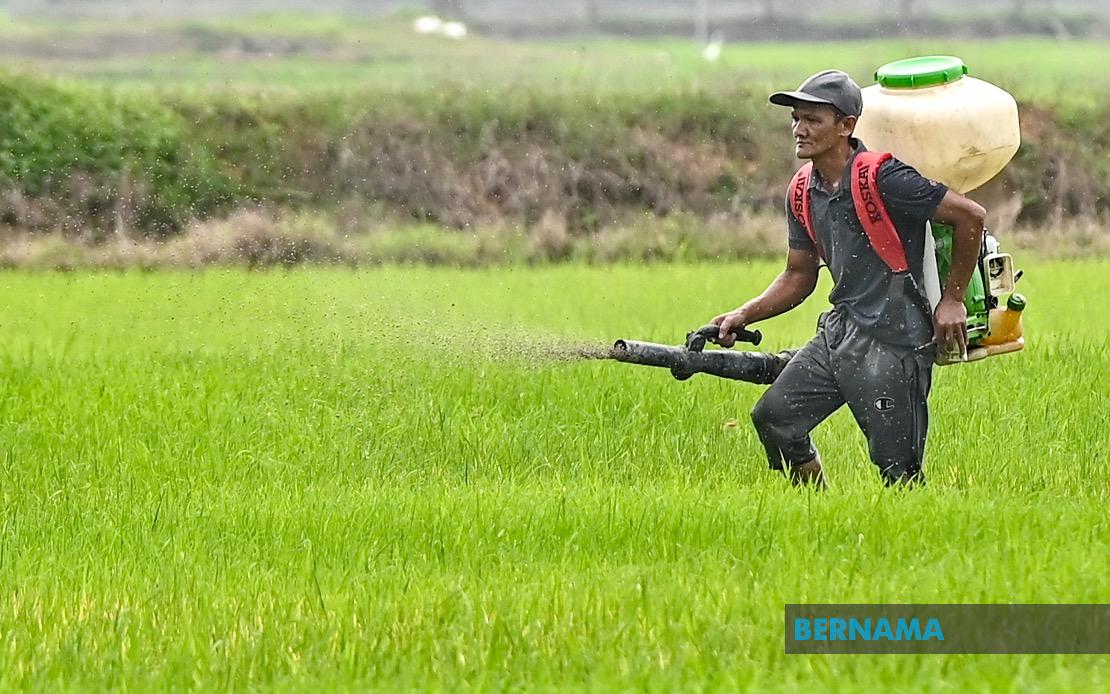
The Kelantan government is channelling RM3.64 million into its agriculture sector this year through 10 focused development initiatives, according to a statement made in the State Legislative Assembly. Datuk Tuan Mohd Saripudin Tuan Ismail, chairman of the State Agriculture, Agro-Food Industry and Commodity Committee, outlined the comprehensive strategy during a sitting at the Kota Darulnaim Complex in response to questions about strengthening the state's food security framework. The investment reflects a deliberate policy shift toward revitalising agricultural productivity across multiple subsectors that have traditionally anchored Kelantan's rural economy.
The allocated funds span an ambitious range of agricultural pursuits designed to unlock value from underutilised land and modernise production methods. Projects encompass bringing idle farmland into productive use, enhancing padi cultivation systems, developing commodity crops suited to local conditions, and scaling up vegetable and fruit production. Equally important is an integrated focus on entrepreneur development, which recognises that agricultural growth requires not just investment in land and equipment but also in the skills and business acumen of those operating at the ground level. This holistic approach signals an understanding that rural development in Kelantan cannot succeed through infrastructure alone.
Commercial agriculture has received particular emphasis through the Kelantan State Agriculture Development Corporation (PKPNK), which is driving innovation in high-value crops. Initiatives at Rong Chenok Agro Valley illustrate this strategy, with projects in chilli fertigation, honeydew melon cultivation, and hydroponic vegetable production. These ventures represent a departure from traditional farming methods and position Kelantan to compete in premium domestic and potentially export markets. Fertigation and hydroponic systems reduce water usage and allow year-round production, making them especially relevant in an era of climate variability affecting Malaysian agriculture.
The livestock sector has experienced tangible expansion, with more than 380 breeders now participating in state-sponsored programmes. These initiatives cover cattle, goats, sheep, deer, buffalo, and quail, complemented by provision of essential support equipment. For smallholder farmers in Kelantan, such programmes offer pathways to diversify income and build resilience against commodity price volatility. The breadth of livestock types supported suggests a strategy to match diverse consumer preferences and local market conditions, rather than concentrating risk in a single species.
Fisheries and aquaculture represent another pillar of Kelantan's agricultural strategy, with particular focus on domestic production to bolster national food security. A total of RM382,094 was distributed to 122 fish and prawn breeders during the period under review. The state's aquaculture output reached 7,901.74 tonnes valued at RM76.2 million in 2025, with authorities targeting an increase to 8,000 tonnes in the current year. These figures demonstrate Kelantan's growing significance as an aquaculture hub, though they also underline the incremental nature of year-on-year expansion in a sector requiring careful environmental and resource management.
Infrastructure development for fisheries production has accelerated considerably, with construction of more than 130 artificial hatcheries now completed or underway. The release of 1.26 million fish and prawn fry into public waters represents both an investment in wild stock replenishment and a mechanism for technology transfer to artisanal fishermen. PKPNK's own production capacity—one million catfish fry and 500,000 tilapia fry annually—positions the corporation as a regional breeding hub. Additionally, the white prawn project at Pantai Geting in Tumpat yields approximately 400,000 kilogrammes annually, demonstrating that Kelantan can sustain commercial aquaculture operations of genuine scale. Such capacity directly supports both household food security and commercial export potential.
Entrepreneur development has emerged as a critical enabler of agricultural value addition and market linkage. As of June, 1,560 entrepreneurs had benefited from 74 marketing infrastructure facilities and 99 marketing outlets established by the state government. Rather than leaving producers to navigate markets independently, Kelantan is creating structured ecosystems where farmers and small-scale producers can access customers more directly. This addresses a persistent challenge in Malaysian agriculture: the disconnect between producers and end consumers, which often leaves smallholders trapped in low-margin supply chains.
The Kota Bharu Rural Transformation Centre (RTC) exemplifies this integrated approach, functioning as both an agro-food marketing hub and a distribution centre. Since its establishment in 2012, the RTC has hosted approximately 800 entrepreneurs and generated RM4.16 billion in cumulative sales through 2025. These figures are substantial and indicate genuine commercial vibrancy, though the average annual turnover suggests many participating enterprises remain modest in scale. The centre's longevity and sales performance provide evidence that structured market linkages can sustain agricultural entrepreneurship in rural settings.
The implications of Kelantan's agricultural strategy extend beyond state boundaries. As Malaysia grapples with broader food security challenges and competition for agricultural labour, Kelantan's investments in modern production techniques, hatchery infrastructure, and market linkages offer lessons for other states. The emphasis on commodity diversification—from padi to hydroponics to aquaculture—reflects pragmatic risk management in an era of volatile global food prices and unpredictable weather patterns. Furthermore, the focus on entrepreneur support acknowledges that income generation matters as much as output volume for rural populations dependent on farming.
For policymakers across Southeast Asia, Kelantan's approach illustrates how state-level investment in marketing infrastructure and enterprise support can complement production-focused spending. Many developing agricultural economies concentrate resources on input provision—seeds, fertilisers, equipment—while neglecting the equally critical challenge of market access. By allocating funds to distribution centres, marketing outlets, and entrepreneur training, Kelantan is attempting to build complete value chains rather than isolated production nodes. This integrated model may prove more resilient and economically productive than traditional subsidy-heavy approaches.
Looking ahead, the sustainability of these initiatives will depend on several factors. Water availability, particularly for hydroponic and fertigated systems, remains a concern in tropical climates subject to erratic rainfall. Training and retention of skilled workers for modern farming techniques represents an ongoing challenge in rural areas experiencing outmigration. Market demand, both domestic and export, must keep pace with expanding production capacity to avoid oversupply and price collapses. Kelantan's current trajectory suggests policymakers are aware of these complexities, but translating capital investment into sustained productivity gains requires consistent effort and adaptive management across multiple seasons and economic cycles.

