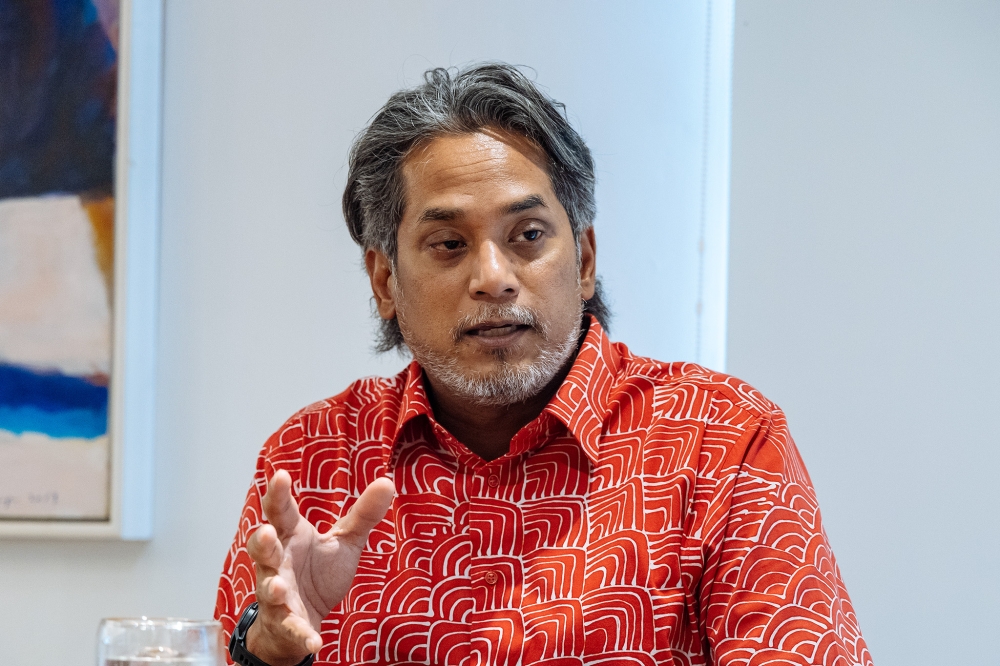
Former Umno Youth chief Khairy Jamaluddin has surfaced in recent reports as a serious contender for Barisan Nasional's nomination to contest the Rembau state assembly seat, marking a potentially significant repositioning within the coalition's political strategy in Negeri Sembilan. The consideration of the prominent Umno figure has triggered wider speculation about his long-term trajectory within the party hierarchy, with some analysts suggesting his candidacy could foreshadow a broader leadership role in the state.
The move represents an intriguing development in BN's approach to state-level politics as Malaysia heads toward an electoral cycle that could reshape the political landscape in several pivotal states. Rembau, situated in the western corridor of Negeri Sembilan, holds strategic importance within the broader peninsular political map, and BN's choice of candidate signals the coalition's determination to maintain electoral momentum in a region where it has traditionally maintained substantial influence. The seat's significance extends beyond the constituency itself, as it touches on matters of resources, economic development, and access to the Kuala Lumpur metropolitan sphere.
Khairy's potential candidacy would represent a deliberate move to inject fresh energy into the electoral campaign, leveraging his profile as a moderniser within Umno and his previous prominence in youth politics. His background in international affairs, business, and party organisation has positioned him as a figure capable of bridging various demographic constituencies. The nomination, if confirmed, would demonstrate BN's intention to field candidates with proven administrative experience and broader appeal beyond traditional party strongholds.
The speculation surrounding a possible menteri besar position for Khairy reflects deeper calculations within BN about succession planning and power distribution in Negeri Sembilan. If such advancement materialises, it would constitute a significant promotion that elevates him from the state legislative assembly to the chief ministerial position. This trajectory would mirror historical patterns in Malaysian politics where strong state-level performance launches politicians into higher national roles, particularly within the Umno-led establishment. The timing of such consideration suggests that BN's senior leadership is evaluating how to consolidate control in the state while simultaneously grooming candidates for expanded responsibilities.
Negeri Sembilan's political configuration has undergone considerable evolution in recent years, with changing voter demographics and shifting allegiances altering the traditional balance of power. The state's economy, historically anchored in agriculture, mining, and manufacturing, has increasingly diversified into technology and services sectors, creating new constituencies with distinct political interests. Younger, urbanised voters in areas adjacent to Selangor and Kuala Lumpur present different political calculations than their counterparts in more rural districts, and BN's strategy appears designed to address this heterogeneity through carefully selected candidates who can articulate contemporary concerns.
The emergence of Khairy as a possibility for high office in Negeri Sembilan also reflects broader patterns of candidate circulation within Umno and its coalition partners. Senior figures frequently undertake multiple postings across different states and federal territories throughout their careers, accumulating experience and building networks that eventually position them for national-level responsibilities. Should Khairy proceed with contesting Rembau and subsequently assume the menteri besar role, he would join a lineage of Umno politicians who have used state administration as a launching pad for greater prominence within the party and the federal government.
From a Southeast Asian perspective, the developments within Malaysia's state-level politics warrant attention for how they reflect broader patterns of democratic competition and political renewal across the region. Countries throughout Southeast Asia grapple with similar questions about generational change, the integration of new cadres into established party structures, and the balance between continuity and reform. Malaysia's experiences, given its relatively mature democratic institutions and established party hierarchies, offer instructive parallels for neighbouring nations undergoing analogous political transitions.
The strategic implications of fielding Khairy in Rembau extend to BN's broader coalition dynamics. By elevating a younger, internationally-engaged figure, BN signals openness to fresh approaches while maintaining fundamental party continuity. This messaging becomes particularly important as the coalition confronts challenges from emerging political competitors and shifting voter preferences, especially among constituencies that prioritise transparency, technological competence, and forward-looking governance.
For Malaysian observers, the Rembau candidacy represents more than a routine electoral calculation. It exemplifies how personnel decisions at the state level reverberate through national politics, influencing factional alignments within Umno and shaping expectations about future governance priorities. The confirmation or dismissal of such speculation will provide signals about the direction of BN's leadership and its vision for administering significant territorial units within the federation. Negeri Sembilan, as a constituent state of the Malaysian federation with its own constitutional peculiarities and governance traditions, occupies a position that makes its political leadership significant beyond the state's borders, affecting national coalition politics and federal policymaking.

