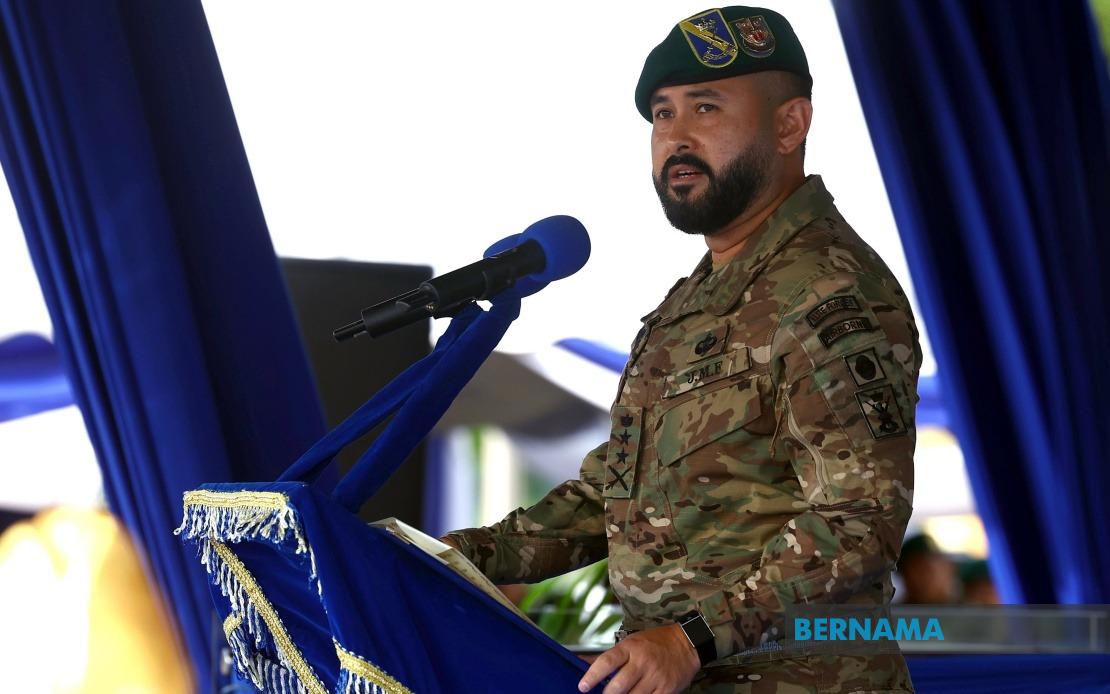
The Regent of Johor, Tunku Mahkota Ismail, has issued a forceful warning against any attempts to alter royal decisions affecting the Regimen Gerak Khas (RGK), Malaysia's premier special forces unit, cautioning that such interference serves only parochial interests at the expense of national security. Speaking during the RGK's 61st anniversary celebration in Mersing on Wednesday, the Regent underscored that all plans and developments concerning the unit have received explicit consent from His Majesty Sultan Ibrahim, King of Malaysia, in his capacity as Colonel Commandant, and must remain sacrosanct to preserve the integrity of security arrangements.
The Regent's remarks carry particular weight given the traditional role of Johor's royal household in military affairs and its historical significance within Malaysia's defence establishment. By invoking the Malay proverb about trusting a fence only to have it consume the rice crop—a metaphor for betrayal by those entrusted with responsibility—Tunku Ismail articulated a concern that extends beyond routine administrative matters into questions of governance, institutional integrity, and whether political actors are prepared to subordinate personal advancement to collective security imperatives.
Central to the Regent's concerns is the management infrastructure overseeing the RGK and broader armed forces. His reference to knowing "who controls" the secretary-general of the Defence Ministry, coupled with his stated intention to meet and address "cancers" within military structures, suggests awareness of systemic vulnerabilities that may compromise institutional effectiveness. This oblique but pointed criticism indicates that problems of oversight, accountability, and bureaucratic interference have reached levels sufficient to trigger royal intervention and public censure.
The geopolitical context underpinning these remarks cannot be overlooked. Tunku Ismail emphasized that Malaysia's security environment has grown significantly more complex and unpredictable, citing geopolitical shifts across the Indo-Pacific region, ongoing developments in the South China Sea, and intensifying competition among major powers. For a special forces unit positioned as the "tip of the spear" in confronting national security threats, these external pressures demand that institutional stability and operational readiness remain paramount concerns, not subordinate to factional interests or political expediency.
Equipment and technological capability emerged as critical focal points in the Regent's address. He stressed that the RGK's requirements across weapons systems, mobility platforms, advanced technology, logistics infrastructure, and operational assets must be sustained at the highest achievable standards. The omission of investment in modern defence capabilities or their diversion toward less capable alternatives would represent a tangible degradation of Malaysia's strategic posture during a period when regional tensions are mounting and technological obsolescence poses genuine operational risks.
Procurement and development processes form another dimension where the Regent demanded rigorous adherence to established protocols. He called for all acquisitions to be grounded in demonstrated capability, quality metrics, operational effectiveness assessments, and the principle of obtaining optimal value for defence expenditure. This emphasis on transparent, merit-based procurement stands in contrast to systems where political patronage, corporate connections, or personal relationships might influence purchasing decisions, potentially resulting in suboptimal equipment selections or inflated costs that drain limited defence budgets.
Personnel management practices received equally stern attention from the Regent, who insisted that career progression, welfare provisions, and merit assessments must be administered transparently without accommodation for favouritism, nepotism, or considerations divorced from individual competence. The potential harm from systems permitting personal interests to influence personnel decisions extends beyond demoralizing capable officers—it directly undermines unit cohesion, operational effectiveness, and institutional credibility, particularly within elite formations where psychological cohesion and mutual confidence are foundational to performance under extreme stress.
The Regent's invocation of the 13th Malaysia Plan suggests that budgetary allocations and development schedules for the RGK have already been determined through established government processes and approved at the highest levels. His insistence that these allocations receive priority treatment and protection from revision reflects concern that post-approval pressure might squeeze RGK projects in favour of competing departmental interests or that modifications might be introduced that compromise original planning assumptions regarding technology standards, cost-effectiveness, and operational suitability.
For Malaysian defence policymakers and military leadership, the Regent's intervention carries unmistakable implications: institutional autonomy in defence matters remains non-negotiable, political actors must respect established approval frameworks even when circumstances change, and short-term factional advantage cannot override long-term security imperatives. The special forces unit's elevated status within Malaysia's defence architecture, coupled with royal patronage and explicit constitutional responsibilities, creates a baseline that transcends routine administrative disputes.
The broader significance extends to governance itself. The Regent's concerns about management transparency, merit-based advancement, and freedom from political interference echo principles fundamental to professional military organizations globally. Malaysia's experience suggests that these principles require consistent reinforcement, particularly when civilian oversight mechanisms prove insufficient or when political competition incentivizes circumventing established procedures to consolidate advantage within defence bureaucracies.
For Southeast Asian security observers, the episode illustrates how institutional conflicts within defence establishments can reflect broader tensions between professional military culture and political interference. Malaysia's resolution of such tensions through royal intervention represents one approach, though its sustainability depends on consistent support from political leadership and public acknowledgment that short-term political gain cannot justify institutional compromises affecting national security capabilities.
Moving forward, the Regent's unmistakable warnings suggest that further attempts to revise approved RGK plans or divert resources may encounter formidable institutional resistance. Whether civilian government and defence ministry leadership prove responsive to these signals will determine whether Malaysia's special forces unit maintains the institutional coherence, technical sophistication, and personnel quality essential for confronting the region's evolving security challenges.

