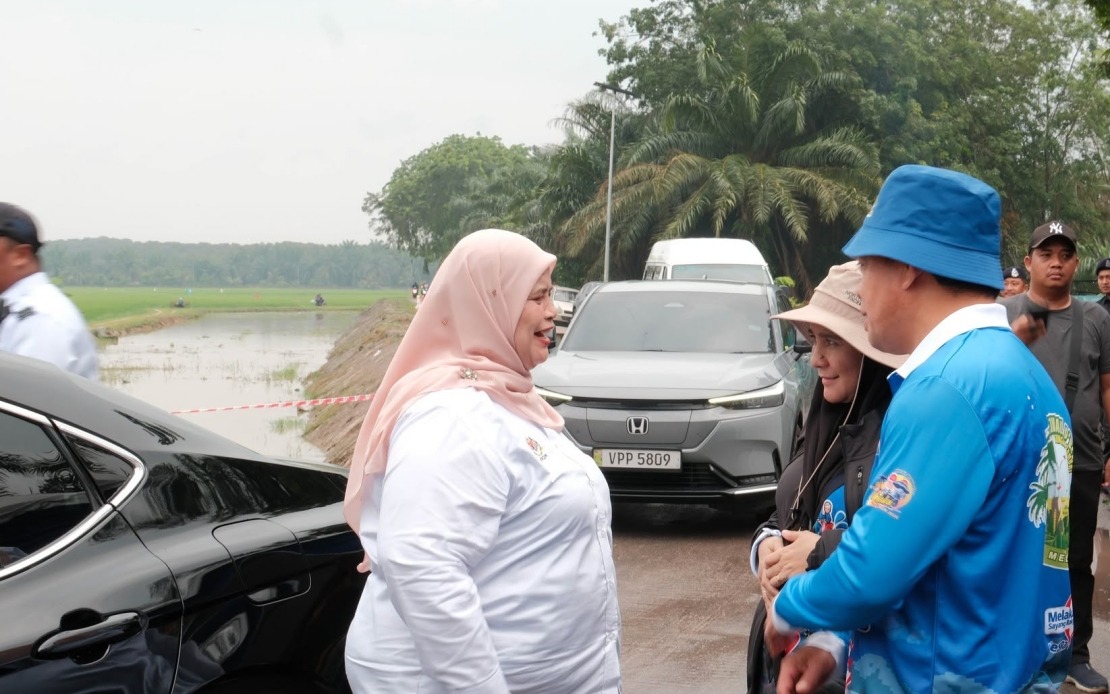
The Ministry of Rural and Regional Development (KKDW) is channelling RM1.911 million into the Sungai Rambai constituency between 2021 and 2026, targeting fundamental improvements to infrastructure and community spaces that will reshape daily life in the rural area. Deputy Minister Datuk Rubiah Wang announced the investment breakdown during the closing ceremony of the D'Bendang Melaka Festival in Jasin, signalling the government's commitment to addressing long-standing development gaps that have historically constrained rural regions in Melaka.
The financial commitment splits into two distinct strategic components designed to create complementary benefits. Under the Social Amenities Programme (PAMS), RM1.001 million has already been released to support 11 distinct projects aimed at transforming public facilities and establishing environments that attract residents to remain in rural communities rather than migrate to urban centres. This reflects a broader policy shift recognising that infrastructure quality directly influences quality of life and economic participation in peripheral areas.
Simultaneously, KKDW has mobilised RM910,000 through its Rural Connectivity Road initiative, channelled into 13 separate highway and thoroughfare projects throughout the Sungai Rambai area. These road improvements address a critical bottleneck for rural economies—inadequate transportation networks that raise costs for agricultural exports and restrict visitor access to local attractions. Better roads theoretically translate into faster commercial movement, reduced vehicle wear, and increased feasibility for time-sensitive agricultural commerce.
The infrastructure investment arrives as a backdrop to the region's emerging profile as an agrotourism destination, with the D'Bendang Melaka Festival serving as the focal point for rural economic transformation. Now completing its fourth year, this annual event has matured from a modest local celebration into a comprehensive rural tourism platform integrating agricultural heritage, cultural preservation, and visitor experiences. The festival exemplifies how strategic events can stimulate broader development conversations and attract investment to previously overlooked regions.
The festival's economic footprint extends beyond attendance figures into tangible commercial activity. More than 60 local entrepreneurs participate annually, showcasing everything from handicraft products to fresh agricultural goods, creating direct income streams for rural households and incentivising value-added production. The homestay sector has expanded correspondingly, generating secondary employment in accommodation, catering, and tourism services that distribute benefits across multiple community segments rather than concentrating them in a single sector.
From a policy perspective, the timing of this infrastructure allocation reflects Malaysia's broader rural development agenda, particularly the Visit Malaysia Year 2026 initiative positioning the country as a diversified tourism destination. Melaka's positioning as an agrotourism hub offers differentiation from competing destinations—the appeal of authentic rural experiences, traditional cultural practices, and agricultural landscapes resonates with both domestic and international visitors increasingly seeking alternatives to conventional urban tourism.
For ordinary Sungai Rambai residents, the convergence of infrastructure spending and tourism development creates tangible opportunities that extend beyond seasonal festival employment. Improved roads reduce isolation and facilitate access to services in Jasin and beyond, while upgraded public facilities—potentially including market spaces, community halls, or recreational areas—enhance everyday amenities. These investments address the quality-of-life deficits that frequently trigger rural-to-urban migration, potentially stabilising local populations.
The festival structure itself deserves scrutiny as a development model. Rather than imposing external solutions onto rural communities, the D'Bendang approach appears to emerge from local agricultural identity and cultural practices, positioning development as an extension of existing community strengths rather than a replacement for them. This participatory foundation may explain its evolution into a sustained platform rather than a one-off promotional event.
Contextually, the Sungai Rambai investment sits within Melaka's broader economic diversification strategy. The state has historically relied on manufacturing and traditional commerce; agrotourism development represents an attempt to anchor employment in primary production, diversify income sources, and capitalise on the state's remaining agricultural landscape before further urbanisation occurs. For Melaka voters and residents, particularly in rural constituencies, this signals that state and federal governments recognise agrarian regions deserve strategic investment comparable to urban development spending.
The investment also carries implications for Southeast Asian rural development models more broadly. Many neighbouring countries face identical challenges—rural emigration, infrastructure deficits, and pressure to modernise without destroying cultural heritage. How successfully Sungai Rambai leverages its RM1.9 million allocation, combined with festival-driven tourism, could provide replicable lessons for similar initiatives across the region, particularly in Indonesia and Thailand where agrotourism has gained prominence.
Looking forward, the genuine test involves translating capital investment into sustained economic improvement. Roads fade without maintenance budgets; public facilities deteriorate without operational funding. The D'Bendang Festival requires consistent promotion and management to avoid the fate of many rural tourism initiatives—initial enthusiasm followed by declining visitor numbers as novelty fades. Success requires that infrastructure improvements and tourism development operate in genuine partnership, each amplifying the other's effectiveness.

