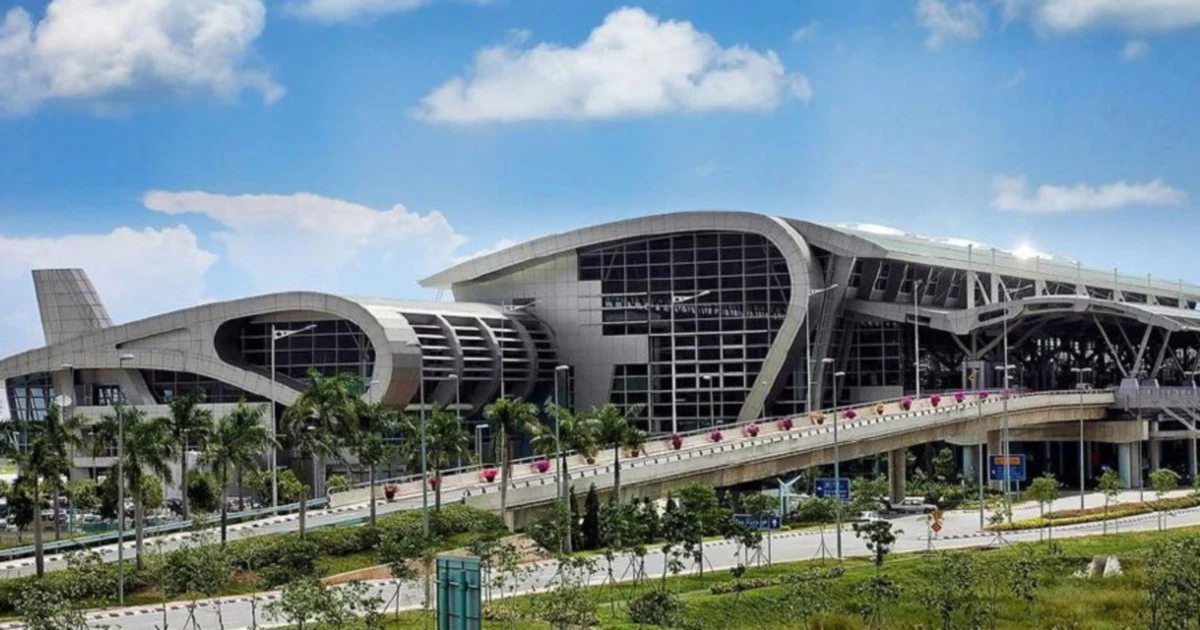
The long-awaited expansion of Kota Kinabalu International Airport remains in a holding pattern as federal and state authorities work to resolve outstanding land and site difficulties that have delayed the launch of the nearly RM500 million project. Deputy Transport Minister Datuk Hasbi Habibollah indicated that once these underlying complications are settled with the Sabah government, construction can proceed on the critical infrastructure undertaking that aims to enhance the airport's capacity.
The expansion represents a significant investment in Malaysia's air transport infrastructure, particularly for Sabah, which serves as a major gateway for both domestic travel and international connectivity to the island of Borneo. The delay reflects the complexity of major infrastructure projects in Malaysia, where coordinating between federal agencies, state governments, and land administrators often requires careful negotiation and documentation. In Sabah's case, the state government holds considerable authority over land matters, making its cooperation essential for the project to advance.
Kota Kinabalu International Airport has witnessed steady growth in passenger traffic over the past decade, driven by tourism expansion and business travel to the resource-rich state. The airport currently handles millions of passengers annually, yet capacity constraints have become increasingly apparent during peak travel periods. The proposed expansion is intended to provide additional terminal facilities, enlarged runway infrastructure, and enhanced ground-handling capacity to accommodate projected demand growth over the coming years.
The nature of the land complications has not been fully detailed, but such challenges typically involve identifying and acquiring the necessary ground for expansion, ensuring proper surveying and demarcation, and obtaining all requisite clearances from state authorities. In Malaysian infrastructure development, securing land in sensitive zones or areas with competing claims or prior allocations can significantly extend project timelines. The involvement of the Sabah government suggests the land parcels in question fall under state jurisdiction or involve state-held properties, requiring direct coordination at the highest levels.
From an economic perspective, delays to airport expansion carry measurable costs. Enhanced aviation infrastructure typically attracts new airline routes, supports tourism growth, and facilitates business investment. Sabah's economy is heavily dependent on visitor arrivals and international trade, making airport capacity a critical economic enabler. The RM500 million investment signals federal commitment to developing the state's infrastructure, yet the project's extended timeline raises questions about implementation capacity and intergovernmental coordination mechanisms.
Malaysia's larger air transport sector has experienced capacity pressures across multiple hubs in recent years. While Kuala Lumpur International Airport dominates the national network, regional airports like Kota Kinabalu play vital roles in distributing passenger flows and developing secondary urban centres. Delays to such projects can compress future capacity development windows and potentially limit economic growth opportunities for affected regions. The Sabah expansion therefore carries implications extending beyond the state to Malaysia's broader transportation strategy.
The involvement of Deputy Transport Minister Datuk Hasbi Habibollah in addressing this matter underscores the project's priority status within the federal government's infrastructure agenda. Transport ministry officials regularly engage with state authorities on aviation matters, particularly where federal funding or federal airport operator involvement intersects with state land prerogatives. His acknowledgment that progress depends on state cooperation reflects the institutional reality that infrastructure projects in Malaysia often require careful consensus-building across multiple levels of government.
For prospective stakeholders—including airlines, tourism operators, and construction contractors—the uncertainty surrounding the project's start date creates planning challenges. Airlines consider expansion timelines when routing capacity decisions, and tourism boards incorporate airport capabilities into promotional strategies. Extended delays can push projects beyond the fiscal year or development cycle for which they were budgeted, potentially affecting cost estimates and scope parameters.
The pathway forward likely involves formal negotiations between federal transport authorities and the Sabah State Government to clarify land titles, finalize site boundaries, and obtain necessary state endorsements. Such processes, while essential for project legitimacy, can consume considerable time depending on the complexity of the underlying issues. Malaysian infrastructure projects have historically demonstrated that resolving governmental coordination challenges requires patience and sustained high-level engagement.
Once the land matters are cleared, project execution will likely proceed relatively swiftly, given that design and planning work has presumably already advanced. Construction of airport facilities in Malaysia typically follows established protocols, and the aviation sector's regulatory framework is well-developed. The real-estate and administrative hurdles appear to represent the primary obstacle, rather than technical or design considerations.
The eventual completion of the KKIA expansion will position Sabah's primary airport to accommodate rising travel demand and support the state's ambitions for tourism growth and economic diversification. For Malaysia's broader infrastructure narrative, the project exemplifies both the opportunity and the complexity inherent in developing modern aviation capacity. How swiftly the federal and state governments resolve their land disputes will determine whether this investment materializes promptly or faces further extension.

