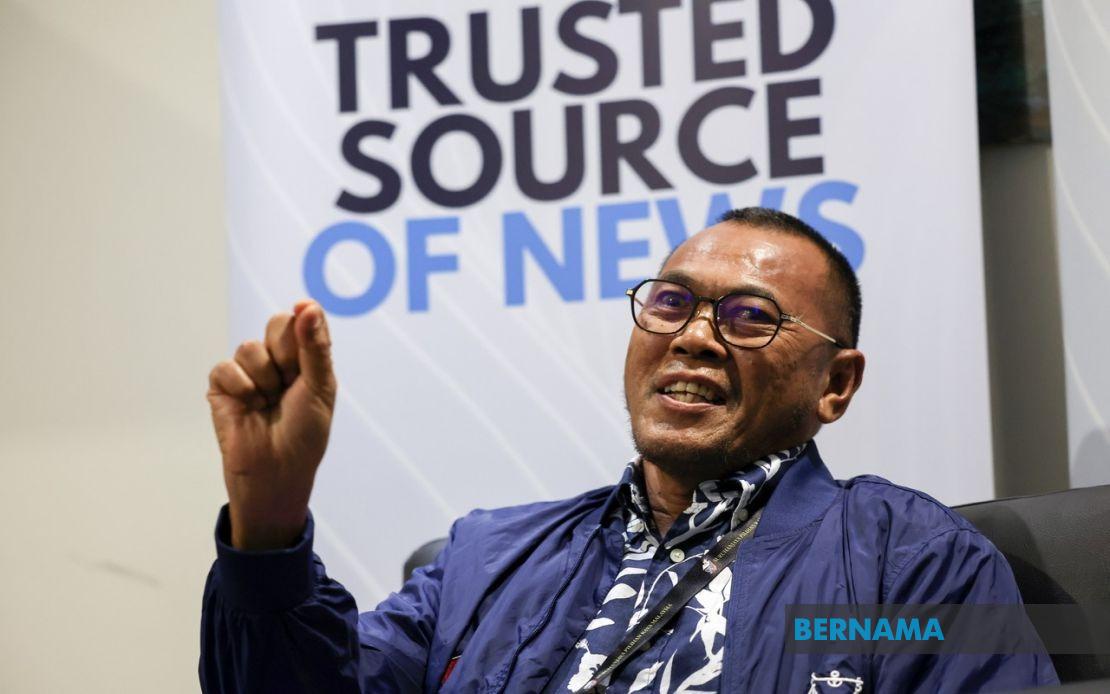
Datuk Pandak Ahmad, the sitting assemblyman for Kota Iskandar, is anchoring his re-election bid on a foundational philosophy of acting as a trustworthy intermediary between constituents and government. Seeking another mandate as the Barisan Nasional candidate ahead of the Johor state election on July 11, Pandak frames his approach around the principle that elected representatives must listen carefully to community concerns, grasp the underlying issues, and deliver concrete solutions. This messaging underscores a campaign strategy that emphasises continuity and proven delivery, positioning him as a guardian of public trust rather than a revolutionary disruptor.
The assemblyman points to several flagship projects completed during his previous term as evidence of his ability to translate constituent needs into measurable outcomes. Among these, he highlights the delivery of 12,000 affordable housing units through the Johor People's Housing Programme, a scheme designed to assist middle-income families who struggle to access conventional property markets. This initiative carries particular resonance in Johor, where rapid urbanisation and economic growth have created housing affordability challenges similar to those experienced across Malaysia's developed regions. The programme's focus on price accessibility rather than luxury development reflects a conscious choice to address grassroots economic anxieties.
Beyond housing, Pandak's portfolio includes religious and community infrastructure. The construction of a new mosque in Pulai Emas and the establishment of the Tunku Mohkota Ismail Youth Centre represent attempts to deepen social cohesion across different demographics. Such projects appeal to voters concerned with spiritual amenities and youth engagement, two concerns that frequently surface in Malaysian constituency feedback. The youth centre, in particular, addresses a concern that resonates throughout Southeast Asia: providing structured outlets for younger populations in rapidly developing areas where traditional community spaces have been displaced by commercial expansion.
Administrative efficiency has become part of Pandak's pitch, with his team highlighting streamlined licensing processes for small traders operating under the Iskandar Puteri City Council. The claim that applications now receive approval within a single day targets a constituency segment often overlooked in mainstream political rhetoric: informal economy workers and petty traders whose livelihoods depend on navigating bureaucratic systems. The recovery of nine acres of previously privatised land for development as a commercial fishing hub suggests an attempt to reclaim public assets and repurpose them for community benefit, a narrative that carries ideological weight in Malaysian political discourse.
The transformation of Kampung Sungai Melayu exemplifies Pandak's development philosophy most comprehensively. What the assemblyman describes as a 160-year-old traditional fishing village has been repositioned as a tourism destination through nearly RM22 million in infrastructure investment. The village now attracts more than 100,000 visitors annually, generating economic activity that benefits local residents while preserving cultural identity. This project illustrates a wider trend in Malaysian regional development: converting heritage communities into experiential tourism assets that generate income without wholesale displacement. However, such initiatives also raise questions about gentrification pressures and whether tourism revenue genuinely flows to ordinary residents or concentrates among business operators.
Traffic congestion emerges as Pandak's most urgent unresolved challenge, particularly along routes connecting Universiti Teknologi Malaysia, Pulai Indah, and Gelang Patah. This complaint directly reflects the growing pains of Iskandar Puteri as a secondary growth centre attracting both residential migration and institutional investment. His proposed solutions—smart traffic light systems, two new flyovers, and an elevated interchange—represent conventional infrastructure responses to congestion. Whether such capital-intensive projects effectively address root causes of traffic flow or simply enable further sprawl remains an open question in Malaysian urban planning discourse.
Pandak's future agenda demonstrates continuity with past priorities while introducing new dimensions. His commitment to education sits alongside housing expansion plans covering approximately 300 units in Gelang Patah and over 800 in Taman Damai and Pulau Hijauan, all priced below RM300,000 per unit. This pricing strategy directly competes with neighbouring developments and signals sensitivity to affordability pressures. The expansion of tourism development to Pendas represents an attempt to replicate Kampung Sungai Melayu's success by combining fishing heritage with ecotourism infrastructure. Such replication strategies assume that tourism models effective in one location will translate successfully elsewhere, though local context, management capacity, and market saturation often determine actual outcomes.
The Kota Iskandar constituency presents a complex electoral battleground reflective of broader Malaysian political fragmentation. With 132,579 registered voters and over 131,000 young voters comprising a substantial portion, the seat features a four-way contest. Pandak faces Dzulkefly Ahmad from Pakatan Harapan, S. Anna Pravina from Perikatan Nasional, and Sahrudin Omar representing Parti Bersama Malaysia. This splintering of opposition forces across multiple parties creates opportunities for the incumbent, yet also suggests that no single opposition narrative has consolidated support.
Pandak's campaign strategy incorporates both traditional and digital elements, recognising that Kota Iskandar's voter profile spans generations with different information consumption habits. Face-to-face engagement remains central, reflecting recognition that personal connection retains political value even in digitally saturated environments. Simultaneously, his deployment of Facebook, Instagram, and Threads targets the substantial youth cohort, acknowledging that younger voters inhabit different media ecosystems than their elders. This dual approach avoids the mistake of assuming digital natives have entirely abandoned older communication channels.
The Johor state election itself represents a significant political moment for Malaysia's southern powerhouse. As one of the country's most economically dynamic states and a traditional Barisan Nasional stronghold, electoral outcomes here carry implications for national politics. Kota Iskandar's status as one of Johor's largest constituencies by voter population makes individual races here consequential for state-level results. Pandak's campaign, focused on demonstrable delivery and community stewardship, reflects a Barisan strategy emphasising performance rather than ideology—a calculated choice given the party's vulnerabilities on governance narratives following years of political turbulence.
The assemblyman's emphasis on trust and bridge-building, while emphasising concrete projects, represents a particular political narrative: the competent administrator who delivers visible improvements without demanding transformative change. For voters prioritising stability, incremental progress, and proven track records, such messaging carries appeal. For those seeking more ambitious governance reimagining, the message may feel insufficient. Kota Iskandar voters' ultimate choice on July 11 will reveal whether Pandak's emphasis on continued delivery and community trust proves sufficient to retain the seat in a increasingly competitive political environment.

