The Ministry of Domestic Trade and Cost of Living (KPDN) has signalled its willingness to develop tailored assistance mechanisms for island communities across Peninsular Malaysia who rely on private boats as their lifeline to the mainland. Deputy Minister Datuk Dr Fuziah Salleh disclosed the ministry's intent during parliamentary proceedings, acknowledging the distinctive hardships experienced by residents of remote island settlements who face elevated transportation costs and logistical challenges in their daily lives.
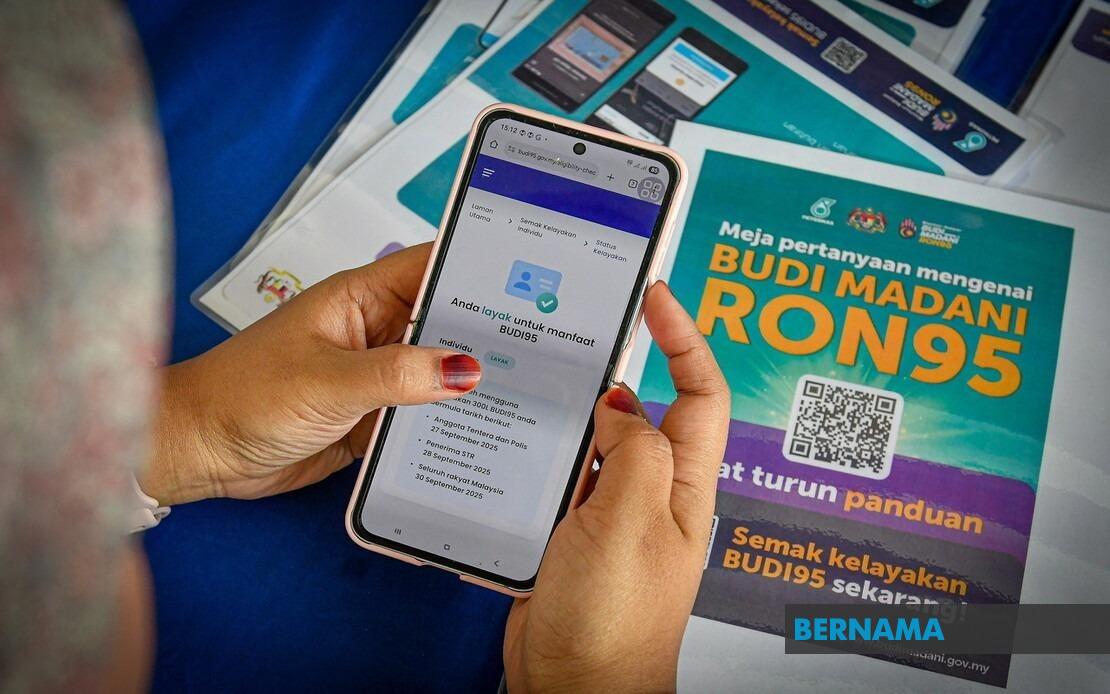
The announcement responds to concerns raised by Muhammad Islahuddin Abas, the representative for Mersing in Johor, who pressed the government for enhanced quota allocations under the BUDI95 fuel assistance scheme specifically tailored to island dwellers. These communities face considerably higher petrol consumption owing to their reliance on water transport, a reality that standard subsidy calculations often fail to accommodate adequately. The Mersing constituency, which encompasses several inhabited islands, has emerged as a focal point for this issue, highlighting the gap between urban and island-based resource allocation under existing subsidy frameworks.
Fuziah's statement signifies an important shift in policy direction, suggesting that the ministry recognises island communities as a distinct demographic requiring customised solutions rather than generic subsidy applications. She indicated that the ministry would investigate concrete pathways through which targeted financial assistance could be channelled to this group, acknowledging their legitimate claim for differentiated support. This approach reflects growing political awareness that blanket subsidy schemes often inadvertently exclude or disadvantage marginal populations whose circumstances deviate from standard urban or rural profiles.
Beyond island communities, the KPDN is simultaneously undertaking a comprehensive review of operational procedures governing subsidised diesel fleet cards, with particular attention to non-governmental organisations managing elderly care facilities. This second policy track addresses a structural oversight in existing subsidy administration: registered homes for older persons operated by NGOs have been systematically excluded from the Subsidised Diesel Control Scheme (SKDS) because their legal registration occurs through the Registrar of Societies rather than the Companies Commission of Malaysia. Despite their substantial transport requirements for welfare services and medical care delivery, these institutions cannot currently access subsidised diesel benefits.
The exclusion of welfare homes from diesel subsidies represents an administrative barrier that contradicts the stated social objectives of government support schemes. These facilities incur significant transport costs to facilitate elderly residents' access to healthcare, social services, and community activities. By restricting eligibility to company-registered entities, existing procedures inadvertently penalise non-profit organisations that serve vulnerable populations. Fuziah acknowledged this regulatory inconsistency, indicating that the ministry recognises the necessity for procedural modification to incorporate these socially essential institutions.
The ministry's proposed solution involves revising the standard operating procedures (SOP) to accommodate organisations registered under different legislative frameworks. This adjustment, while administratively straightforward, requires coordination between multiple government bodies and represents a meaningful policy reform. The challenge lies not in principle but in execution—creating approval mechanisms that account for the distinct governance structures of NGO-registered facilities whilst maintaining the scheme's integrity and preventing potential misuse or abuse of subsidised fuel access.
Parallel to these developments, the KPDN has maintained that the tourism industry remains outside the scope of diesel subsidies under SKDS 2.0, reflecting deliberate prioritisation of sectors deemed essential to national welfare. The scheme currently concentrates resources on food production and related critical sectors, with authorities declining to expand eligibility to tourism despite its economic significance and employment contribution. This decision reflects budgetary constraints and the government's assessment of sectoral priority, though it continues to generate discussion about whether tourism-dependent communities and operators warrant inclusion in future iterations of the subsidy framework.
The policy deliberations occurring within KPDN exemplify the broader challenge facing Malaysia's subsidy administration: balancing fiscal sustainability against the diverse needs of multiple stakeholder groups. Island communities, welfare organisations, and tourism operators all present legitimate claims for assistance, yet finite government resources necessitate difficult prioritisation decisions. The ministry's willingness to examine mechanisms for island dwellers and elderly care homes suggests incremental policy evolution rather than comprehensive subsidy expansion.
For Malaysian policymakers, these discussions underscore the importance of tailoring national support schemes to accommodate geographic and institutional diversity. Island-dependent communities operate under fundamentally different economic conditions than mainland populations, and their transportation costs reflect geographic realities beyond their control. Similarly, non-profit welfare providers serve essential social functions that arguably warrant recognition within subsidy frameworks. The KPDN's current review process represents an opportunity to enhance policy coherence and ensure that assistance mechanisms reach populations whose needs might otherwise remain invisible within standard administrative categories.
The ministry's commitment to reviewing these mechanisms will require consultation with relevant stakeholders, including island community representatives, NGO administrators, and local government authorities. Any revised procedures must balance accessibility with fiscal responsibility, ensuring that expanded eligibility does not create sustainability challenges or distort market incentives. The timeline for these reviews remains unspecified, though the parliamentary discussion suggests that implementation could occur within the current fiscal year if institutional coordination proceeds efficiently.
These policy developments carry implications for other Southeast Asian nations managing similar subsidy schemes and remote community challenges. Malaysia's experience with extending support to island populations and non-traditional welfare providers may inform regional approaches to equitable resource distribution. As governments across the region grapple with balancing targeted assistance against fiscal pressures, the mechanisms Malaysia develops could offer instructive precedents for addressing the needs of geographically marginalised and institutionally unconventional populations.

