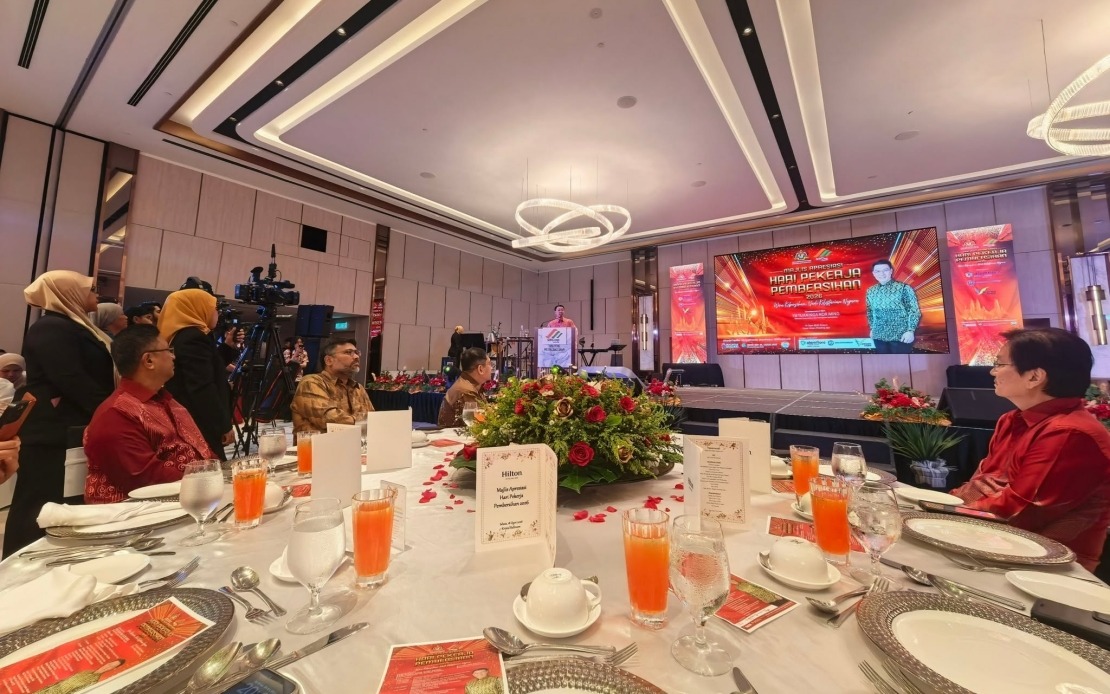
The Housing and Local Government Ministry (KPKT) has committed to nominating recipients of the 2026 Cleaning Workers Award for state honours, marking a significant expansion of recognition for one of the nation's most essential but often overlooked workforces. Minister Nga Kor Ming unveiled the initiative at the 2026 Cleaning Workers Appreciation Day event in Petaling Jaya, underscoring the government's determination to give formal acknowledgement to workers whose daily labour keeps Malaysia's public spaces habitable and hygienic.
The decision emerged from discussions between Nga and KPKT secretary-general Datuk Dr Wira M Noor Azman Taib, who agreed that award recipients deserved elevation to state honours status through nomination to respective state palaces for recognition by state rulers. This administrative advancement signifies a shift in how the government perceives the status and contribution of cleaning sector employees within Malaysia's formal honours framework. Deputy Housing and Local Government Minister Datuk Aiman Athirah Sabu was present at the announcement, underscoring ministerial consensus on the matter.
The expansion of honours recognition builds on an established foundation. Penang state government has practised honouring cleaning workers for nearly a decade, demonstrating the viability and value of formalised appreciation at state level. Nga acknowledged this precedent whilst arguing that the time had arrived for other states to adopt similar practices, ensuring that excellence and dedication in the cleaning sector receives consistent recognition across Malaysia's political landscape. The initiative reflects broader momentum toward elevating the status of workers whose contributions are frequently taken for granted.
The sector itself represents a substantial employment base. Currently, Malaysia's solid waste management and public cleansing industry employs 26,889 workers through various concessionaire companies. These figures belie the profound commitment evident across the workforce: many have served for over a decade, with some individuals dedicating nearly three decades to the sector. This longevity demonstrates not merely job tenure but genuine professional commitment to maintaining environmental standards despite conditions that frequently involve physical hardship and public invisibility.
Nga emphasised that cleaning workers occupy a critical position in Malaysia's infrastructure, maintaining the environmental quality, safety standards and livability that citizens depend upon daily. Yet their role remains largely performed behind the scenes, earning minimal public recognition despite profound societal importance. By formalising honours through state channels, the government seeks to rectify this recognition deficit and acknowledge that keeping a nation clean requires sustained professional effort and personal sacrifice.
However, the minister articulated a complementary thesis: that public cleanliness cannot rest solely upon the shoulders of professional cleaning workers. Instead, Nga framed sanitation as a collective responsibility requiring behavioural change across Malaysian society. This reframing proves essential for sustainable environmental management, as cleaning infrastructure cannot function effectively when public consumption patterns and disposal habits remain careless or disrespectful. The goal of achieving 'Malaysia Bersih, Rakyat Sejahtera' (Clean and Prosperous Malaysia) demands cultural transformation alongside infrastructure investment.
To reinforce this cultural shift, Nga directed the Solid Waste Management and Public Cleansing Corporation (SWCorp) to intensify enforcement of the Community Service Order (PKM), transforming penalty mechanisms into educational tools. As of August 17, enforcement efforts had yielded 14,807 offence notices throughout the year, with 548 individuals undergoing community service orders in states where Act 672 has been adopted. Of these, 419 have completed their obligations whilst 129 continue serving, suggesting meaningful implementation of this corrective approach.
The Community Service Order operates as more than punitive mechanism, Nga explained, functioning instead as an instrument for instilling discipline, personal responsibility and environmental consciousness. By requiring offenders to engage directly in cleaning and maintenance activities, the system creates experiential understanding of the labour involved in maintaining public spaces. This pedagogical dimension potentially generates lasting behavioural change more effectively than fines alone, addressing the root cause of littering by making individuals acutely aware of the consequences of casual environmental degradation.
At the Appreciation Day event itself, seven workers received the 2026 Cleaning Workers Award, distributed across two major service providers: two recipients from Alam Flora Sdn Bhd and five from SWM Environment Sdn Bhd. These individuals represent excellence within their organisations and sector more broadly. Additionally, three recipients received financial contributions as welfare support measures, reflecting government commitment to addressing the socioeconomic circumstances of workers whose compensation frequently falls below national averages despite the essential nature of their work.
The initiative carries significance for Southeast Asia's broader development narrative. Malaysia, as a regional economic leader, sets precedent through how it treats workers in essential but lower-wage sectors. Formalising honours for cleaning workers sends a powerful signal about valuing labour dignity and professional recognition irrespective of occupational status or social hierarchy. This approach contrasts with attitudes in some neighbouring economies where informal sector and sanitation workers remain largely invisible within formal recognition structures.
For Malaysian readers specifically, the initiative intersects with ongoing conversations about inclusive development, wage justice, and national identity. A developing nation seeking high-income status must address not merely GDP metrics but quality of life indicators and social cohesion. When citizens from all sectors feel their work receives proper acknowledgement and respect, social stability and public morale benefit tangibly. The cleaning workers' honours programme represents modest but meaningful progress toward recognising that national prosperity emerges through collective effort across all occupational strata.
Longer-term implications warrant consideration. If state honours nomination becomes routine for award recipients, the practice could evolve into permanent institutional recognition, potentially influencing how local authorities and private companies in the cleaning sector reward performance and loyalty. Enhanced formal recognition may gradually improve sector attractiveness for workers seeking stable employment with dignity components alongside compensation. As Malaysia confronts challenges of attracting and retaining skilled workers across sectors, demonstrating genuine appreciation for essential work may prove strategically important for workforce stability and public service quality.
The convergence of formal honours elevation, enforcement of community participation obligations, and welfare support represents a comprehensive policy approach to environmental cleanliness and worker dignity. Rather than relying exclusively upon workers to maintain standards, the government is attempting to reshape collective responsibility through multiple channels simultaneously: recognition and status elevation for workers, behavioural correction for littering offenders, and educational reinforcement of civic duty. Whether this integrated strategy achieves its intended transformation of Malaysian environmental culture and social attitudes toward cleaning workers will become apparent through implementation and sustained commitment across political cycles.

