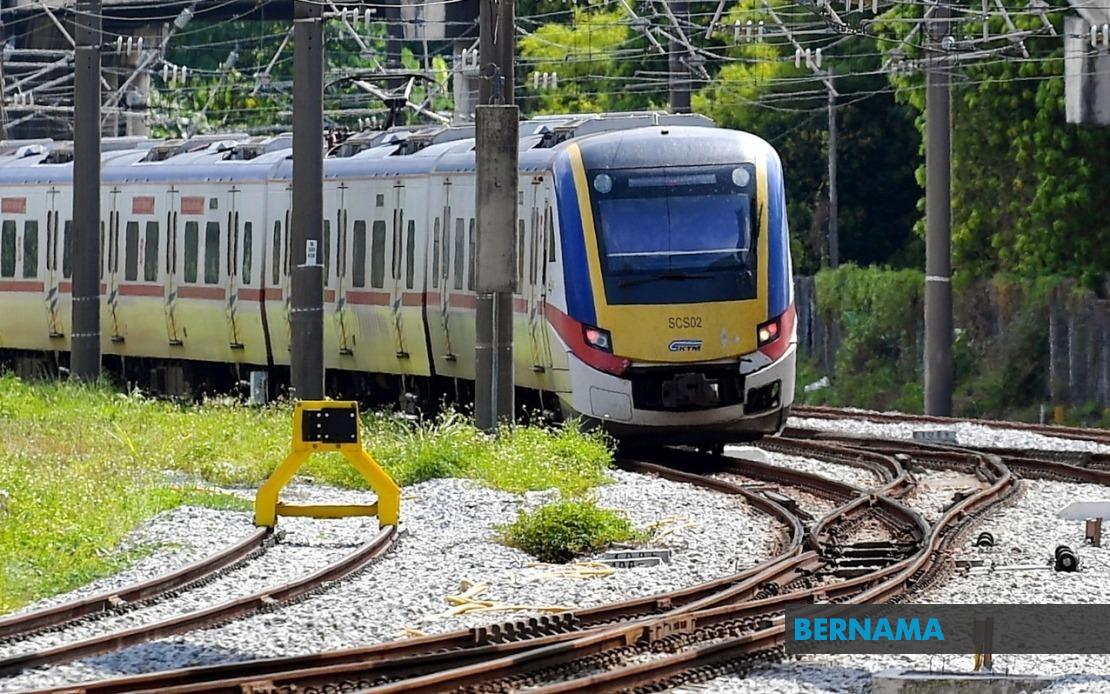
Keretapi Tanah Melayu Berhad (KTMB) is preparing for one of the year's busiest travel periods by substantially expanding its rail capacity across multiple services. The announcement comes as the country enters the school holidays and National Day celebrations, periods when intercity travel traditionally surges. The operator will introduce 124 additional services across its premium and standard electric rail offerings, collectively providing nearly 39,000 additional seats to accommodate the anticipated spike in passenger movement between August and early September.
The expanded service schedule represents a significant operational effort by KTMB to manage holiday-season congestion. The Electric Train Service (ETS), which forms the backbone of long-distance rail connectivity in Peninsular Malaysia, will see an additional 100 services deployed, furnishing 31,600 seats. These will operate across three distinct periods: August 21-23, August 28-31, and September 4-6, strategically timed to coincide with the school break windows and the National Day period. This phased approach allows KTMB to concentrate resources during peak demand intervals rather than spreading services uniformly across the month.
Complementing the ETS expansion, KTMB's premium Electric Multiple Unit (EMU) Plus service will add 24 more trains to its schedule, offering 7,344 additional seats. These supplementary EMU Plus services will operate selectively between August 21 and September 6, with an important operational enhancement: the extension of EMU Plus coverage to Bandar Tasik Selatan station. This expansion of the premium service corridor addresses growing commuter demand in the southern Klang Valley region and demonstrates KTMB's recognition that holiday travel patterns now encompass not just long-distance journeys but also intra-regional movements.
The northern rail corridor is not being neglected in this capacity expansion. On the Padang Besar-Butterworth-Padang Besar route, KTMB Komuter will introduce eight additional services during August 27-31, elevating the total daily service count to 46 trains on this crucial link. This particular route, which connects Malaysia's main gateway to Thailand through Padang Besar, typically experiences elevated traffic during holiday periods as travellers access cross-border destinations or begin their journeys to northern Malaysia. The augmented services underscore regional connectivity's importance in Malaysia's transport ecosystem, particularly during periods when leisure travel to northern destinations peaks.
Timing and accessibility have been prioritised in the roll-out strategy. Advance ticket sales for these additional services commenced through KTMB's official channels the day prior to the announcement, enabling intending passengers to secure seats early and plan their holiday movements with confidence. This early availability window is crucial during peak periods when popular time slots can sell out within hours. By opening sales immediately, KTMB minimises last-minute booking pressures and allows the operator to better forecast demand patterns and optimise resource allocation.
The capacity initiative arrives as KTMB celebrates a significant organisational milestone. The Electric Train Service, which inaugurated Malaysia's modern high-speed rail era when it launched on the Kuala Lumpur-Ipoh route on August 12, 2010, has now transported 44.3 million passengers cumulatively. The service's expansion trajectory mirrors Malaysia's growing intercity mobility: after establishing the Ipoh connection, the network reached Butterworth and Padang Besar in 2015, subsequently expanding southward with a scheduled extension at the end of 2025. These network expansions reflect long-term strategic planning to connect Malaysia's major population and economic centres.
Passenger statistics reveal the ETS's accelerating popularity among Malaysian travellers. During the January-July period of 2024, the service transported 3.67 million passengers, representing a robust 56 per cent increase compared to 2.36 million passengers during the corresponding months of 2023. This growth trajectory, occurring despite broader economic uncertainties and continued private vehicle ownership, suggests structural shifts in how Malaysians perceive intercity rail travel. The ETS's appeal appears rooted in reliability, comfort, and competitive pricing relative to alternative transport modes, particularly as road congestion intensifies during peak seasons.
Concurrently with the service expansion, KTMB mounted customer appreciation activities commemorating the ETS's 16th anniversary throughout August 10-14. These included voucher distributions, complimentary KFC meals at selected stations, free travel vouchers, and discount incentives of RM16 per ticket—a figure symbolising the 16-year milestone. Such promotional activities serve dual purposes: they reward loyal customers and generate goodwill that attracts new riders during peak travel periods. The strategy acknowledges that holiday travellers often include first-time or infrequent ETS users who may be swayed by promotional offers and positive brand experiences.
KTMB's Group Chief Executive Officer Datuk Azlan Shah Al Bakri positioned these capacity enhancements within a broader organisational narrative emphasising reliability and customer confidence. He attributed the ETS's sustained growth to consistent delivery of comfortable, dependable service—factors that resonant during periods when travellers face time pressures and seek transportation they can depend upon. His remarks linking the service's 16-year trajectory to strategic network expansion acknowledge that rail infrastructure development operates on multi-year timescales, with decisions made in 2009 determining service availability in 2024.
The expansion carries implications beyond immediate passenger convenience. At the macroeconomic level, improved intercity rail capacity supports Malaysia's tourism industry by facilitating domestic leisure travel and reducing bottlenecks that discourage regional movement. For commuters, the expanded capacity on northern routes represents acknowledgment that Malaysia's transportation challenges extend beyond rush-hour urban congestion to encompass holiday-season capacity management. For KTMB, the deployment of 124 additional services demonstrates operational flexibility—the capacity to surge services during predictable demand peaks rather than maintaining costly excess capacity year-round.
For Malaysian travellers planning holiday journeys, the expanded schedule offers tangible benefits: greater seat availability, reduced waitlist frustrations, and a broader spectrum of departure times to accommodate diverse travel preferences. Regional readers should note that the capacity expansion reflects a pan-Malaysian approach: while the ETS dominates the schedule, the inclusion of EMU Plus extensions to Bandar Tasik Selatan and komuter enhancements on the northern route indicate KTMB is responding to demand patterns across its entire portfolio. As Southeast Asian transport infrastructure continues evolving, Malaysia's railway operator demonstrates how strategic capacity management during predictable peak periods can enhance public transportation's competitiveness against alternative modes.

