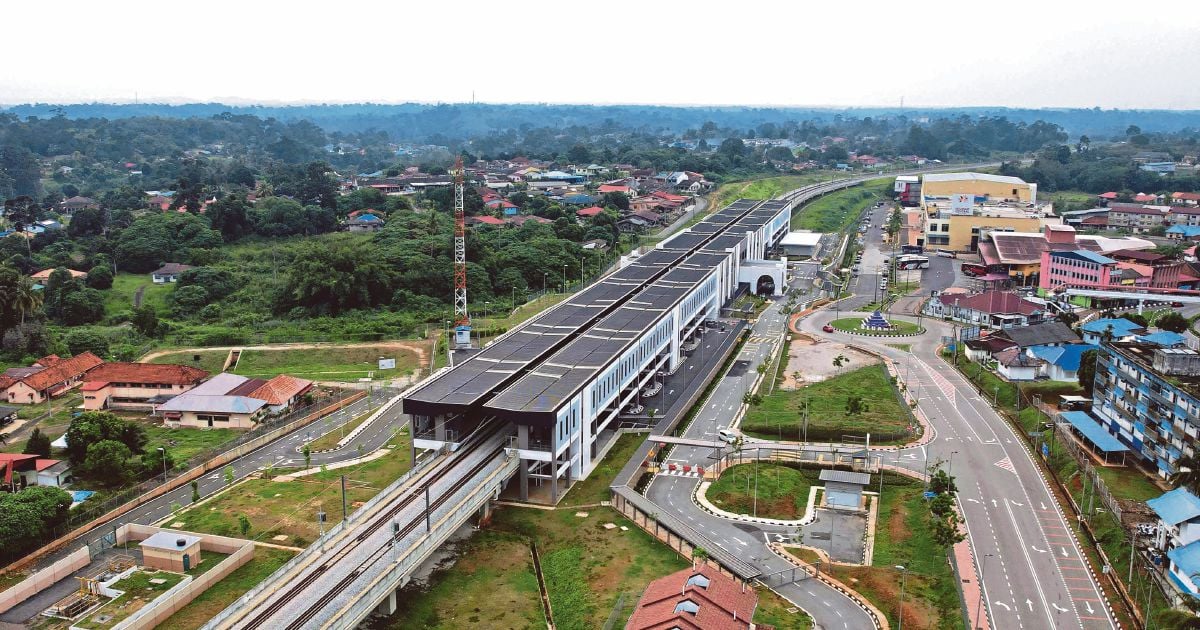
Keretapi Tanah Melayu Berhad (KTMB) has announced a significant expansion of rail services on the southern Electric Train Service corridor to accommodate heightened passenger demand stemming from the Johor state election scheduled for this weekend. The railway operator will inject 7,464 additional seats across its ETS network serving the southern sector, with the enhanced capacity reflecting operational preparations for voter movement between major urban centres and constituencies throughout the state.
The service expansion represents a coordinated logistics effort to ensure accessible transportation infrastructure during the electoral period. By deploying supplementary train slots on key southern routes, KTMB aims to reduce congestion and provide reliable connectivity for voters travelling to polling locations. The initiative underscores the critical role that public transport networks play in facilitating democratic participation, particularly across sprawling states like Johor where distances between residential areas and voting centres can be substantial.
Complementing the capacity increase, KTMB has implemented a temporary 20 per cent fare discount applicable exclusively to Johor voters utilising the ETS during the election weekend. The reduced pricing structure functions as both an incentive for public transport adoption and a practical subsidy recognising the additional travel costs that voters incur when participating in electoral processes. For commuters regularly using southern corridor services, the discount translates into meaningful savings, particularly for return journeys or multiple trips to voting centres.
The promotional fare adjustment requires voters to present valid identification during ticket purchase, establishing a straightforward verification mechanism. This approach balances accessibility concerns against administrative feasibility, avoiding complex documentation procedures that might deter participation. The discount applies across all ETS southern sector segments, ensuring equitable pricing regardless of journey origin or destination point within the eligible service area.
For Malaysian readers accustomed to relying on KTMB services, particularly those in the Klang Valley and southern Selangor regions with regular Johor commuting patterns, this initiative carries operational significance. Weekend ETS operations typically experience unpredictable demand fluctuations, and the pre-announced capacity expansion allows households planning election-related travel to access reliable service information. The transparency regarding additional train frequencies enables voters to schedule journeys with greater confidence, reducing uncertainty about seating availability.
Johor's geographical expanse and dispersed settlement patterns make election-day transportation coordination particularly important. Unlike more geographically compact states, Johor encompasses extensive rural districts, suburban municipalities, and urban concentrations across three distinct regions—the western coastal zone, central industrial corridor, and eastern coastal area. Public transport accessibility therefore becomes crucial in ensuring voters in peripheral constituencies face minimal logistical barriers to participation.
The rail infrastructure investment also reflects broader Southeast Asian patterns regarding election management and voter support. Regional democracies increasingly recognise that practical barriers—including transport availability and affordability—represent material obstacles to electoral participation. By addressing these constraints through targeted service provision, KTMB acknowledges that democratic processes depend not merely on formal rights but on infrastructure facilitating their exercise.
For transport operators across Malaysia and the region, this model demonstrates how public entities can contribute to democratic infrastructure without partisan involvement. KTMB's approach focuses on capacity and affordability rather than promoting particular candidates or parties, operating within a neutral framework that supports the electoral system itself. This distinction matters for maintaining institutional legitimacy and public confidence in transportation services.
The commercial implications deserve attention as well. Enhanced ETS utilisation during election weekends generates operational data and revenue patterns that KTMB can analyse for future service planning. Successful capacity deployment during high-demand periods provides empirical foundations for assessing network requirements during other peak-demand scenarios, from holiday periods to festival seasons and school holidays.
Beyond the immediate election period, the initiative raises questions about KTMB's baseline capacity allocation on southern routes. If current regular capacity proves insufficient to accommodate election-related demand without supplementary deployment, this suggests structural under-provisioning during non-election contexts. Sustainable regional transport planning might warrant examining whether southern corridor capacity reflects genuine demand patterns or represents chronic underinvestment relative to usage requirements.
Regional cohesion implications also emerge from this service expansion. By facilitating inter-district voter movement, KTMB infrastructure supports democratic legitimacy across Johor's dispersed geography. States encompassing multiple development zones and population centres depend on robust connectivity to ensure equitable electoral participation regardless of residential location. Rail services functioning reliably during election periods strengthen the material foundations for inclusive democratic participation across geographically divided territories.
The initiative additionally reflects evolving commercial relationships between public transport operators and electoral authorities. Rather than viewing election periods as disruptive anomalies, KTMB's proactive service expansion positions rail infrastructure as fundamental democratic infrastructure. This reframing potentially influences long-term investment decisions and operational priorities, gradually shifting how transport planning integrates electoral and civic participation requirements alongside routine commercial considerations.

