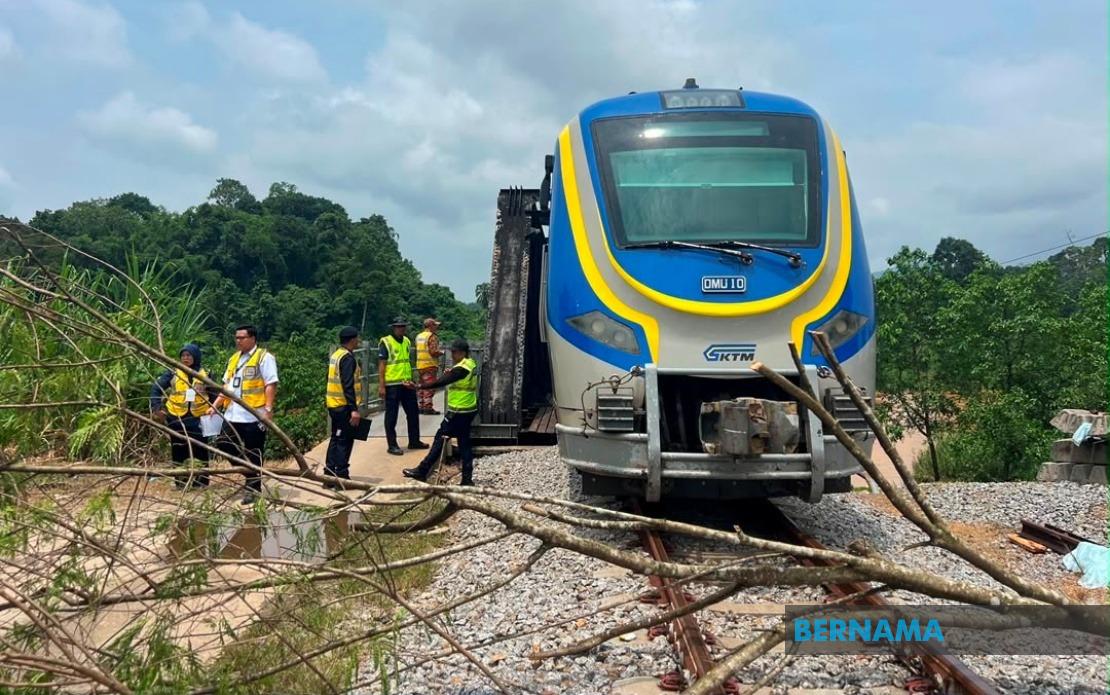
Keretapi Tanah Melayu Berhad (KTMB) has undertaken a comprehensive emergency training exercise along the EX-Kemubu railway route to stress-test its crisis management protocols in one of Malaysia's most challenging operational environments. The drill, held in Kuala Krai, brought together approximately 350 personnel representing 11 separate agencies to simulate real-world incident response scenarios under conditions that closely mirror the logistical constraints responders would face in an actual emergency. The training programme underscores KTMB's commitment to preparedness on routes that traverse remote terrain, where geographical isolation poses significant obstacles to rapid rescue mobilisation.
According to Khairul Naim Johdi, KTMB's Occupational Safety, Health and Environment general manager, the exercise concentrated on three interconnected operational pillars that collectively determine the success or failure of emergency response in remote areas: the speed at which rescue teams can physically reach an incident scene, the elapsed time between when KTMB reports an emergency and when rescue agencies commence active operations, and the clarity and timeliness with which critical information flows between the railway operator and external responders. The emphasis on these specific elements reflects the unique vulnerabilities of operating rail services through sparsely populated regions where conventional urban rescue infrastructure may not exist or may require substantially longer travel times to mobilise.
The EX-Kemubu corridor was deliberately selected as the training venue because its operational characteristics encompass multiple high-risk features that frequently converge in real emergencies. The route traverses areas adjacent to river systems, creating potential for water-related incidents, while its remote positioning relative to main road networks means that external rescue teams must navigate complex local geography to reach derailment sites or other emergencies. These combined factors create a realistic training environment that forces both KTMB personnel and partner agencies to confront the practical difficulties they would actually encounter during genuine crises, rather than conducting exercises in theoretically ideal conditions.
Khairul Naim emphasised that the post-exercise evaluation process would employ a rigorous analytical framework examining multiple performance indicators across participating agencies. This assessment methodology moves beyond simple pass-fail determinations, instead collecting detailed feedback regarding response time delays, the decision-making quality demonstrated by first responders, the effectiveness of access routes and entry procedures, and whether information dissemination occurred with sufficient speed and accuracy to enable coordinated action. This comprehensive approach allows KTMB and its partner agencies to identify not merely that problems exist, but specifically where in the response chain bottlenecks occur and what procedural or resource adjustments could improve future performance.
The participating agencies encompassed the full spectrum of Malaysia's emergency response infrastructure, including the Royal Malaysia Police for scene security and investigation, the Malaysian Fire and Rescue Department for rescue operations and hazardous material management, the Ministry of Health for medical triage and casualty care, the Malaysian Civil Defense Force for large-scale evacuation coordination, and the Department of Social Welfare for victim support and displaced persons management. This multi-agency structure reflects contemporary understanding that rail emergencies rarely fall within the exclusive domain of any single organisation, instead requiring seamless coordination among entities with distinct capabilities, command structures, and operational doctrines.
The training programme forms part of KTMB's broader, systematic approach to emergency preparedness across its four operational regions. The company conducts large-scale exercises annually, rotating the location among the regional divisions to ensure that all parts of the KTMB network receive thorough evaluation and that personnel in different regions benefit from direct exposure to major incident response procedures. Complementing these annual major drills, KTMB maintains a continuous schedule of smaller-scale training activities throughout the year, allowing railway staff to maintain and progressively develop their emergency competency without waiting for annual major exercises.
A critical challenge that the exercise addressed involves the inherent difficulty of rapid response in rural settings. As Khairul Naim noted, geographical isolation in Malaysian railway's rural segments fundamentally limits how quickly external resources can arrive at an incident location. The training therefore sought to identify practical means of improving response velocity within these physical constraints—not through unrealistic assumptions about access times, but through enhanced internal coordination mechanisms and earlier notification procedures. When KTMB staff can transmit incident information to the railway's operations control centre with minimal delay, and when that centre can immediately relay standardised incident details to external agencies, the effective response time improves measurably even when geographical distances remain unchanged.
Emergency preparedness within KTMB extends beyond the training exercises themselves to encompass the foundational elements that enable effective response when actual incidents occur. These elements include the development and continuous refinement of written emergency procedures that anticipate foreseeable scenarios, the systematic training of KTMB personnel in executing these procedures under stress conditions, the maintenance of technical skills among staff responsible for critical functions such as passenger evacuation, and the establishment of clear communication protocols that ensure information flows reliably to appropriate decision-makers. This multi-layered approach recognises that preparedness represents not a single initiative but rather an integrated system of procedures, training, equipment, and organisational culture.
The immediate crisis response chain on KTMB systems initiates when train crew or station personnel detect an emergency and contact the railway's operations control centre, staffed by controllers with authority to activate predetermined response protocols. Once the control centre acknowledges an incident report, it immediately alerts relevant external agencies using standardised notification procedures, providing essential details regarding incident location, type, severity assessment, and any immediate threats to passenger safety. This structured approach prevents the loss of critical information that might occur through uncontrolled communication channels and ensures that responding agencies receive consistent information rather than fragmented reports from multiple sources with varying situational understanding.
The Dabong to Kemubu route specifically represents one of KTMB's more operationally demanding segments, combining remote positioning with geographic features that complicate both normal operations and emergency response. The route serves communities that depend heavily on rail connectivity for access to urban centres, making service reliability particularly important to local populations. However, this important service function does not diminish the inherent challenges posed by the route's geography and isolation. By conducting the emergency training exercise specifically on this challenging segment, KTMB demonstrated its recognition that preparedness must address the company's most difficult operational environments rather than focusing disproportionately on routes where external support arrives more readily.
The multi-agency coordination demonstrated during the EX-Kemubu exercise has broader implications for Malaysia's broader infrastructure safety framework. Rail networks intersect with numerous communities and cross diverse geographic zones, meaning that competent emergency response requires precisely the kind of inter-agency cooperation that the exercise tested. As Malaysia's transportation infrastructure continues to expand and existing networks like KTMB serve increasingly diverse route portfolios, the ability to mount effective emergency responses in remote areas becomes progressively more important. The systematic training approach that KTMB has adopted provides a model potentially applicable to other transport operators managing routes through challenging geography.

