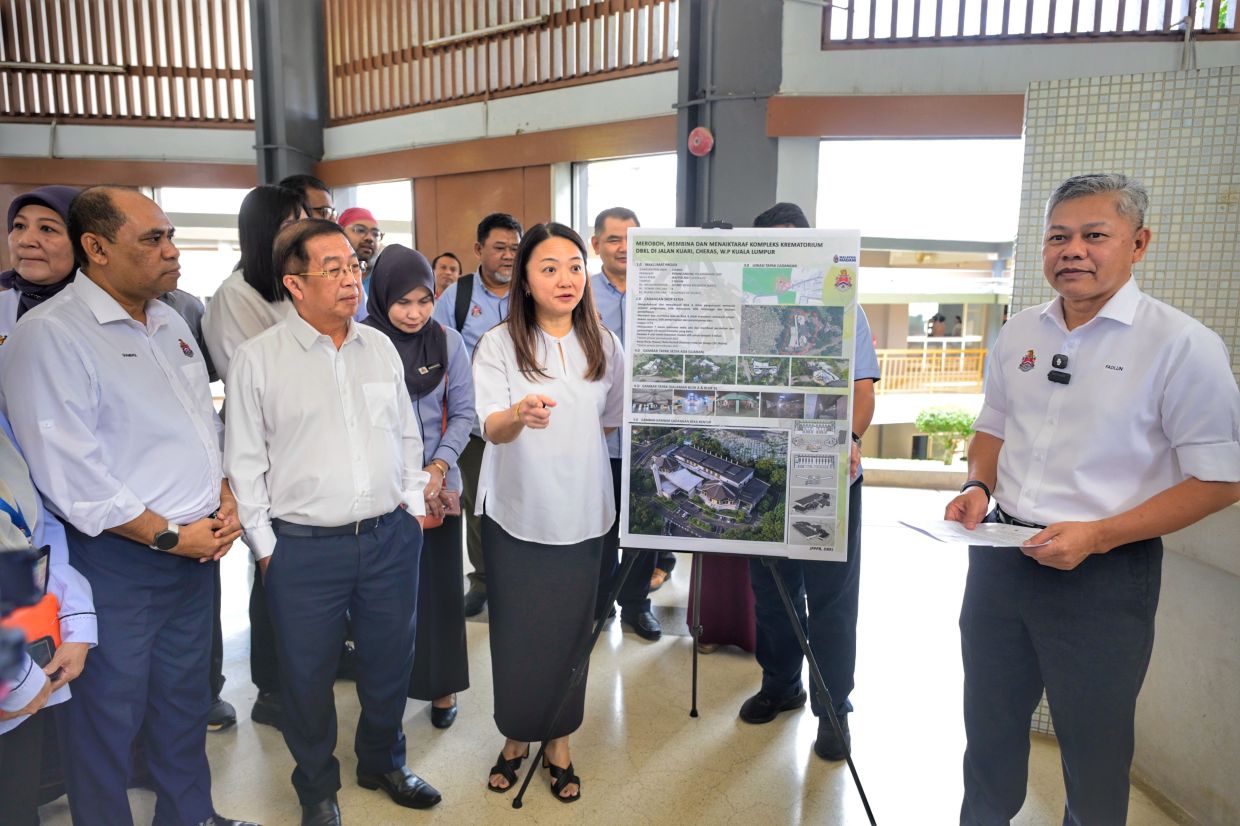
Kuala Lumpur City Hall has embarked on a substantial infrastructure modernisation programme centred on the crematorium facility in Cheras, committing RM45 million to enhance capacity and service quality for the city's growing non-Muslim population. The expansion initiative at the Jalan Kuari complex represents a strategic response to demographic pressures and evolving community expectations, officials confirmed during a site inspection this week. Mayor Datuk Seri Fadlun Mak Ujud outlined that the undertaking would introduce three additional cremation units alongside the facility's existing seven operational chambers, substantially increasing throughput capacity across the capital.
Scheduled to commence in February 2025, the enhancement programme will operate across a two-year implementation timeline, positioning full completion by early 2027. Critically, municipal authorities have engineered the construction phasing to maintain uninterrupted service delivery, pledging that four cremation units shall remain continuously accessible throughout the upgrading duration. This operational continuity commitment reflects City Hall's awareness that crematorium services require consistent availability, given their essential role within community death management protocols and cultural observance practices.
The Cheras facility has functioned since its establishment in 1977, serving as Kuala Lumpur's sole municipally operated crematorium installation across nearly five decades. Annual throughput data indicates the complex currently processes more than 5,800 cremations yearly, highlighting substantial and steady utilisation amongst the capital's diverse religious and cultural communities. The existing infrastructure, now approaching its half-century mark, has become increasingly strained by demographic expansion and urbanisation patterns across the Federal Territory, prompting this comprehensive renewal initiative approved under Malaysia's 13th national development strategy.
Representatives from multiple government tiers attended the inspection, including Hannah Yeoh, who holds the ministerial portfolio for Federal Territories within the Prime Minister's Department. Accompanying her was Cheras Member of Parliament Tan Kok Wai, who emphasised the temporal urgency surrounding the modernisation programme. Tan characterised the existing installations as inadequate given their age and the ongoing population expansion trajectories affecting Malaysia's administrative capital, stressing that expedited project execution would better serve constituent communities requiring such essential municipal services.
City Hall's investment philosophy, as articulated by the mayor, frames the crematorium expansion within broader municipal service enhancement frameworks responding to changing public expectations and demographic composition shifts. The RM45 million allocation reflects administrative recognition that infrastructure intended for specific community requirements demands periodic recalibration as urban populations evolve and diversify. The mayor positioned the initiative as emblematic of City Hall's commitment to maintaining service standards commensurate with contemporary urban demands rather than relying on outdated infrastructure inherited from previous development epochs.
Beyond the Cheras crematorium expansion, government representatives also addressed complementary infrastructure deficiencies affecting Kuala Lumpur's mortality management landscape. Hannah Yeoh disclosed that federal authorities are actively engaging counterparts within the Selangor state administration to identify and develop appropriate sites within Semenyih specifically designated for Muslim burial ground establishment. This parallel initiative underscores recognition across multiple government levels that Kuala Lumpur confronts acute spatial constraints limiting its capacity to develop additional cemetery infrastructure within municipal boundaries, a constraint that becomes progressively acute as the Federal Territory's Muslim population continues expanding.
The spatial limitations confronting Kuala Lumpur's burial infrastructure present significant medium-term governance challenges requiring inter-state cooperation mechanisms. Unlike cremation, which substantially reduces physical remains requiring long-term land occupation, conventional burial practices demand permanent ground allocation, creating heightened pressure on land-scarce urban jurisdictions such as the capital. The Selangor-Kuala Lumpur cemetery collaboration represents pragmatic administrative response to this geographic constraint, leveraging adjacent state territory to accommodate spillover demand from the capital's Muslim communities seeking culturally appropriate interment options.
For Malaysian citizens and expatriate communities resident within the Federal Territory, the crematorium expansion carries significant practical implications beyond mere capacity metrics. Extended operational hours and additional cremation units should diminish waiting periods and scheduling constraints that have increasingly characterised access to these essential services. Non-Muslim families managing death arrangements will encounter improved service availability and reduced administrative friction, particularly during peak demand periods coinciding with seasonal mortality fluctuations or cultural observance calendars.
The RM45 million investment also reflects broader municipal fiscal priorities and developmental sequencing within City Hall's strategic planning frameworks. Inclusion within the 13th Malaysia Plan indicates federal and local alignment regarding infrastructure investments targeting specific demographic constituencies, suggesting renewed policy recognition that diverse urban populations require proportionate municipal service provision across religious and cultural domains. This budgetary commitment to crematorium enhancement carries symbolic significance beyond mere infrastructure provision, communicating governmental acknowledgement of non-Muslim community presence and their legitimate claims upon municipal resources and service capacity.
Looking forward, the successful execution of the Cheras crematorium expansion programme may establish precedential frameworks for addressing analogous infrastructure deficiencies affecting other community service domains across Kuala Lumpur. The planning and implementation methodology adopted for this project—maintaining operational continuity whilst executing major facility expansion—demonstrates municipal governance maturation and administrative capacity development. Should the programme achieve its stated timeline and operational objectives, the expanded facility will position Kuala Lumpur more favourably to accommodate demographic growth trajectories anticipated across the coming decade, reducing service pressure and ensuring that essential death management infrastructure remains adequate relative to evolving population composition and scale.

