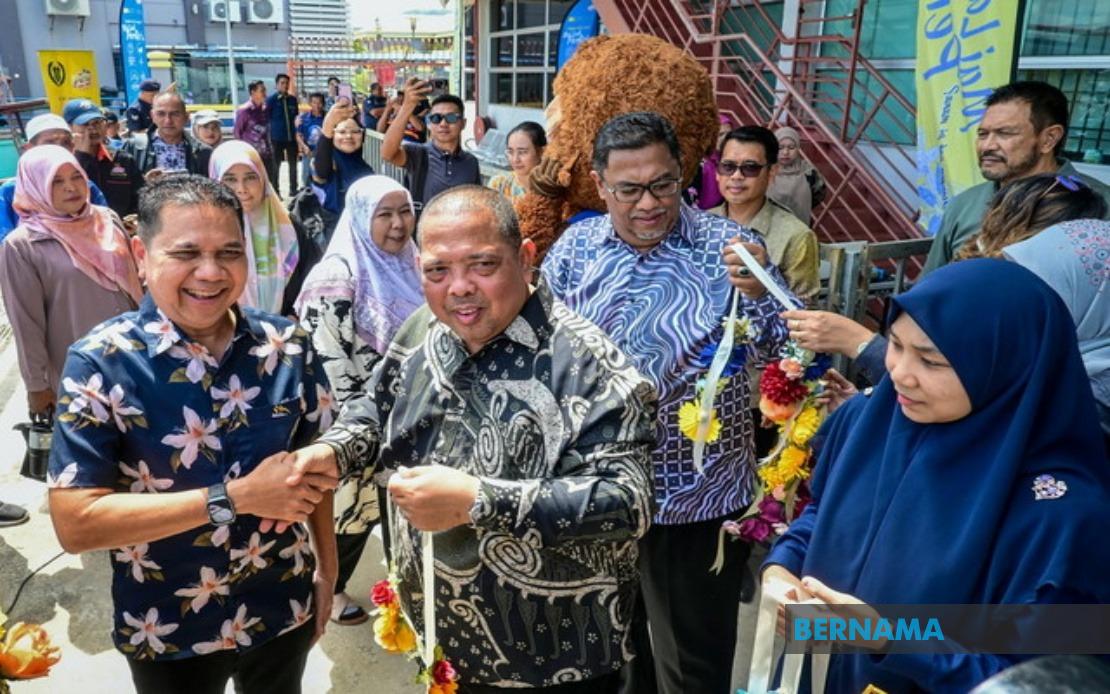
Perlis is banking on the resumption of its maritime link with neighbouring Thailand to accelerate tourism growth, with state officials projecting visitor numbers between 5.5 million and six million for the year following the reopening of the Kuala Perlis-Satun ferry service. Menteri Besar Abu Bakar Hamzah welcomed the return of direct sea connectivity on July 9, describing the development as a catalyst for economic activity in a region that had remained cut off since the COVID-19 pandemic halted cross-border operations.
The 40-minute journey across the Straits of Malacca offers more than convenience—it represents a strategic repositioning of Perlis within the regional tourism landscape. Where previously travellers faced limited options for crossing into Thailand's Satun province, the ferry now provides a direct alternative to road routes through Padang Besar. This shift is particularly significant for leisure tourists seeking scenic coastal experiences, as the crossing affords passengers views of the Malaysian and Thai coastlines that road transport cannot replicate. The accessibility of the route is expected to attract Thai shoppers to Kuala Perlis and surrounding commercial zones, creating retail opportunities for local merchants while simultaneously drawing Malaysian tourists across the border.
Beyond immediate tourism metrics, Abu Bakar emphasised the diplomatic dimensions of reopening the route. The ferry service strengthens people-to-people connections between Perlis and Satun, two border regions that share historical ties and geographic proximity. By facilitating easier movement, the initiative reinforces bilateral cooperation between Malaysia and Thailand at the grassroots level, allowing communities on both sides to engage in cross-border commerce and cultural exchange. This type of connectivity often yields intangible benefits—improved bilateral relations, reduced border tensions, and mutual recognition of shared economic interests.
The resumption arrives at a time when congestion at traditional border crossings has become a chronic issue. Padang Besar, the primary land checkpoint between the two countries, experiences severe bottlenecks during school holidays and major festivities. By introducing a maritime alternative, Perlis can distribute traveller flow more evenly across entry points. This decentralisation of border traffic alleviates infrastructure strain at Padang Besar while creating new revenue streams through ferry operations. The state government has calculated that reduced congestion translates into faster processing times, improved traveller satisfaction, and higher throughput capacity during peak seasons.
However, the state's ambitions extend far beyond the current ferry arrangement. Abu Bakar revealed that the government is installing a floating pontoon at Kuala Perlis Ferry Terminal to address a persistent operational constraint: fluctuating water levels and shallow waters that have historically limited berthing options. This engineering solution reflects pragmatism in confronting natural geographic challenges that have long complicated maritime operations in the region. The pontoon will provide flexible mooring infrastructure that adapts to tidal variations, ensuring year-round operability regardless of seasonal changes.
More ambitiously, state authorities are exploring reactivation of the Roll-on/Roll-off service, which would allow vehicles to be driven directly onto ferries—a capacity that would dramatically increase the throughput of both passenger vehicles and commercial cargo. This upgrade would transform Kuala Perlis from a passenger-centric gateway into a serious logistics hub serving cross-border commerce. Businesses trafficking goods between Malaysia and Thailand would gain a faster, potentially cheaper alternative to land routes, with implications for regional supply chains and trade patterns.
The most transformative proposal under consideration is a RM500 million bridge project extending approximately two kilometres into the sea. Such infrastructure would permanently resolve shallow navigation channel issues that have constrained maritime access and fundamentally alter connectivity between the two nations. A bridge of this scale would represent one of the largest infrastructure investments in Perlis's recent history, signalling governmental commitment to positioning the state as a premier cross-border economic zone. The project remains in discussion stages with potential investors, suggesting that implementation timelines remain uncertain and financial viability assessments are ongoing.
These infrastructure plans must be understood within the context of Perlis's economic development strategy. As one of Malaysia's smaller states with limited industrial base, tourism and cross-border commerce represent critical revenue sources. The ferry initiative directly addresses this need by capitalising on geographic advantage—Perlis's proximity to Thailand—to generate visitor spending and facilitate trade. Success hinges not merely on tourist arrivals but on converting visits into spending through competitive retail offerings, hospitality services, and attractions that justify the journey across the straits.
For regional observers, the Kuala Perlis-Satun resumption exemplifies how ASEAN countries are gradually restoring cross-border connectivity following pandemic disruptions. Similar initiatives across Southeast Asia—from reopened river crossings to expanded air routes—reflect governments' recognition that regional integration drives prosperity. Perlis's experience offers a case study in leveraging geographic position and bilateral relations to create localised economic growth while contributing to broader regional cohesion.
Looking forward, the trajectory from current ferry operations toward potential bridge construction represents a long-term vision of infrastructure development. Early success of the ferry service will provide crucial data on demand, economic impact, and feasibility of larger-scale projects. Tourist arrival figures and spending patterns over the coming months will inform investment decisions on the floating pontoon and ferry terminal upgrades. Should these intermediate improvements deliver anticipated returns, the bridge proposal—ambitious though it appears—may transition from exploratory discussions to serious project planning. For Perlis, the maritime route to Thailand has reopened not merely as a transportation link but as a foundation upon which to build sustained economic expansion and deeper integration with its Thai neighbour.

