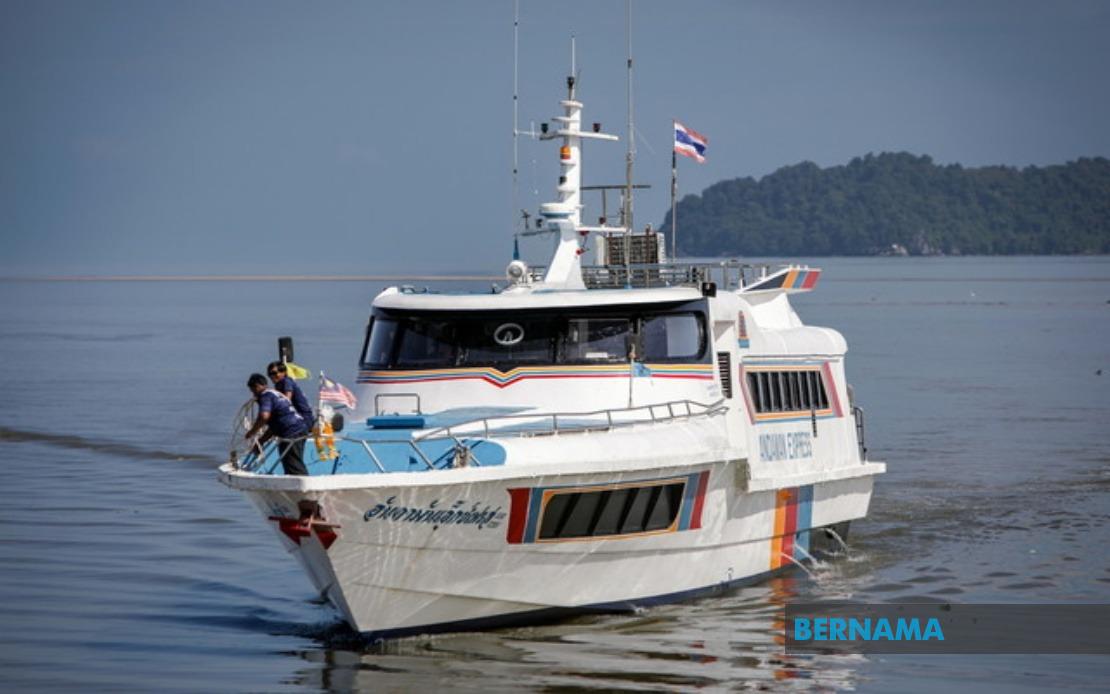
The maritime link between Kuala Perlis and Satun is poised to reopen this Thursday following an extended suspension caused by the COVID-19 pandemic. The resumption marks a significant moment for bilateral cooperation in the northern region, where officials anticipate the restored crossing will energise tourism flows and generate fresh economic opportunities for communities on both shores of the Andaman Sea.
Perlis Menteri Besar Abu Bakar Hamzah announced the development after witnessing a comprehensive simulation of ferry operations at Tammalang Jetty in Satun. The trial run validated that all operational systems function reliably and that both Malaysian and Thai authorities have completed their respective preparations. Officials expressed confidence that the service would commence smoothly and establish a foundation for sustained cross-border movement.
The reinstatement of this sea route carries implications beyond mere transport logistics. Abu Bakar outlined an ambitious vision centred on leveraging the three major geopark designations in the vicinity—the Perlis Geopark, Satun UNESCO Global Geopark, and Langkawi UNESCO Global Geopark. By coordinating tourism initiatives across these heritage sites, the three jurisdictions can craft compelling regional packages that attract international visitors and distribute economic benefits throughout the corridor.
To advance this collaborative framework, officials plan to establish a dedicated committee drawing representatives from Perlis, Satun, and Langkawi. Such institutional arrangements are essential for harmonising promotion strategies, aligning infrastructure investments, and resolving operational challenges that inevitably arise when multiple administrations coordinate tourism development. The committee structure signals long-term commitment rather than a temporary arrangement, suggesting stakeholders view the ferry link as foundational to the region's future positioning.
Operational details underscore a measured approach to service expansion. The ferry will begin with a single daily sailing, allowing operators and authorities to monitor performance, address bottlenecks, and build passenger confidence during an initial phase. Once demand justifies expansion, frequency will increase incrementally. This conservative scaling strategy minimises disruption risk while providing flexibility to adjust to market conditions—a pragmatic approach for a route that has been dormant for three years.
Fare competitiveness represents another critical consideration. Abu Bakar indicated that the Perlis state government is engaging ferry operators to ensure pricing remains attractive relative to alternative transport options. Discussions also encompass promotional discounts during the launch period, a conventional strategy for stimulating trial usage among potential travellers who might otherwise default to established routes. The balance between commercial viability for operators and affordability for passengers requires continuous adjustment.
Physical infrastructure upgrades are proceeding simultaneously with service preparation. The Kuala Perlis Roll-on-Roll-off Terminal is undergoing enhancements, including construction of a dedicated route to streamline ferry operations and reduce turnaround times. These improvements address capacity constraints and operational inefficiencies that plagued the terminal previously, transforming it into a facility capable of handling modern ferry volumes reliably.
Regulatory compliance has been thoroughly executed. Malaysian authorities—spanning the Royal Malaysian Customs Department, Malaysian Immigration Department, Marine Department, and security agencies—have aligned their procedures with Thai counterparts to facilitate seamless passenger and cargo processing. This bilateral harmonisation of documentation, screening, and clearance protocols represents substantial preparatory work that occurs largely invisibly but proves essential for reliable cross-border operations. The absence of regulatory friction directly influences whether travellers perceive the crossing as convenient or cumbersome.
For Malaysian stakeholders, the ferry reopening addresses a strategic gap in the northern region's tourism infrastructure. Perlis and Langkawi have invested considerably in developing their respective tourism products, yet they have remained geographically isolated from Satun's attractions. The ferry creates a natural tourism triangle, enabling visitors to combine experiences across three distinct geopark environments within a single itinerary. This connectivity multiplier effect amplifies the appeal of the entire region.
The timing coincides with global travel recovery, as international tourists increasingly resume cross-border journeys. Southeast Asian destinations particularly benefit from intra-regional mobility improvements, as shorter journeys between proximate attractions attract budget-conscious and time-limited travellers. A functioning Kuala Perlis-Satun link taps into this demand pattern while deepening bilateral relationships in the Andaman region.
Thailand gains reciprocal benefits through enhanced access to Malaysian tourism assets, particularly Langkawi's established reputation as a regional destination. For Satun, which remains less developed tourism infrastructure than many Thai destinations, the Malaysian connection opens revenue streams and employment opportunities. Cross-border tourism cooperation thus serves mutual economic interests rather than favouring either nation disproportionately.
The successful simulation and administrative coordination evident in Abu Bakar's statements suggest the reopening will proceed as scheduled. However, sustainable success depends on maintaining political will across multiple administrations, continuing infrastructure maintenance, managing seasonal demand fluctuations, and adapting to evolving travel patterns. The initial Thursday departure will be symbolically important, but the true test emerges over subsequent months as the service proves its capacity to deliver reliable, cost-effective transportation that attracts consistent passenger volumes.

