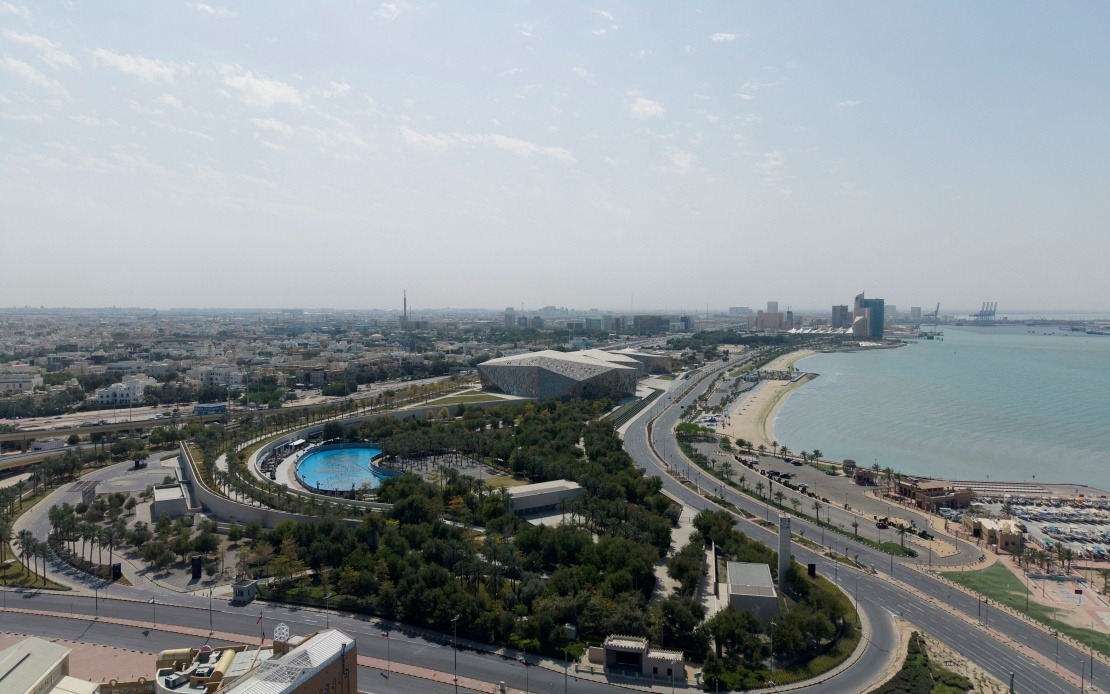
Kuwait's armed forces mobilised their air defence capabilities in the early hours of Wednesday in response to what military authorities characterised as deliberate drone incursions originating from Iran. The deployment marked the latest flare-up in a pattern of military exchanges that has gripped the strategically vital Persian Gulf region, where global energy supplies and international commerce depend on precarious security arrangements.
Kuwaiti officials acknowledged that residents across various parts of the country would likely hear explosive sounds, attributing these to active interception operations against incoming unmanned aircraft. The military urged the public to adhere strictly to safety directives issued by designated authorities, an indication of the genuine threat posed by the aerial incursions. The announcement reflected the seriousness with which Kuwait's defence establishment views the situation, recognising that civilian populations needed reassurance and clear guidance during the unfolding incident.
Emergency services in Kuwait had previously managed a fire at an unspecified location that authorities attributed to the Iranian attack. Though firefighters successfully contained the blaze, the government refrained from publicly identifying the targeted site or disclosing further operational details. This discretion, common in Gulf military circles during active crises, leaves significant questions about the strategic significance of the location and the potential damage sustained, though the absence of reported casualties offered some reassurance.
Bahrain, Kuwait's smaller Gulf neighbour, simultaneously activated its civil defence apparatus in parallel response to the regional threat. The Interior Ministry activated air raid sirens and issued directives for residents and expatriate populations to seek shelter at designated safe locations. This coordinated emergency response across two distinct Gulf states underscores the broad geographical reach of the Iranian military action and the interconnected nature of security challenges throughout the region.
Bahrain's Defence Force had previously announced the successful interception and destruction of what it characterised as unprovoked Iranian aerial operations on Tuesday, suggesting this latest activity represents either a continuation or escalation of a coordinated campaign. The terminology employed by both Kuwaiti and Bahraini officials—describing the operations as treacherous and hostile—reflects the inflammatory language increasingly dominating military communications in the Gulf, with little diplomatic softening.
The immediate trigger for these developments lies in the deteriorating relationship between the United States and Iran over control and shipping security in the Strait of Hormuz, one of the world's most critical maritime chokepoints. American military forces have conducted strikes against Iranian targets, prompting Iranian counter-attacks against American bases distributed throughout the region. This cycle of attack and retaliation has created a volatile environment where miscalculation risks triggering wider conflict.
Notably, Pakistan reportedly attempted to broker a memorandum of understanding between Washington and Tehran aimed at de-escalating tensions and establishing a sustainable peace framework. However, the continued military exchanges suggest that such diplomatic efforts have failed to gain meaningful traction with either party, indicating fundamental disagreements about acceptable terms and red lines. The persistence of hostile actions despite these mediation attempts reflects the deep strategic competition underpinning US-Iran rivalry.
For Malaysia and other Southeast Asian nations, these Gulf developments carry significant implications. The region's stability directly affects regional energy security, given that substantial quantities of crude oil transiting through the Strait of Hormuz eventually reach Asian markets, including Malaysia. Any prolonged conflict or closure of shipping lanes would disrupt energy supplies and trigger global price spikes, reverberating through regional economies already navigating inflationary pressures.
The broader pattern of escalation also raises concerns about the potential involvement of other regional actors. Saudi Arabia, the United Arab Emirates, and other Gulf Cooperation Council members face their own security calculations regarding Iranian capabilities and intentions. Should tensions further deteriorate, the regional balance of power could shift dramatically, potentially drawing additional nations into active conflict or prompting new alliance formations that reshape geopolitical alignments across the wider Middle East.
Furthermore, the demonstrated Iranian capability to conduct coordinated drone operations across multiple targets simultaneously demonstrates technological advancement that regional military planners must factor into their strategic assessments. These capabilities extend well beyond direct threats to Gulf states, potentially affecting shipping security throughout the Indian Ocean region where Malaysian and Southeast Asian commercial interests concentrate.
The use of unmanned systems as the weapon of choice reflects a deliberate Iranian strategy to inflict damage while maintaining some operational deniability and controlling escalation intensity. Drone attacks offer precision targeting with reduced risk to Iranian personnel, representing a calculated approach to signalling resolve without triggering the kind of overwhelming conventional response that overt air strikes might provoke.
Moving forward, the international community faces the challenge of preventing further escalation while addressing underlying disputes between Washington and Tehran. For regional stability and global economic interests, de-escalation mechanisms must prove more effective than current mediation efforts, requiring genuine diplomatic engagement and realistic compromise from both sides rather than continued military posturing.

