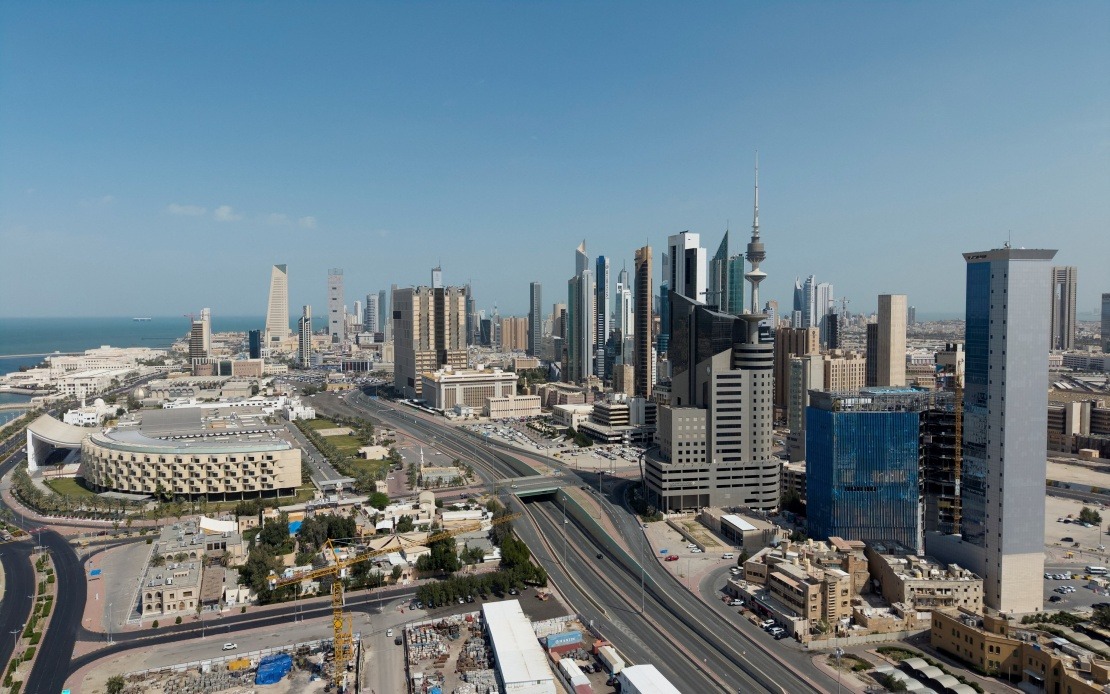
Kuwait has established a substantial emergency financing mechanism worth US$100 million to address infrastructure damage sustained during the escalating military confrontation between Iran and Western forces, reflecting growing alarm across the Gulf region over security threats and their economic consequences. The Kuwait Emergency Response Fund, initiated by the Kuwait Fund for Arab Economic Development (KFAED), represents a strategic shift towards institutionalising disaster response capabilities and strengthening the nation's capacity to manage future crises, according to Foreign Minister Sheikh Jarrah Jaber Al-Ahmad Al-Sabah.
The initiative emerged as the Gulf state grapples with the fallout from February's military exchanges, when coordinated strikes by the United States and Israel triggered an Iranian retaliation involving ballistic missiles and unmanned drones. These attacks, directed at Israeli and American military installations across the region, underscored the vulnerability of neighbouring states to collateral damage and demonstrated the practical need for rapid reconstruction mechanisms. Kuwait's decision to establish this dedicated fund signals acknowledgement that the conflict landscape has fundamentally shifted, necessitating permanent institutional arrangements rather than ad-hoc responses.
According to Acting Director General Waleed Al-Bahar of the KFAED, the fund's creation implements a cabinet-approved strategy designed to evaluate incoming financing applications systematically and allocate resources to projects based on priority assessment. This structured approach differs markedly from emergency measures hastily improvised during crises, instead embedding conflict response into Kuwait's development infrastructure. The KFAED, long established as Kuwait's primary instrument for extending economic support throughout the Arab world, now shoulders dual responsibility for both regional development assistance and domestic emergency reconstruction.
The establishment of this facility carries significant implications for how Gulf Cooperation Council states approach infrastructure resilience. Kuwait's vulnerability stems partly from geography—situated on Iraq's southern border and across the Persian Gulf from Iran—rendering it exposed to military escalation across multiple potential conflict vectors. By creating a dedicated institutional framework rather than relying on general treasury allocations, Kuwait demonstrates recognition that such crises may recur with increasing frequency, necessitating permanent financial architecture.
The fund explicitly invites contributions from both government institutions and private sector entities, effectively converting the initial US$100 million into a seed amount designed to attract additional capital. This approach mirrors how multilateral development institutions mobilise resources through matching funds and co-financing arrangements. Kuwaiti authorities appear to hope that private companies with stakes in infrastructure reconstruction, alongside government agencies responsible for critical facilities, will voluntarily contribute, creating a broader financing base.
For Malaysian readers and observers across Southeast Asia, Kuwait's initiative offers instructive lessons regarding infrastructure protection in volatile geopolitical environments. While Southeast Asian nations occupy a different strategic position than Gulf states, regional disputes over maritime boundaries and resource competition create similar imperatives to strengthen resilience against potential conflict spillovers. The Strait of Malacca's critical importance to global shipping means that any significant military escalation in the Middle East or Indian Ocean could disrupt supply chains affecting Malaysian ports and trade corridors.
Kuwait's decision also reflects broader patterns in how wealthy Gulf states respond to security challenges through financial and institutional innovation rather than military escalation. Rather than adopting confrontational postures, the country has chosen to focus its newly-mobilised resources on reconstruction capacity, implicitly signalling that preparedness and resilience matter more than aggressive posturing. This strategic choice carries diplomatic overtones, particularly as Kuwait seeks to maintain balances between various regional and international powers.
The fund's structure allows the KFAED to assess applications from government agencies and private entities seeking financing for damaged or threatened infrastructure projects. This mechanism enables prioritisation based on strategic importance and economic impact, ensuring that limited capital flows toward projects offering greatest national benefit. Unlike conventional lending arrangements, emergency response funds typically feature streamlined approval processes and flexible repayment terms, essential characteristics when time-sensitive reconstruction efforts face tight deadlines.
Geopolitical tensions show no signs of dissipating, particularly given ongoing Israeli-Iranian friction and American military positioning throughout the Gulf. Kuwait's creation of permanent institutional structures for emergency response essentially acknowledges this uncomfortable reality, treating conflict-related damage not as exceptional circumstance but as recurring feature of contemporary geopolitical landscape requiring permanent mechanisms. This frank assessment differentiates Kuwait's approach from earlier assumptions that conflict represented temporary disruption requiring temporary fixes.
The fund's launch also carries implications for how Gulf states coordinate response efforts. While oil-rich nations possess substantial financial resources, institutional capacity and speed of implementation often determine whether reconstruction efforts succeed or falter. By establishing clear procedures and governance structures, Kuwait positions itself to respond more effectively to future crises while potentially offering institutional models that other vulnerable states might adopt. Regional coordination through organisations like the GCC could eventually evolve to include shared emergency infrastructure funds pooling resources across member states.
Looking forward, the success of Kuwait's emergency fund will depend substantially on whether private sector participation materialises at anticipated levels. Companies operating in construction, engineering, and infrastructure sectors stand to benefit directly from reconstruction contracts, creating financial incentives for contribution. However, macroeconomic pressures affecting Gulf economies, including oil price volatility and diversification challenges, may constrain corporate capacity to contribute additional capital beyond government commitments.
For international observers, Kuwait's initiative demonstrates how developing nations increasingly adopt financial engineering and institutional innovation to manage security risks beyond their direct control. Rather than merely accepting vulnerability to external conflict, Kuwait has constructed mechanisms enabling rapid response and reconstruction, transforming passive exposure into active management. This approach, while distinct from preventive diplomacy or military deterrence, recognises that in contemporary geopolitics, resilience and reconstruction capacity constitute legitimate strategic assets warranting substantial public investment.

