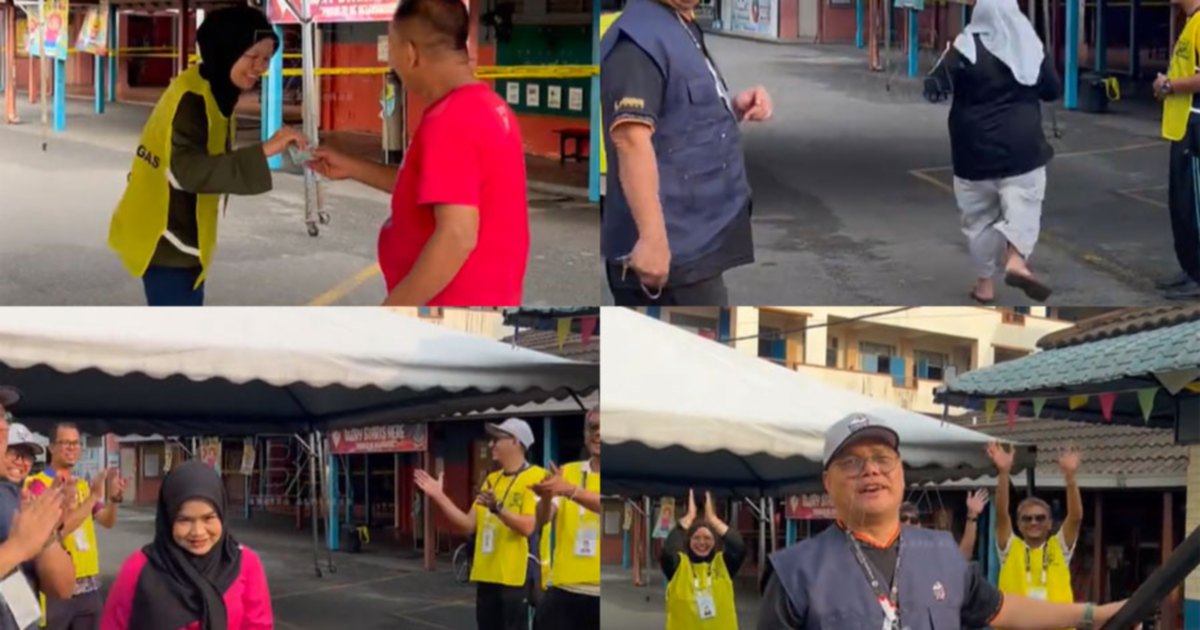
The closing hours of the Negri Sembilan state election produced scenes that would quickly captivate Malaysian social media users: a video capturing desperate voters sprinting to reach polling stations before the 6pm deadline went viral, underscoring the commitment some citizens showed in exercising their democratic right despite time pressure.
The footage, which spread rapidly across platforms, documents the palpable urgency that gripped electoral venues as the final bell approached. Voters can be seen hurrying through crowded queues, anxious to complete their civic duty before poll workers shut the doors. The video's rapid circulation reflects broader Malaysian interest in electoral engagement and the challenges voters face when attempting to participate in state elections.
This dramatic conclusion to voting in Negri Sembilan raises important questions about electoral accessibility and the practical difficulties faced by ordinary Malaysians attempting to cast ballots. While the video captures a single moment, it illustrates the broader logistical pressures that elections place on voters who may have limited flexibility in their schedules. Working Malaysians, particularly those in urban areas or further from polling stations, often struggle to balance employment obligations with their voting responsibilities, and the 6pm cutoff creates genuine constraints for participation.
The viral nature of this content speaks to how Malaysians increasingly engage with electoral processes through digital media. Rather than relying solely on news broadcasts or newspapers, citizens now share and discuss voting experiences through social platforms, creating a participatory documentary of election day. This grassroots documentation can amplify awareness about voting accessibility issues and may influence how election authorities plan future polling procedures.
Negri Sembilan's state election has been significant for Malaysian political dynamics, representing an important electoral test in a region with considerable strategic importance. The state's political landscape has evolved considerably, and voter participation rates remain a crucial metric for assessing public engagement with state-level governance. When citizens face time constraints that prompt them to rush, it raises concerns about whether election administration fully enables universal suffrage in practice.
State election commissions across Malaysia have struggled with the balance between accommodating voter convenience and maintaining electoral security and efficiency. The 6pm closure time, while providing a clear deadline, necessarily excludes those who cannot reach polling stations within standard business hours. This is particularly challenging for shift workers, rural voters with long commutes, and parents managing family responsibilities. Some regional observers have noted that several democracies have experimented with extended voting windows or early voting periods to address similar concerns.
The Negri Sembilan video also highlights broader conversations about voter participation patterns in Malaysian state elections, which typically record lower turnout than federal elections. When potential voters perceive that voting is difficult to accomplish within their daily schedules, participation may decline, potentially skewing results towards those with greater flexibility. Election authorities face competing priorities: maintaining procedural clarity while simultaneously removing barriers to participation.
From a Malaysian governance perspective, such viral moments serve an important function beyond entertainment value. They bring visibility to practical electoral challenges that might otherwise remain invisible to policymakers and the general public. When hundreds of thousands of Malaysians share and discuss voting difficulties through social media, it creates political pressure for reform and encourages authorities to consider adjustments to future procedures.
The incident also reflects the democratic spirit present in Malaysian society, where despite frustrations with the electoral system or political circumstances, significant numbers of citizens remain motivated to vote. This commitment to participation, even when constrained by scheduling pressures, suggests that removing administrative barriers could further strengthen democratic engagement and produce even higher voter turnout across the country.
As Malaysia continues to refine its electoral processes and contemplate potential reforms, incidents like the Negri Sembilan rush serve as useful reminders of ground-level realities. Policymakers reviewing election administration might consider whether modified polling hours, additional voting locations, or extended voting periods could accommodate more voters without compromising security or integrity. Other Commonwealth democracies have adopted such measures with considerable success.
The viral video ultimately documents something more significant than merely a deadline-driven scramble: it captures ordinary Malaysians' determination to participate in their state's democratic processes despite practical obstacles. This underlying commitment to engagement provides a foundation upon which more accessible and user-friendly electoral systems could be built, potentially unlocking even greater participation rates and stronger democratic legitimacy in future state elections across the country.

