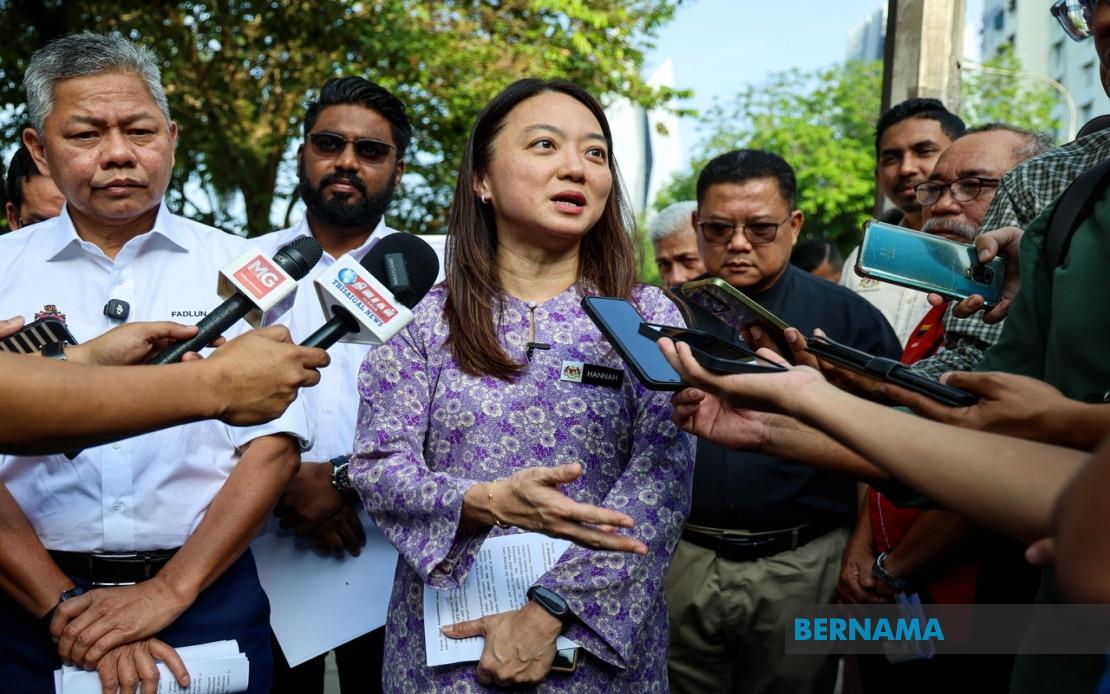
Hannah Yeoh, the Minister in the Prime Minister's Department (Federal Territories), has issued a pointed reminder to all local authorities across Malaysia to adopt a more proactive stance on maintaining public infrastructure, especially in high-profile tourism destinations such as Putrajaya. Speaking after inspecting a hawker facilities upgrading project near the Urban Transformation Centre in Sentul, the minister emphasized that basic maintenance and cleanliness standards should be treated as ongoing operational responsibilities rather than reactive measures triggered by public backlash on social platforms.
The minister's intervention comes in response to recent complaints from Malaysian internet users regarding deteriorating conditions in public spaces within Putrajaya, including damaged lifts and escalators that had drawn criticism online. Rather than defending the status quo, Hannah Yeoh directly acknowledged the failings and signaled that her ministry had already initiated contact with Putrajaya Corporation leadership to commence necessary repair works. This acknowledgment reflects growing governmental recognition that public facilities in premier locations cannot afford the reputational damage caused by poor maintenance.
Central to Hannah Yeoh's message is a distinction between two categories of maintenance work. She acknowledged that larger-scale infrastructure upgrades and modernization projects may legitimately require budgetary constraints and extended planning timelines. However, she drew a firm line on fundamental cleanliness and safety issues, which she characterized as non-negotiable priorities that carry no legitimate excuse for neglect. This framing effectively removes the traditional "budget limitations" defense that local authorities sometimes invoke when maintenance problems accumulate.
The minister's call for consistency and continuous upkeep represents a shift in expectations around municipal governance. Rather than permitting local authorities to operate on a crisis-management model—where repairs occur only after public outcry—Hannah Yeoh is advocating for a preventative maintenance culture where regular site inspections and prompt remedial action become embedded operational practices. She specifically urged all stakeholders to conduct more frequent on-ground visits to monitor conditions, suggesting that absence of complaints should not be equated with absence of problems.
Putrajaya occupies a particular position in this discussion, serving simultaneously as Malaysia's federal administrative center and a major tourism destination that projects national image to international visitors. The condition of public facilities in such spaces carries outsized significance beyond their immediate functional value. When escalators fail or lifts malfunction in prominent public spaces, the impact extends beyond inconvenience to visitors—it communicates something about institutional standards and civic competence more broadly. Hannah Yeoh's emphasis on Putrajaya's status as a tourism hub underscores why this city cannot operate with the maintenance standards of typical municipalities.
Beyond the operational critique, Hannah Yeoh offered a parallel commentary on social media dynamics and information literacy among Malaysian users. She cautioned that viral videos and posts often present incomplete pictures of situations, potentially capturing moments of malfunction while omitting context about remedial timelines, systemic explanations, or broader performance metrics. Her observation that "information presented may represent only 10 per cent of the actual situation" reflects frustration with the phenomenon of decontextualized content driving public perception and institutional response.
However, the minister's critique of social media discourse merits careful parsing. While her point about incomplete information carries validity—platform dynamics do reward dramatic framing over nuance—her framing also risks deflecting legitimate accountability. The fundamental issue remains that public facilities were in a state requiring viral exposure to trigger official attention. Rather than primarily blaming information consumers for their gullibility, the more direct problem is that local authorities failed their baseline maintenance obligations. The existence of such failures means that even partial or simplified video documentation serves a public function, regardless of whether the complete story involves extenuating factors.
The minister's intervention signals that Malaysia's federal government intends to apply greater scrutiny to local authority performance, particularly in high-visibility areas. For local government administrators across the country, the message carries implications beyond Putrajaya. If maintenance failures in tourism hubs face ministerial-level censure, similar standards are likely to be applied more universally. This could catalyze broader improvements in municipal infrastructure maintenance practices, though success depends on whether local authorities receive corresponding resource allocations and technical support to implement more rigorous inspection and maintenance protocols.
For Malaysian citizens and residents, the exchange between social media concerns and official response illustrates an important dynamic: institutional change continues to be triggered significantly by public pressure through digital platforms, despite elite discomfort with this mechanism. While Hannah Yeoh correctly notes that platform discourse sometimes oversimplifies issues, the alternative—local authorities operating without this form of accountability and feedback—has historically produced worse outcomes for public facility maintenance. The optimal solution would combine Hannah Yeoh's legitimate point about information discernment with institutional acceptance that social media amplification, however imperfect, serves a necessary accountability function.
Moving forward, the efficacy of this intervention will depend on whether federal exhortation translates into concrete changes in local authority operations and resource allocation. Establishing regular inspection protocols, implementing performance metrics tied to maintenance standards, and providing local authorities with adequate funding represents the institutional follow-through required to convert ministerial statements into sustained improvements. Without such mechanisms, the current moment may simply represent another cycle of public complaint, official responsiveness, temporary improvements, and eventual degradation.