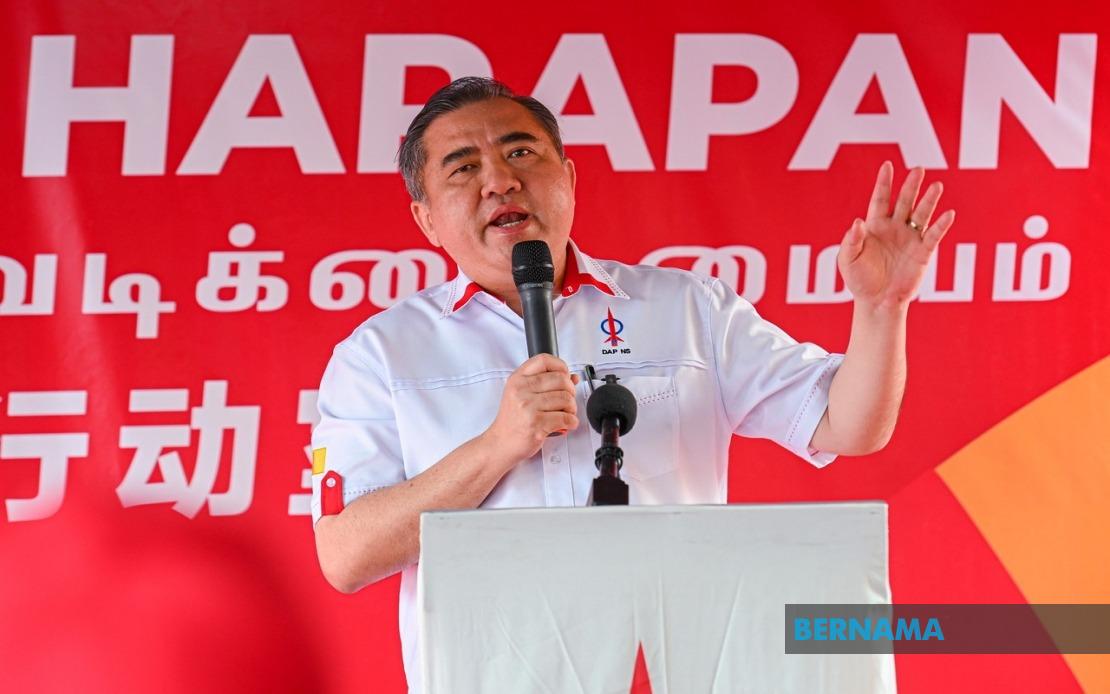
DAP secretary-general Anthony Loke is banking on tomorrow's Johor state election drawing more than 70 per cent voter participation, viewing robust electoral engagement as essential to validating the legitimacy of any incoming government. Speaking in Seremban after unveiling Pakatan Harapan's operations base for the Seremban Jaya constituency, Loke underscored that high turnout serves as a barometer for the health of Malaysia's democratic institutions, reflecting citizens' commitment to exercising their electoral franchise responsibly.
Loke reasoned that a government lacking broad popular endorsement—one elected with participation from less than half the eligible electorate—inherently faces credibility challenges and struggles to claim genuine representative authority. The implication cuts deeper than mere statistics: he argued that for Malaysia's democratic system to survive and strengthen over time, sustained and substantial voter participation must become ingrained in the nation's political culture. Without this foundation, even legally constituted governments risk appearing hollow or partial in their mandate.
The Transport Minister's optimism rests on concrete improvements to electoral logistics compared to the previous state poll. In 2022, Johor's voter turnout languished at approximately 54 per cent, a figure Loke directly attributed to pandemic-related border restrictions that prevented Malaysian workers based in Singapore from returning home to cast their votes. Those artificial impediments have dissolved, and he anticipates this removal of structural barriers will meaningfully lift participation numbers.
Evidence of voter enthusiasm already manifests in the transport sector. Train and express bus operators running services from Kuala Lumpur and Singapore to Johor Bahru have reported sold-out capacity since the previous week, indicating genuine demand among voters determined to travel home. Additional Electric Train Service trips introduced between Kuala Lumpur and Johor Bahru have similarly attracted strong bookings, a reflection that many citizens regard voting as a civic obligation worth the journey. Beyond commercial carriers, civic-minded organisations have arranged shuttle buses to facilitate voter movement, and these too have filled to capacity.
Loke's assessment extends beyond official transport channels. He acknowledged that alternative arrangements—carpooling among friends, informal ride-sharing networks, and community-organised conveyances—would further amplify access for those unable to secure seats on formal services. This ecosystem of grassroots mobility solutions signals organic mobilisation that the authorities had not orchestrated, suggesting voters themselves are driving the push for higher engagement.
Simultaneously, Johor voters and those across Malaysia have begun associating electoral participation with consequential political change. In recent years, elections have shifted governments and prompted significant policy realignments, elevating voter interest and participation incentives. The convergence of improved logistics, demonstrated voter determination, and heightened stakes creates conditions Loke believes favour exceeding the 70 per cent benchmark.
On a separate front, Loke announced S. Mugunthan, a 40-year-old research officer serving Negeri Sembilan state executive councillor J. Arul Kumar, as Pakatan Harapan's candidate for the Seremban Jaya state seat in the upcoming 16th Negeri Sembilan state election. Mugunthan replaces incumbent Datuk P. Gunasekaren, who has represented the constituency—previously called Senawang before recent electoral boundary adjustments—continuously since 2008.
Loke, who additionally serves as Negeri Sembilan DAP chief, framed the selection as rewarding Mugunthan's dedication and proven experience across electoral campaigns and administrative operations at multiple levels. The party hopes voters will embrace the newcomer, implicitly signalling that while Gunasekaren brought experience through tenure, fresh perspectives and renewed energy merit consideration. The decision reflects broader patterns in Malaysian politics where long-serving representatives occasionally yield to emerging candidates, a practice that risks incumbent resentment but aims to invigorate party machinery.
The Negeri Sembilan state election timeline differs from Johor's immediate schedule. Nominations open on July 18, with polling designated for August 1, affording candidates and parties several weeks to campaign. This staggered calendar means Loke and Pakatan Harapan must sustain momentum across two separate electoral contests, requiring disciplined resource allocation and messaging consistency across states with distinct demographic and political compositions.
For Malaysian political watchers, the 70 per cent turnout target encapsulates a broader conversation about democratic resilience and public engagement in an era of electoral competition and governmental uncertainty. Loke's framing emphasises that democratic legitimacy derives not merely from procedural correctness but from substantive participation reflecting popular will. As voter apathy and declining turnout plague democracies worldwide, Malaysia's ability to mobilise citizens carries implications for regional democratic health and governance credibility.

