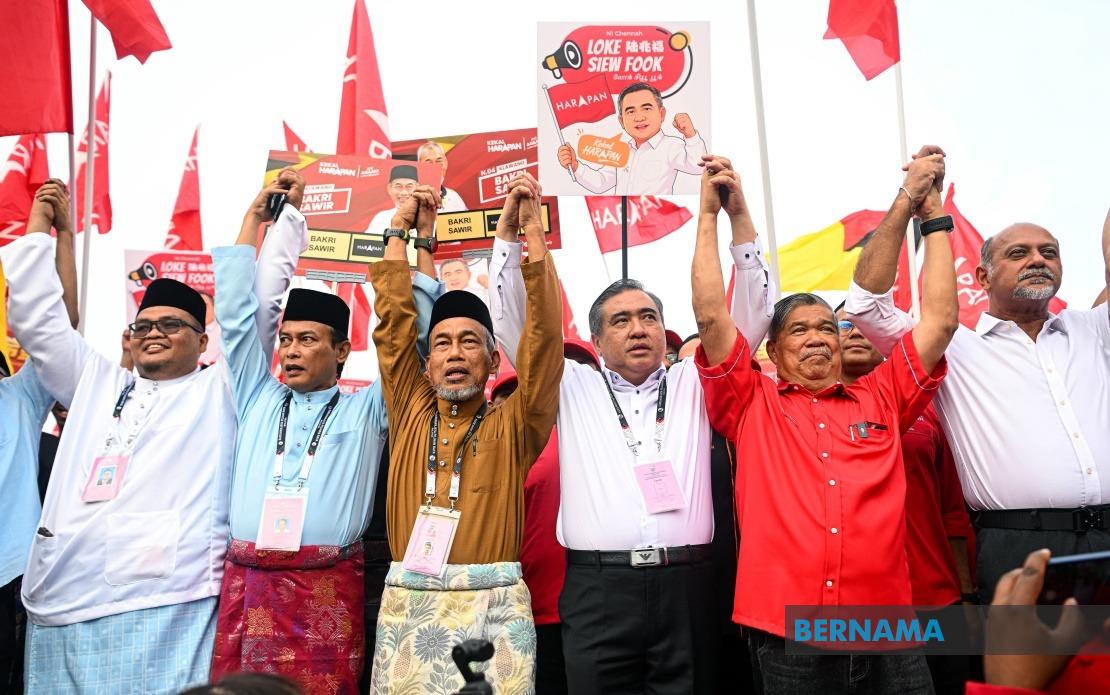
Transport Minister Anthony Loke, the DAP secretary-general and Seremban MP, will contest the Chennah state seat in the 16th Negeri Sembilan state election beginning today, facing a direct challenge from Siow Kong Choon, the state MCA Youth chief campaigning under the Barisan Nasional banner. The contest was formally declared after nomination papers closed at 10 am at Dewan Besar Kuala Klawang in Jelebu, with both candidates submitting their documentation within minutes of each other during the morning's filing process.
Loke, who has represented Chennah since 2013, submitted his nomination at 9.05 am, with Siow following at 9.09 am. The Jelebu Parliamentary returning officer Abdul Rahim A Aziz confirmed the two-way contest, indicating a keenly anticipated state-level battle in one of Negeri Sembilan's most closely watched constituencies. This matchup represents a significant test of the DAP's support in the state, particularly given Loke's prominent national profile as Transport Minister in the current coalition government.
The 2023 state election result provides important context for this rematch. Loke secured 5,888 votes in Chennah, defeating Perikatan Nasional candidate Rosmadi Arif with a commanding majority of 2,200 votes. That convincing margin suggests a strong personal vote and effective grassroots organization in the constituency, though the intervening two years have witnessed substantial shifts in Malaysia's political landscape. The contest against BN rather than PN this time indicates a realignment of opposition forces in Negeri Sembilan, with the traditional coalition attempting to reclaim ground it has lost in recent state elections.
Siow Kong Choon's candidacy reflects MCA's efforts to maintain relevance within the Barisan Nasional framework despite the coalition's diminished electoral standing. As state youth chief, Siow carries responsibility for mobilizing younger voters, a demographic that has increasingly moved toward opposition parties in recent years. His nomination signals BN's determination to contest every seat aggressively in Negeri Sembilan, treating the state election as an opportunity to rebuild after disappointing federal election results in 2023. However, the party faces inherent challenges in appealing beyond its traditional support base, particularly among urban and younger voters.
The broader context of this election reveals deeper strategic considerations for both coalitions. Negeri Sembilan, with its mix of urban constituencies in Seremban and rural areas, has become a genuine battleground between established political forces. The DAP's grip on Chennah reflects the party's successful expansion beyond urban strongholds into state seats previously considered safe for BN. Loke's position as Transport Minister provides him with visibility and resources that may advantage his campaign, though ministerial responsibility for infrastructure and transportation issues can also attract criticism if voters perceive service deficiencies.
The Election Commission's schedule allows candidates just over a fortnight to campaign intensively. Early voting has been set for July 28, with the main polling day on August 1. This compressed timeline means both sides must rapidly mobilize their machinery and deliver their messages effectively. For a long-serving incumbent like Loke, the challenge involves consolidating existing support and persuading marginal voters that his tenure has delivered tangible benefits to the constituency. For Siow, the task involves convincing voters that BN represents a viable alternative government capable of addressing local concerns more effectively than the current DAP representative.
Loke's dual responsibilities as both state representative and national Transport Minister create distinctive advantages and complications. His visibility at the federal level provides platform and resources for constituency work, yet demands on his time from ministerial duties might limit his local presence compared to full-time state-focused politicians. Voters in Chennah will weigh whether his national prominence translates into better local service delivery or represents a distraction from constituency matters. This tension between national and local politics frequently determines outcomes in seats held by prominent national figures.
The contest also reflects MCA's strategic positioning within Barisan Nasional. The party has faced sustained challenges in maintaining support among Chinese-majority constituencies, with many voters gravitating toward DAP and other opposition parties over the past decade. By fielding Siow, MCA signals its determination to contest every seat and present itself as a credible alternative to the DAP across all demographics. Whether this approach reverses recent electoral trends remains uncertain, though Negeri Sembilan's mixed character suggests the state could be more receptive to moderate, coalition-oriented politics than purely urban constituencies.
The electoral dynamics in Negeri Sembilan extend beyond individual contests like Chennah. The state has emerged as a crucial testing ground for different political coalitions, with results often signalling broader trends affecting national politics. DAP's performance in seats like Chennah will indicate whether the party can maintain its advances in state-level politics and expand further into traditionally BN territory. Conversely, BN's ability to mount credible challenges suggests whether the coalition retains sufficient organizational capacity and voter support to remain relevant as an alternative government.
Look ahead to August 1 will reveal whether Loke's incumbency advantage and national profile prove decisive, or whether BN and Siow Kong Choon can capitalize on broader anti-government sentiment or dissatisfaction with DAP performance. The result will carry implications well beyond Negeri Sembilan, as political analysts and rival parties assess emerging voting patterns and coalition strategies ahead of the next general election.

