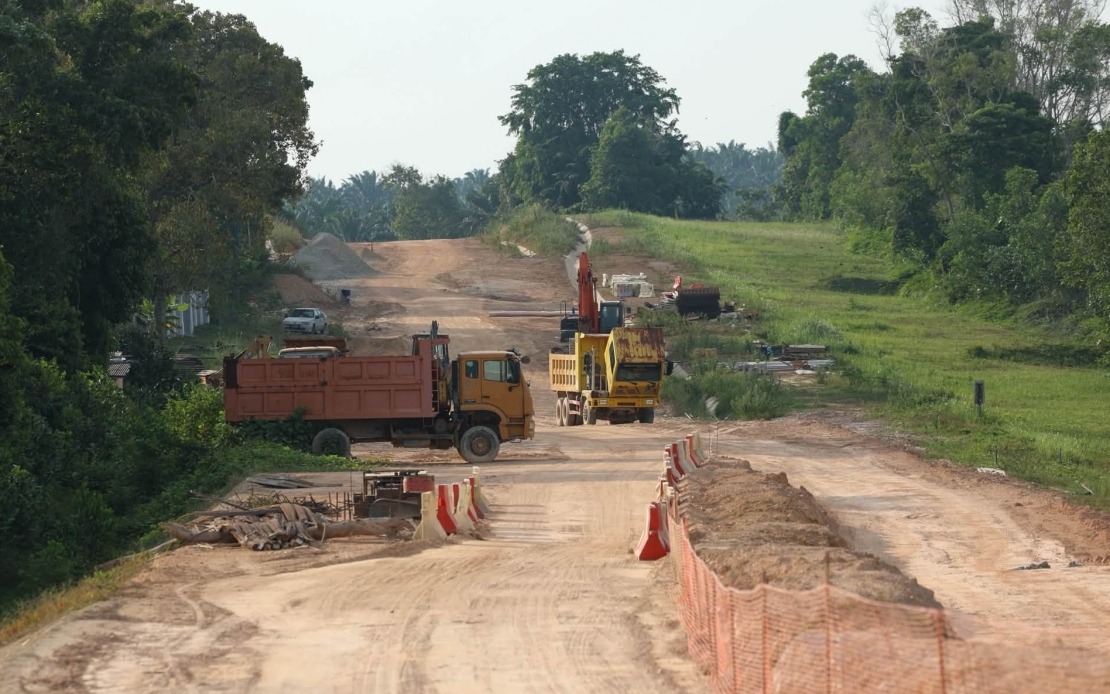
The construction of a new thoroughfare connecting Lukut to Kampung Sirusa through Kampung Paya and Kampung Bagan Pinang in Port Dickson is progressing faster than anticipated, having reached nearly two-thirds completion with 60.57% of work finished. This acceleration puts the RM81.92 million infrastructure undertaking well ahead of its original timetable, with work expected to finish by August 10, 2027, some 43 days before the initially projected completion date. The achievement marks a significant milestone for the Works Ministry, which has prioritised expedited delivery of the road network enhancement in Selangor's Port Dickson district.
The 10-kilometre stretch represents a comprehensive infrastructure overhaul extending beyond simple asphalt laying. Construction encompasses the full suite of supporting systems required under Public Works Department specifications, including slope stabilisation works, comprehensive drainage solutions, sewerage infrastructure installation, structural elements, and utility integration. This multifaceted approach ensures the completed road will meet contemporary engineering standards and serve the district's expanding needs for several decades. The project's scope reflects a recognition that modern transportation infrastructure demands integrated planning addressing water management, environmental protection, and utility accessibility alongside basic road construction.
Port Dickson has long grappled with connectivity challenges that have constrained regional development. By establishing improved linkages between Lukut and Kampung Sirusa through these intermediate settlements, the project addresses longstanding infrastructure deficiencies that have limited economic activity and community integration. The existing road network in the area has struggled to accommodate growing traffic volumes and provide adequate access to outlying communities. This new route promises to unlock previously isolated settlements by creating direct, efficient pathways to commercial and civic centres, fundamentally altering the accessibility landscape for residents scattered across the district.
Beyond mere connectivity, the project's economic implications extend to tourism and commercial development. Port Dickson's established reputation as a coastal destination has remained partially constrained by interior transportation limitations. Improved road access to settlements previously reached only through circuitous routes will enable tourism operators to diversify offerings and venture into less-developed areas, potentially creating new hospitality and entertainment opportunities. Local enterprises currently hampered by logistical constraints will find market access more feasible, potentially catalysing entrepreneurial ventures that have remained dormant due to poor infrastructure.
Community services access represents another tangible benefit emerging from this infrastructure investment. Schools, medical clinics, and administrative facilities scattered across Port Dickson's territory often serve populations navigating challenging road conditions and lengthy travel times. The new road will substantially reduce journey durations for students accessing secondary schools and patients seeking healthcare services, improving educational attendance rates and enabling timelier medical interventions. Such improvements in service accessibility directly translate into measurable quality-of-life enhancements for populations whose geographic distance from facilities previously represented genuine hardship.
The construction timeline acceleration suggests effective project management and labour coordination despite Malaysia's tropical climate and challenging terrain. Maintaining 60.57% progress while running 43 days ahead demonstrates that the executing authorities and contractors have successfully mobilised resources, resolved ground-level complications, and maintained consistent workforce productivity. This performance provides encouraging evidence that infrastructure projects can deliver on schedule promises, an achievement that has proven elusive for numerous Malaysian development initiatives historically plagued by delays and cost overruns.
Deputy Works Minister Datuk Seri Dr Ahmad Maslan's site visit underscores the federal government's direct engagement with infrastructure delivery at the district level. Such high-level oversight serves multiple purposes: it provides momentum to executing agencies through ministerial attention, signals federal commitment to Port Dickson's development, and enables early identification of implementation obstacles before they compound into schedule-threatening problems. The inspection regime described—verifying adherence to timelines, specifications, and standards while addressing site issues—reflects systematic management practices essential for project success.
The governance structure positioning the State Public Works Department as implementing agency under the Ministry of Rural and Regional Development demonstrates federal-state coordination in infrastructure deployment. Port Dickson, while administratively part of Selangor, has historically received targeted federal support reflecting its strategic importance as a historical port town and regional economic contributor. This project represents federal developmental allocation prioritising district-level infrastructure that state budgets alone might struggle to finance, illustrating how centralised resource allocation can address geographic disparities in infrastructure investment.
For Malaysian readers observing national infrastructure progress, this project offers valuable perspective on implementation capacity. The ability to complete nearly two-thirds of a complex road project ahead of schedule contrasts sharply with numerous delayed mega-projects that have captured public attention. Successful, timely infrastructure delivery remains achievable when projects maintain appropriate scale, manageable complexity, and adequate resourcing. Port Dickson's experience suggests that district-level infrastructure focusing on essential connectivity, rather than prestige megaprojects, may deliver more reliable outcomes and tangible community benefits.
The employment and economic stimulus generated through this construction phase extends beyond project completion. Road construction creates immediate job opportunities for labourers, engineers, equipment operators, and supply chain workers. Local material suppliers, food vendors serving workers, and accommodation providers all benefit from construction activity concentration. Upon completion, the improved road will reduce transportation costs for businesses and consumers, effectively providing permanent economic stimulus through lower logistics expenses and expanded market opportunities.
Looking ahead toward the August 2027 completion target, maintaining current momentum becomes critical. Weather disruptions during monsoon seasons, unforeseen subsurface conditions, and labour availability fluctuations represent potential challenges that could derail the advantageous schedule position. However, the 43-day buffer existing at the 60% mark provides reasonable contingency against typical disruptions. Sustained attention from ministerial oversight combined with contractor accountability should enable the project to achieve its ambitious completion timeline while maintaining the engineering standards essential for long-term infrastructure durability.
For Southeast Asian regional development observers, this project illustrates Malaysia's ongoing commitment to interior infrastructure modernisation extending beyond major urban centres. While Kuala Lumpur and Selangor's premier locations attract international attention, systematically upgrading connectivity in secondary towns like Port Dickson reflects balanced regional development philosophy. Such investments ultimately determine whether Malaysia's periphery develops sustainably or stagnates economically, making the successful execution of projects like the Lukut-Kampung Sirusa road essential to inclusive national prosperity.

