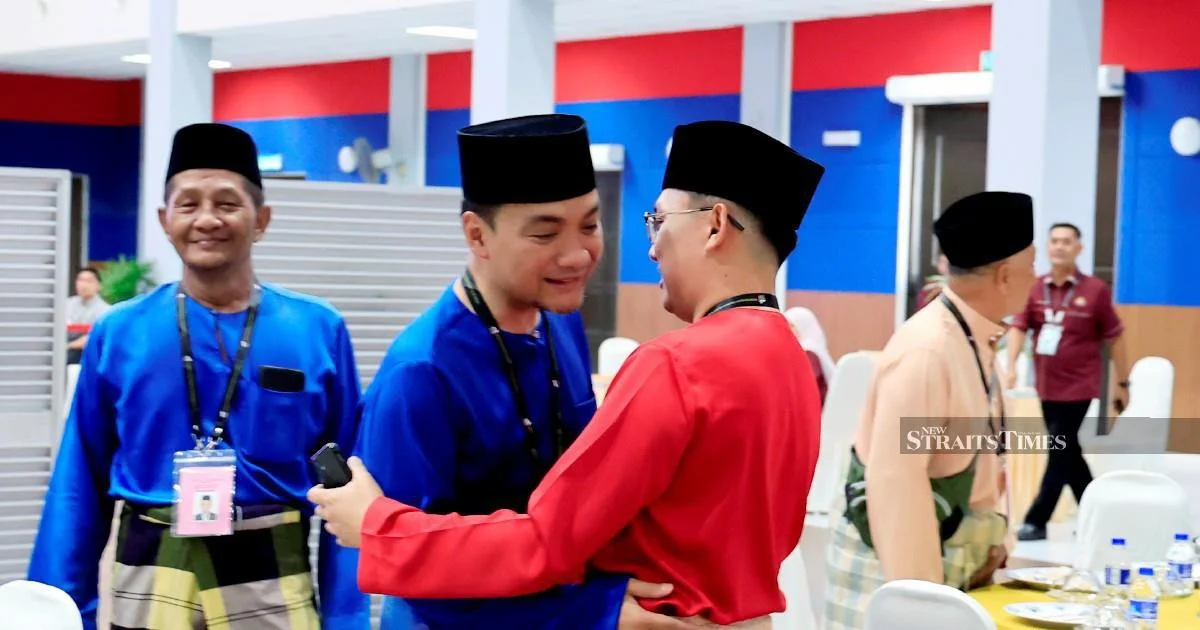
The Machap state constituency in Johor will witness a straight fight between two candidates representing the country's main political blocs, setting up a significant contest ahead of the state election. Datuk Onn Hafiz Ghazi, serving as caretaker Menteri Besar, will defend his seat against a single rival fielded by Pakatan Harapan, eliminating the possibility of a three-corner split in this electoral battleground.
The decision by both Barisan Nasional and Pakatan Harapan to field only one candidate each in Machap reflects their strategic focus on consolidating voter support in a constituency that holds importance for both coalitions. Direct contests of this nature typically benefit the front-runner with stronger ground machinery and name recognition, potentially giving Onn Hafiz an advantage given his incumbent status and control of state resources as caretaker Menteri Besar.
Onn Hafiz's position as the outgoing chief minister strengthens his visibility among Machap voters, who may view continuity and the ability to channel development funds as significant factors in their voting decision. His tenure has exposed him directly to local constituencies, allowing him to build relationships with community leaders and grassroots figures whose endorsement can be decisive in Johor's political contests. The caretaker status, while technically limiting his executive powers, does not diminish his symbolic authority or his capacity to campaign on his record.
The opposition's fielding of Nur Hafiz represents a calculated challenge to Onn Hafiz's dominance in the seat. Pakatan Harapan's willingness to commit a single candidate suggests confidence in Nur Hafiz's appeal within the constituency, or recognition that a concentrated campaign effort offers better prospects than splitting the opposition vote. This approach also signals that the coalition believes Machap is winnable without fragmenting resources across multiple candidates in other seats.
For Malaysian observers and analysts, the Machap contest encapsulates broader themes emerging in Johor's electoral landscape. The state has undergone significant political realignment in recent years, with voters showing willingness to shift allegiances based on governance performance and leadership credibility. The straight contest format removes the complication of spoiler effects, making the outcome a clearer indicator of voter sentiment towards the two main coalitions.
From a regional perspective, Machap's outcome will carry implications beyond Johor itself. The state remains a crucial swing state in Malaysian politics, and results here contribute to the national narrative about which coalition commands broader public support. An Onn Hafiz victory would reinforce BN's recovery in traditional strongholds, while a Nur Hafiz win would suggest Pakatan Harapan's ability to penetrate constituencies previously thought secure for the government coalition.
The electoral dynamics in this constituency also reflect factional considerations within both coalitions. Within BN, the contest affects internal positioning among UMNO, MCA, and other component parties, with Machap's result potentially influencing internal balance of power during government formation. For Pakatan Harapan, the race represents an opportunity to demonstrate that the coalition remains competitive in peninsular Malay-majority constituencies, an area where the opposition has struggled historically.
Voter sentiment in Machap appears centred on pragmatic considerations regarding local development, infrastructure improvement, and the delivery of services by either coalition. Economic concerns affecting Johor residents, including employment opportunities and the rising cost of living, are likely to feature prominently in campaign messaging from both sides. The constituency's demographic composition and the nature of its economic base will influence which candidate and coalition messaging proves more persuasive.
The confirmation of this straight contest also means both camps can now focus resources and campaign intensity on the seat without diversion. It eliminates tactical voting complications and third-party spoiling, which typically characterises Malaysian elections where three or more significant candidates compete. This clarity allows for a more straightforward evaluation of which candidate and coalition better reflects the preferences of Machap voters.
As the campaign unfolds, observers should monitor several factors that may determine the outcome. Onn Hafiz's ability to translate his caretaker status into electoral momentum will be tested against Nur Hafiz's capacity to mobilise Pakatan Harapan's supporters and persuade swing voters that change is preferable to continuity. Ground-level campaign mechanics, including voter outreach, community engagement, and the effectiveness of party machinery on polling day, will prove decisive in what shapes as a competitive election contest.

