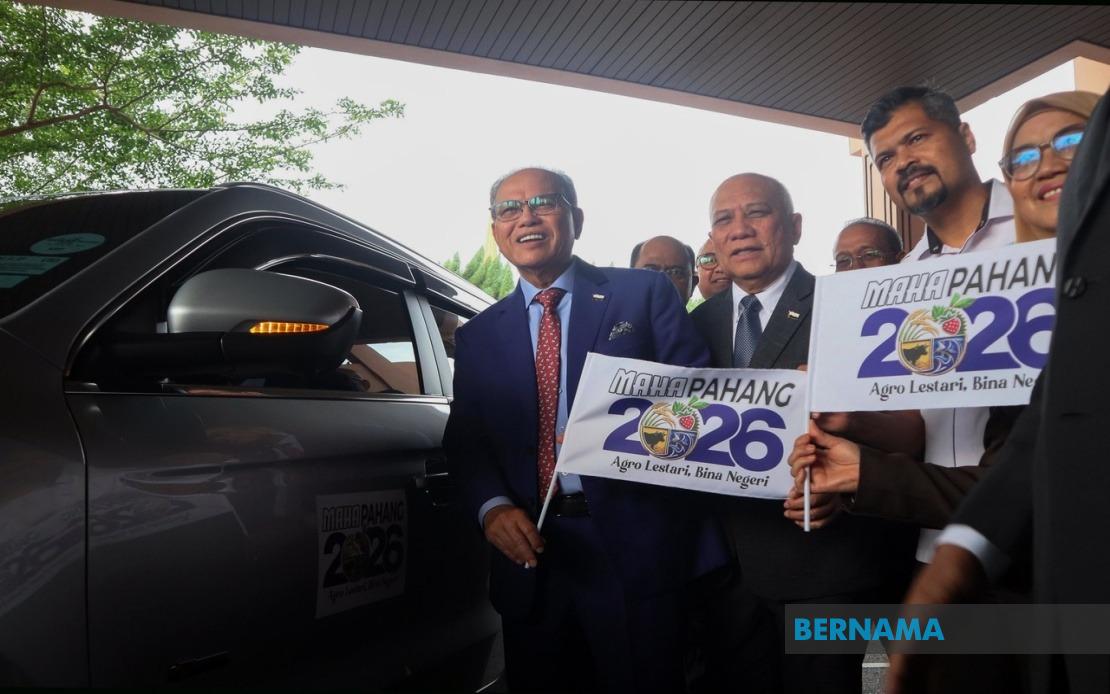
The Pahang state government has unveiled ambitious targets for MAHA Pahang 2026, expecting the upcoming agricultural showcase to welcome over 100,000 visitors while generating RM1.3 million in commercial transactions. Menteri Besar Datuk Seri Wan Rosdy Wan Ismail made the announcement following a ceremonial vehicle convoy dispatch that kicked off official promotional activities for the event, signalling the state's commitment to positioning the gathering as a major platform for the agriculture and food security sector.
The four-day event, scheduled to run from July 30 to August 2 at Dataran Raub in Bera district, represents a continuation of MAHA's regional expansion strategy across Malaysia. By bringing the annual Malaysian Agriculture, Horticulture and Agrotourism exhibition to Pahang, organisers aim to showcase the state's agricultural potential while providing a structured marketplace for approximately 100 participating entrepreneurs and smallholder producers. The location in Raub, situated in the heart of Pahang's agricultural belt, offers strategic access to farming communities and consumers throughout the eastern region.
To stimulate visitor attendance and encourage spending, the Pahang state government has structured an attractive lucky draw system with high-value prizes designed to generate excitement and word-of-mouth promotion. The top prize includes a Wagyu cow, reflecting growing consumer interest in premium livestock and agricultural products, alongside a Perodua Bezza vehicle that appeals to a broader demographic. These headline prizes are complemented by additional giveaways distributed throughout the event period, creating multiple incentive layers that reward frequent visitors and increase foot traffic across exhibition areas.
The RM1.3 million sales target underscores the commercial dimension of MAHA Pahang 2026, positioning it not merely as an educational forum but as a genuine economic stimulus mechanism for agricultural entrepreneurs. This projection accounts for direct sales from exhibitors' stalls, value-added product transactions, and ancillary spending on food and entertainment within the event precinct. For Pahang's farming community, the gathering offers direct consumer access that often bypasses traditional wholesale and distribution channels, enabling producers to capture higher margins while building brand awareness in new markets.
Menteri Besar Wan Rosdy's public acknowledgement of Agriculture and Food Security Minister Datuk Seri Mohamad Sabu and the event committee reflects the multi-level governance structure supporting MAHA Pahang 2026. Federal-state coordination on agricultural policy has intensified under the current administration, with MAHA exhibitions serving as tangible expressions of that alignment. By formalising recognition of ministerial involvement, state authorities reinforce the federal-state partnership narrative while legitimising the event as a platform endorsed by national agricultural policymakers.
The convoy dispatch ceremony, involving 20 government vehicles from various departments and agencies, served a dual symbolic and functional purpose. Beyond ceremonial significance, the deployment of multiple government entities underscores the cross-departmental coordination required to execute a large-scale public event. Participation from agriculture, trade, tourism, and local administration bodies signals comprehensive governmental engagement and suggests integrated support systems that extend beyond mere event promotion to encompass logistical backing and regulatory facilitation.
Visitors to MAHA Pahang 2026 will encounter exhibitions spanning contemporary crop varieties, innovative farming techniques, and modern agricultural technology. This educational component addresses a critical knowledge gap within Malaysia's farming sector, where adoption of new cultivation methods and improved seed genetics remains uneven. For smallholder farmers attending from surrounding districts, the event provides accessible technical information that might otherwise require costly extension officer consultation or travel to research institutions. The emphasis on crop innovation reflects broader Malaysian agricultural policy priorities centred on productivity enhancement and international competitiveness.
The geographic focus on Raub positions MAHA 2026 as a regional event that serves beyond Pahang's boundaries. The Raub district sits within reasonable driving distance of Kuala Lumpur, Selangor, and Terengganu, positioning the event to draw visitors from across the central and eastern regions. This geographic accessibility increases the likelihood of achieving the 100,000 visitor target, particularly if promotional efforts extend into neighbouring states. For agricultural stakeholders throughout the region, the event represents an opportunity to benchmark products against competitors and evaluate market demand across multiple state markets.
The MAHA exhibition series has evolved from its origins as a primarily agricultural showcase into a multifaceted platform addressing food security, rural entrepreneurship, and agrotourism development. MAHA Pahang 2026 reflects this broader mission by integrating commercial transactions with educational content and experiential components. The inclusion of agrotourism elements attracts leisure visitors beyond the core farming demographic, diversifying revenue streams and creating secondary economic benefits for surrounding communities.
For Malaysian consumers, MAHA events provide rare opportunities to purchase directly from producers at prices unmediated by retail markups and distribution costs. This direct-to-consumer model has gained currency across Southeast Asia as consumers increasingly seek authenticity and supply chain transparency. MAHA Pahang 2026 taps into this consumer sentiment while supporting farmer incomes, creating alignment between consumer preferences and agricultural livelihood objectives that policy frameworks increasingly emphasise.
The success of MAHA Pahang 2026 will likely influence future event scheduling across Malaysia's states, with strong attendance and sales figures validating the decentralised exhibition model. Should organisers achieve projected visitor and revenue targets, it could prompt replication in other regions and expansion of MAHA's footprint beyond current scheduling. This trajectory would reflect broader Malaysian policy interests in strengthening rural economies and positioning agricultural sectors as engines of inclusive growth rather than marginal economic activities.

