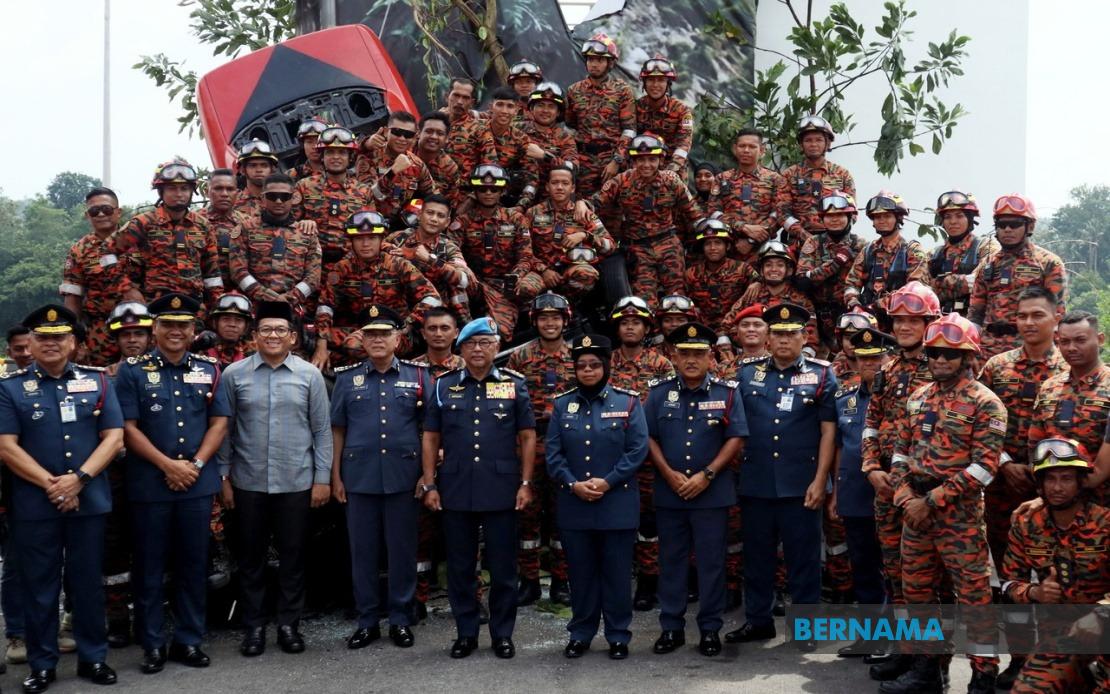
The Malaysian government has greenlit an annual expenditure ceiling of RM278.9 million for the Malaysian Fire and Rescue Department (JBPM) to undertake 86 infrastructure and operational projects in the current financial year as part of the 13th Malaysia Plan's inaugural rolling plan phase. This substantial financial commitment encompasses both new initiatives and continuation of established programmes across the nation, reflecting the administration's priority in strengthening emergency response capabilities nationwide.
According to Housing and Local Government deputy minister Datuk Aiman Athirah Sabu, the funded portfolio consists of 27 freshly initiated projects alongside 59 existing undertakings in various stages of completion. This mixed approach allows the government to balance immediate service enhancement with long-term infrastructure development, ensuring continuity in critical emergency services while expanding operational reach. The allocation demonstrates a comprehensive strategy to modernise fire and rescue infrastructure while maintaining momentum on previously committed initiatives.
Pahang state has emerged as a focal point for this development agenda, with seven fire and rescue facility projects currently advancing under both the 12th Malaysia Plan and the 13th Malaysia Plan's first rolling phase. These initiatives span acquisition, new construction, and substantial refurbishment work across multiple locations. The projects include purchasing the Gohtong Jaya Fire and Rescue Station building and residential quarters, constructing the Benta facility, and establishing new stations in Tioman with accompanying quarters for personnel deployment.
Beyond new facilities, the state benefits from targeted infrastructure improvements to existing stations. Bentong and Kuantan fire and rescue stations are undergoing comprehensive upgrades while Triang station is being entirely reconstructed. Additionally, preliminary groundwork has commenced for the Tanjung Lumpur facility, indicating a pipeline of future expansions designed to enhance coverage and response times across Pahang's diverse terrain and communities.
The recently inaugurated Sungai Lembing Fire and Rescue Station exemplifies this development investment. Constructed at a cost of RM6 million on a seven-acre plot, the facility began operational deployment in February and represents the 29th such station in Pahang. Its establishment specifically targets the approximately 15,000 residents inhabiting Sungai Lembing and neighbouring localities, addressing a historical service gap in this former mining community. The station's commissioning marks a tangible outcome of the government's commitment to equitable emergency service distribution.
Beyond its primary firefighting function, the Sungai Lembing station conceptually serves broader community objectives. Deputy minister Aiman Athirah envisioned the facility as a multi-purpose centre capable of delivering educational programmes, skills training, and public safety awareness initiatives. This expanded mandate reflects evolving thinking about emergency services infrastructure—increasingly positioned not merely as operational bases but as community anchors fostering disaster preparedness and public health consciousness among civilian populations.
The station's development gains additional significance within Sungai Lembing's broader revitalisation trajectory. Deputy Economy Minister Datuk Mohd Shahar Abdullah highlighted how emergency services infrastructure integrates within the heritage town's comprehensive modernisation programme. Simultaneous initiatives include restoration of the PCCL Cinema, ecotourism product development, construction of a digital museum, tunnel upgrading works, and sustained efforts seeking UNESCO World Heritage Site designation. This coordinated approach recognises that infrastructure investment requires multi-dimensional support to generate meaningful community benefit.
Mohd Shahar emphasised that without robust safety infrastructure, development aspirations remain incomplete. The Sungai Lembing station represents governmental responsiveness to the Sultan of Pahang's directive, transforming a policy commitment into operational reality. By establishing emergency preparedness capacity, the station provides essential foundation for sustainable development, enabling the heritage town to position itself as a secure destination combining historical authenticity with modern amenities and functional safety systems.
For the broader Southeast Asian context, Malaysia's approach demonstrates how developing economies can strategically allocate infrastructure investment across competing priorities. The decision to fund 86 simultaneous projects rather than concentrating resources on prestige facilities reflects practical governance philosophy emphasising broad-based service provision. This methodology proves particularly relevant for Malaysian policymakers managing disparate regional needs—rural communities require equivalent emergency capacity to urban centres despite lower population density.
The 13th Malaysia Plan's comprehensive fire and rescue investment also signals recognition that climate change, urbanisation, and industrial development create escalating demand for sophisticated emergency response. Regional flooding patterns, industrial incidents, and traffic accidents demand well-equipped, strategically positioned facilities staffed with adequately trained personnel. Malaysia's allocation addresses these infrastructure deficiencies through methodical, phased deployment rather than reactive, crisis-driven budgeting.
Stakeholder alignment evidenced by the Sungai Lembing inauguration—involving the Sultan, housing deputy minister, economy deputy minister, state menteri besar, and assembly speaker—indicates cross-government commitment to implementation. This coordination proves essential for sustaining multi-year projects through political transitions and budgetary fluctuations. When officials from different hierarchical levels and portfolio responsibilities publicly endorse initiatives, implementation credibility strengthens considerably.
The RM278.9 million annual commitment warrants contextualisation within broader fire and rescue sector needs. Malaysia's growing economy, expanding urban footprint, and industrial complexity continuously elevate emergency services demands. Whether current allocation sufficiently addresses projected requirements over the 13th Malaysia Plan period remains subject to operational assessment. Real-world performance metrics—response times, incident outcomes, personnel satisfaction—will ultimately validate whether this investment adequately modernises JBPM capabilities.
Looking forward, the Sungai Lembing project's success offers template potential for other heritage towns and underserved communities seeking balanced development. By demonstrating how emergency infrastructure can catalyse broader revitalisation while strengthening essential services, Malaysia positions itself as a regional model for integrated community development. Implementation outcomes from this expanded project portfolio will significantly influence subsequent planning phases and budgetary decisions affecting emergency services development throughout the coming decade.

