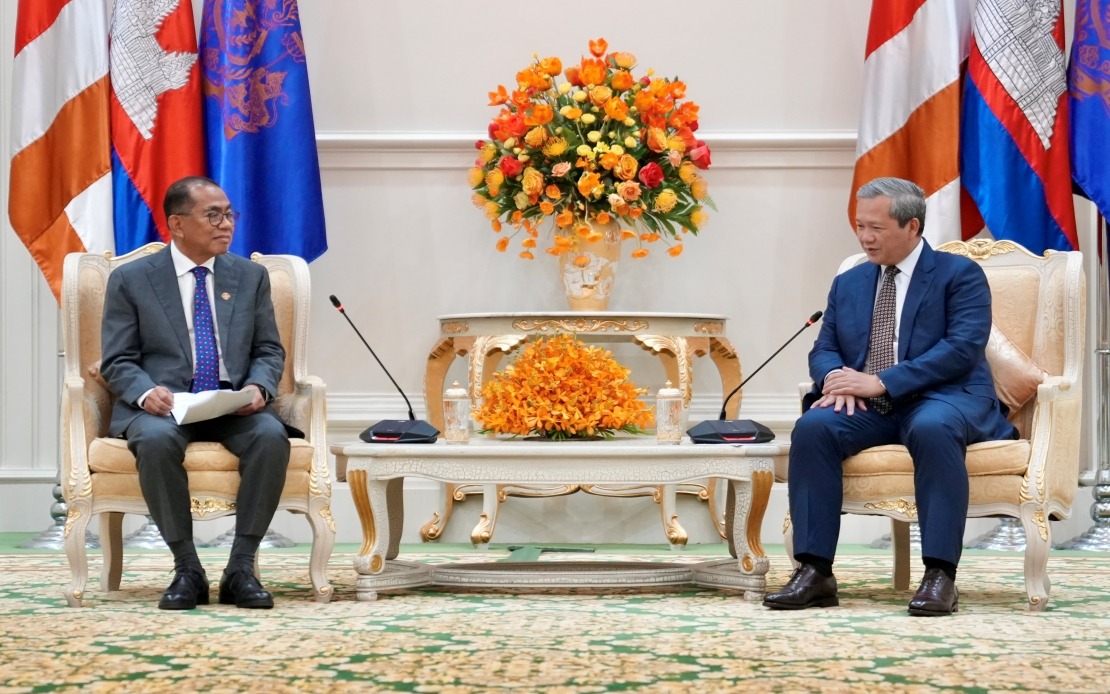
Malaysia and Cambodia have moved decisively to deepen their defence and security partnership, with both countries pledging to finalise a comprehensive bilateral framework that will anchor cooperation for years to come. Defence Minister Datuk Seri Mohamed Khaled Nordin conveyed this commitment during official meetings with Cambodian Prime Minister Samdech Thipadei Hun Manet and Deputy Prime Minister General Tea Seiha in Phnom Penh, underscoring Malaysia's strategic focus on strengthening ties with fellow Southeast Asian nations even as regional security dynamics grow increasingly complex.
The centrepiece of Malaysia's engagement centres on the Malaysia-Cambodia Defence Cooperation Memorandum of Understanding, which has reached an advanced stage of negotiation and is expected to be signed in the coming weeks. This framework will establish formal mechanisms for expanding defence collaboration across multiple domains, moving beyond traditional military-to-military exchanges to encompass emerging technologies and specialised training areas. For Malaysian readers and defence analysts, the timing of this initiative reflects a calculated effort to solidify relationships within ASEAN as great power competition intensifies across the Indo-Pacific region.
Both nations have identified several priority areas for enhanced cooperation, including jungle warfare training—a capability particularly relevant given the diverse terrain across Southeast Asia—as well as collaboration in the defence industrial base, artificial intelligence applications, and unmanned aerial systems. These focus areas suggest both countries recognise that modern security challenges require technological sophistication and innovation alongside traditional military capabilities. The emphasis on AI and drone technology, in particular, positions Malaysia and Cambodia as forward-thinking partners willing to invest in capabilities that will define regional defence dynamics over the coming decade.
A significant dimension of the bilateral discussions centered on broader regional stability mechanisms and ASEAN's collective approach to security. Mohamed Khaled emphasised Malaysia's continued backing for the ASEAN Observer Team mechanism, which monitors border tensions and promotes dialogue between neighbouring states. This support proves particularly pertinent given ongoing efforts to maintain peace along the Cambodia-Thailand border, where historical grievances and occasional flare-ups continue to pose risks to regional stability. Malaysia's principled stance on supporting dialogue and peaceful resolution through negotiation reflects its consistent commitment to ASEAN centrality in addressing regional disputes.
The Code of Conduct for the South China Sea emerged as another critical talking point during the ministerial meetings. Both Malaysia and Cambodia underscored the importance of finalising this multilateral agreement as a mechanism for ensuring lasting peace and stability in one of the world's most strategically significant waterways. For Malaysia, which has its own maritime interests and claimant status in the South China Sea, advancing progress on the COC remains a foundational foreign policy objective. The bilateral alignment on this issue signals broader consensus within ASEAN regarding the need for legally binding rules to manage competition and prevent miscalculation.
Mohaed Khaled's visit to Cambodia represents the second leg of a two-nation defence diplomacy tour across Southeast Asia. He had previously led a Malaysian delegation to Vietnam on August 5-6, where he engaged with Prime Minister Le Minh Hung and Defence Minister General Phan Van Giang in parallel discussions aimed at strengthening the Malaysia-Vietnam defence partnership. This sequential engagement with two key ASEAN members demonstrates a deliberate strategy to reinvigorate Malaysia's defence relationships across the region and project stability amid shifting geopolitical circumstances.
The Defence Minister expressed particular satisfaction with the momentum toward signing the Malaysia-Cambodia Defence Cooperation MoU, indicating hopes that the agreement could be formalised during the upcoming ASEAN Defence Ministers' Meeting in the Philippines. This timeline would be symbolically meaningful, allowing the two countries to showcase their commitment to regional partnership at a formal ASEAN gathering. The prospect of signing during this multilateral forum would also underscore Malaysia's broader message that bilateral defence cooperation serves the collective interests of ASEAN rather than any narrow strategic agenda.
Malaysia's sustained engagement with Cambodia carries additional significance as both countries prepare to commemorate 70 years of diplomatic relations in 2027. Mohamed Khaled noted that strengthened defence cooperation would contribute meaningfully to this historic milestone, transforming what might otherwise be a ceremonial observation into evidence of substantive, deepening partnership. For Malaysian foreign policy strategists, investing in this relationship now establishes a foundation for marking the anniversary with tangible achievements rather than merely symbolic gestures.
The Defence Ministry has framed these bilateral visits within Malaysia's Third Pillar of the National Defence Strategy, termed Credible Partnerships, which emphasises the importance of regional allies in safeguarding national security and promoting stability. This conceptual framework reflects recognition that Malaysia's defence interests cannot be pursued in isolation; rather, they are inextricably linked to the security environment across Southeast Asia. By actively nurturing partnerships with nations like Cambodia and Vietnam, Malaysia positions itself as a responsible stakeholder in regional security architecture.
A notable dimension of Malaysia's approach involves maintaining its commitment to regional stability and dialogue mechanisms notwithstanding the loss of the ASEAN chair this year. Mohamed Khaled explicitly stated that Malaysia's dedication to supporting peace and stability remains undiminished regardless of rotating ASEAN leadership. This messaging proves important for reassuring smaller ASEAN members and addressing potential concerns that Malaysia might deprioritise regional engagement following the conclusion of its chairmanship. Consistent defence diplomacy demonstrates that Malaysia's commitment to ASEAN extends beyond ceremonial leadership roles to reflect deeper, institutionalised partnerships.
The composition of Malaysia's delegation, which included Chief of the Royal Malaysian Navy Admiral Tan Sri Zulhelmy Ithnain and Defence Ministry Deputy Secretary-General (Policy) Datuk Mohd Yani Daud, reflected the high-level nature of these engagements. The inclusion of the Navy Chief underscores maritime security considerations in bilateral cooperation, relevant given both countries' interest in South China Sea stability and freedom of navigation. These personnel choices signal that the defence relationship encompasses all military branches rather than focusing narrowly on ground forces.
For Malaysian observers and regional defence analysts, these developments suggest Kuala Lumpur is pursuing a measured but purposeful strategy to strengthen ASEAN cohesion and upgrade bilateral defence partnerships in response to an increasingly contested regional environment. The emphasis on formalised cooperation frameworks, technological collaboration, and peace maintenance mechanisms reflects sophisticated statecraft aimed at building resilience through partnership rather than military buildup. As great power competition shapes regional politics, Malaysia's focus on deepening ASEAN ties through institutions and dialogue represents a strategic choice that prioritises collective stability.

