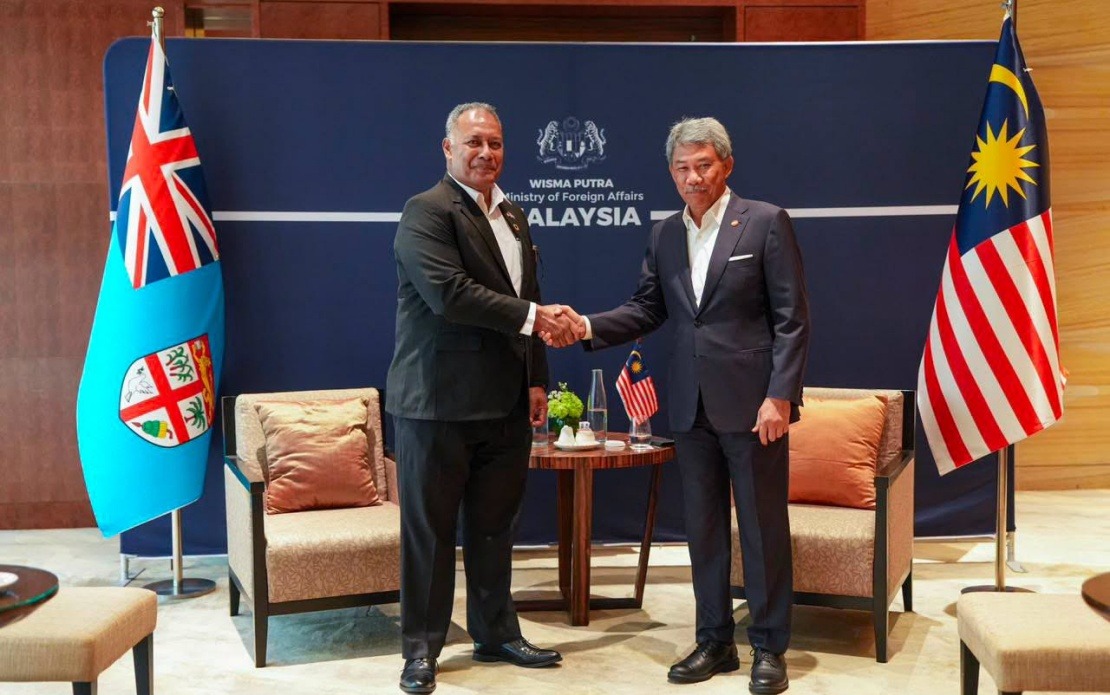
Malaysia and Fiji are moving to deepen their diplomatic and economic relationship, with both nations identifying multiple sectors for expanded cooperation. During a working visit to the Malaysian capital, Fijian Foreign and External Trade Minister Sakiasi Raisevu Ditoka held substantive discussions with Malaysian Foreign Minister Datuk Seri Mohamad Hasan on August 11, focusing on areas that promise mutual benefit for island economies increasingly concerned with sustainable development and regional stability.
The partnership framework encompasses six primary domains, reflecting the evolving priorities of both governments in the Indo-Pacific region. Trade and investment form the commercial foundation, while human capital development points to the shared challenge of building skilled workforces competitive in a globalised economy. Forestry cooperation speaks to environmental stewardship, particularly relevant as both nations grapple with sustainability pressures. Renewable energy collaboration appears especially significant given rising energy demands across Southeast Asia and the Pacific, where many nations are pivoting away from fossil fuel dependence. Cultural exchanges round out the agenda, reinforcing people-to-people connections that underpin diplomatic relationships.
The timing of this engagement reflects a broader Malaysian strategy to strengthen ties with Pacific Island nations, a region geographically distant yet strategically significant for trade routes and diplomatic influence. Mohamad's emphasis on discussing regional and global issues alongside bilateral matters suggests Malaysia views its Pacific relationships as part of a comprehensive Indo-Pacific engagement strategy. This approach recognises that smaller island nations, collectively wielding significant maritime zones and fishing rights, carry disproportionate weight in global governance forums including climate negotiations and maritime law discussions.
Fiji's decision to reopen its high commission in Kuala Lumpur, formally inaugurated by Ditoka on Monday during his four-day visit from August 9-12, carries practical and symbolic weight. A diplomatic presence signals serious commitment to the relationship and facilitates the bureaucratic machinery necessary for meaningful bilateral engagement. For Fiji, particularly relevant is accessing Malaysian expertise and investment in sectors like palm oil production and timber, where Malaysia's regional leadership provides valuable knowledge transfer opportunities. For Malaysia, the Pacific presence strengthens its credentials as a truly regional power extending influence beyond traditional Southeast Asian spheres.
Bilateral trade figures reveal an asymmetrical but growing commercial relationship. The RM880.01 million recorded in 2025 demonstrates meaningful economic interchange, though Malaysia's dominant position as exporter is evident in the composition: Malaysian exports reached RM867.92 million against imports of merely RM12.09 million from Fiji. This imbalance reflects classic patterns of trade between an industrialised economy and a smaller, resource-dependent nation. However, the substantial export volume indicates Malaysian companies view Fiji and the broader Pacific as valuable markets, likely including agricultural products, manufactured goods, and technical services.
The import figure, whilst modest in absolute terms, likely represents Fiji's primary export strength in fish products and agricultural commodities. For Malaysian importers, Fijian goods offer supply diversification and access to products suited to tropical and Pacific market specifications. Expansion of this trade relationship could particularly benefit Malaysian small and medium enterprises seeking export opportunities beyond saturated Southeast Asian markets, whilst offering Fijian producers access to Malaysian distribution networks serving broader regional markets.
The human capital development component deserves particular attention for Malaysian readers. Malaysia's established educational institutions and vocational training programmes position it as a natural destination for Fijian scholars and trainees. Reciprocally, Malaysian firms increasingly seek offshore locations for specialised labour and technical expertise, areas where strategic partnerships in the Pacific might yield unexpected opportunities. Such exchanges build long-term relationship foundations more durable than transactional commerce.
Renewable energy cooperation aligns both nations with global climate imperatives whilst addressing practical energy security challenges. Malaysia's advanced capabilities in solar technology, biomass utilisation, and hydroelectric systems can inform Fiji's transition strategies. Conversely, Fiji's experiences with tropical renewable deployment and small-island grid integration offer insights valuable for Malaysian planners developing distributed energy solutions for eastern Malaysian territories.
The reopening of Fiji's high commission represents institutional commitment transcending individual ministerial visits. Permanent diplomatic infrastructure enables sustained engagement, facilitates visa processing, and provides a venue for regular consultations. For Malaysian citizens with business interests in Fiji, including tourism operators and traders, the reopened commission streamlines administrative processes. The decision to establish this presence after apparent closure underscores confidence in relationship trajectory and expectation of expanding bilateral activity justifying permanent representation.
From Malaysia's broader foreign policy perspective, strengthening Pacific relationships serves multiple objectives simultaneously. It demonstrates commitment to ASEAN's strategic vision of maintaining regional centrality whilst engaging distant partners. It provides diplomatic platforms for articulating Malaysian positions on issues from maritime governance to climate action. It creates commercial opportunities for Malaysian enterprises and establishes Malaysia as a preferred development partner for island economies navigating complex geopolitical currents.
The Fiji visit exemplifies contemporary Malaysian diplomacy's character: active, multisectoral, and ambitious in geographic reach. Rather than limiting engagement to immediate regional neighbours, Malaysian policymakers increasingly recognise that influence and prosperity depend on relationships extending across oceans to fellow developing nations sharing common challenges. The Fiji partnership, modest by some measures, illustrates this strategic expansion. As Malaysia continues positioning itself as a bridge between developed and developing worlds, conversations with nations like Fiji become essential components of that bridging mission.

