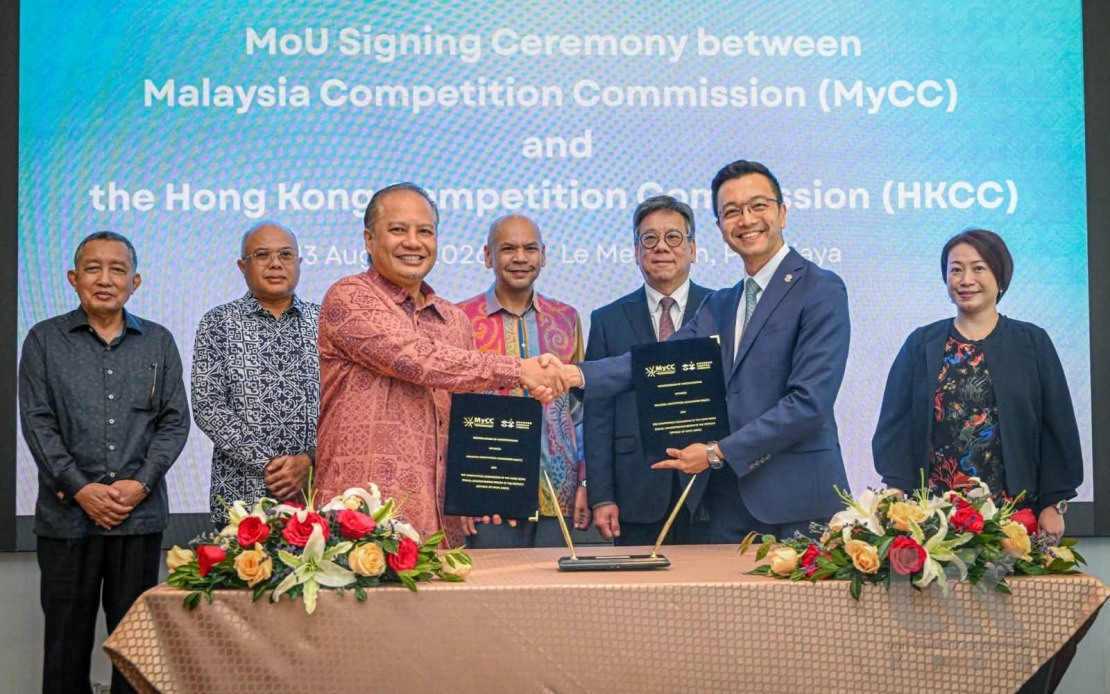
Malaysia's competition watchdog and Hong Kong have formalised their partnership through a fresh memorandum of understanding aimed at tightening enforcement of competition rules across both jurisdictions. The agreement between the Malaysia Competition Commission (MyCC) and the Hong Kong Competition Commission (HKCC) represents a strategic step in addressing the complexities of modern cross-border commerce, where anticompetitive conduct increasingly transcends territorial boundaries. Domestic Trade and Cost of Living Minister Datuk Armizan Mohd Ali unveiled the accord, emphasising the government's broader push to align Malaysian competition enforcement with international standards and peer authorities.
This collaboration marks MyCC's fourth bilateral competition arrangement, positioning Malaysia within a growing network of competition enforcers spanning East Asia and beyond. Previous partnerships with the Türkiye Competition Authority, Korea Fair Trade Commission, and Philippine Competition Commission have already established frameworks for sharing expertise and coordinating investigations. The addition of Hong Kong, a major regional financial and trading hub, extends Malaysia's enforcement reach into one of Asia's most strategically important markets. Hong Kong's position as a gateway between mainland China and the rest of the world makes the partnership particularly valuable for Malaysian businesses operating regionally and for regulators seeking intelligence on cross-border cartels or market abuse.
The substance of the agreement centres on systematic information exchange regarding evolving competition law and policy across both territories. Both authorities will maintain channels to discuss legislative reforms, enforcement priorities, and emerging threats to market competition. This transparency mechanism proves essential in an era when businesses frequently restructure operations across multiple jurisdictions to circumvent rules, and when regulatory gaps in one territory can undermine enforcement elsewhere. For Malaysian consumers and enterprises, access to Hong Kong's regulatory intelligence provides MyCC with broader context when investigating suspected violations involving regional players.
Operationally, the MoU creates pathways for investigative cooperation that can substantially amplify MyCC's capabilities. Sharing of evidence-gathering techniques, legal precedents, and case strategies with Hong Kong counterparts enables both agencies to build stronger cases against sophisticated violators. The mechanism also facilitates coordination when investigations touch both markets simultaneously—a common scenario involving multinational corporations or regional cartels operating across Southeast Asia and greater China. Such coordination prevents tactical advantages that wrongdoers might otherwise exploit by playing jurisdictions against one another.
Capacity building forms another critical pillar of the partnership. MyCC staff will access training programmes, workshops, and research initiatives developed by the HKCC, exposing Malaysian enforcers to cutting-edge investigative methodologies and economic analysis techniques used in one of Asia's most advanced competition regimes. Officer secondments create immersive learning opportunities, allowing MyCC personnel to embed within HKCC operations and absorb institutional knowledge that cannot be conveyed through formal training alone. This human capital investment particularly benefits Malaysia's competition ecosystem by developing a cadre of enforcers experienced in handling sophisticated international cases.
Cross-border competition issues pose mounting challenges for Malaysia's economy as regional supply chains deepen and digital markets obliterate traditional geographic boundaries. Agreements such as this one provide MyCC with institutional partners for tackling problems that no single authority can resolve independently. Cartels fixing prices in regional manufacturing sectors, abuse of dominance by technology platforms spanning multiple Asian countries, and merger scenarios involving significant Malaysian assets all benefit from multilateral enforcement approaches. The MoU explicitly contemplates bilateral and broader multilateral coordination, meaning investigations might ultimately involve MyCC, HKCC, and other authorities working in concert.
The timing reflects Malaysia's economic positioning within increasingly integrated Asian markets. As businesses expand regionally and foreign investment flows into Malaysia, maintaining competitive market conditions becomes a prerequisite for sustained growth and consumer welfare. Competition authorities that appear capable of addressing cross-border violations present more attractive regulatory environments to international investors and domestic entrepreneurs alike. Conversely, markets perceived as permitting unchecked anticompetitive conduct face economic penalties through reduced investment and innovation. The MoU signals to stakeholders that Malaysia takes enforcement seriously and possesses tools to combat sophisticated violations.
Minister Armizan's emphasis on preserving fair and healthy competition reflects broader government economic strategy. Competition policy underpins consumer protection, business dynamism, and allocative efficiency—all prerequisites for inclusive economic growth. When markets function competitively, prices reflect scarcity and productivity rather than cartel arrangements or predatory behaviour, benefiting households and enabling efficient resource allocation. Small and medium enterprises, which dominate Malaysia's business landscape, depend particularly on competitive market conditions that prevent larger rivals from leveraging market power anticompetitively.
The partnership also positions MyCC within the global competition community at a moment when enforcement regimes worldwide are grappling with digital markets, cross-border data flows, and novel business models that traditional competition law struggled to address. Hong Kong's experience navigating these issues—including dealing with major technology platforms and cross-border e-commerce—provides valuable reference points for Malaysian authorities. Learning from Hong Kong's successes and missteps accelerates MyCC's institutional development without requiring Malaysia to undertake costly trial-and-error approaches.
Looking forward, the framework commits both authorities to sustained engagement rather than ad-hoc cooperation. Institutionalising the relationship ensures continuity beyond individual cases and creates predictable channels for future collaboration. As regional economic integration accelerates and businesses increasingly operate across multiple Southeast Asian and Asian markets simultaneously, frameworks enabling rapid information exchange and coordinated enforcement will grow only more valuable. Malaysia's willingness to invest in these partnerships reinforces its commitment to market-based economic governance and positions it favourably within regional trade discussions where competition policy receives increasing attention.

