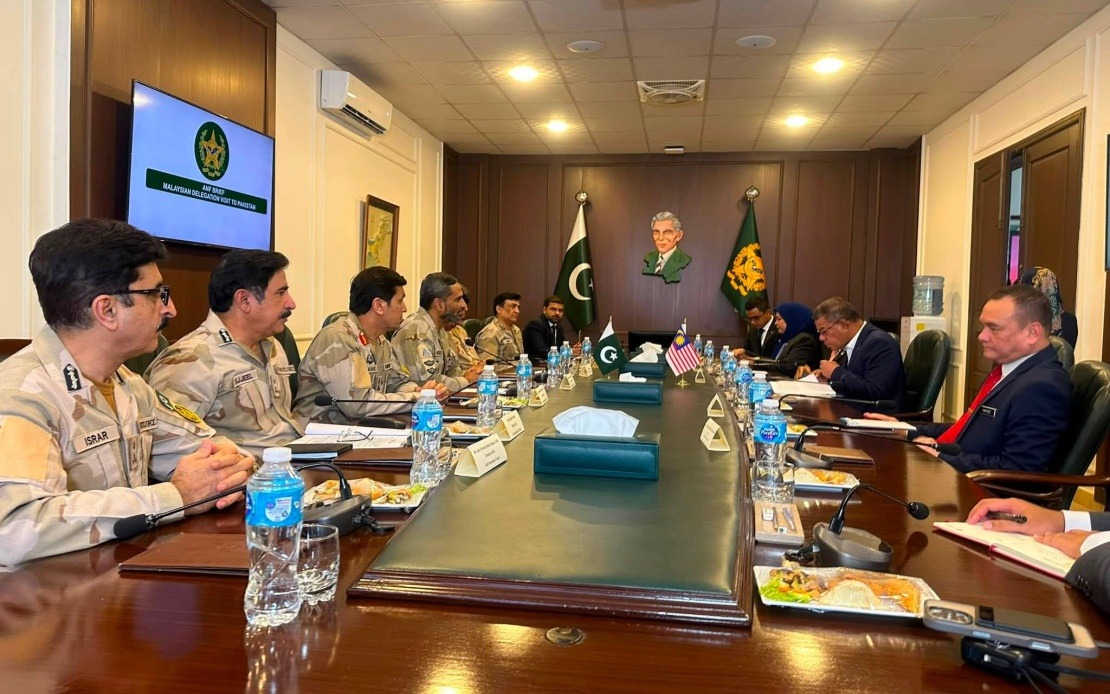
Malaysia and Pakistan are moving to formalise their drug-fighting efforts through a proposed Memorandum of Understanding that will create a more coherent operational framework for tackling narcotics threats spanning both nations. Home Minister Datuk Seri Saifuddin Nasution Ismail announced the initiative following high-level discussions at Pakistan's Anti-Narcotics Force headquarters in Islamabad, where he was briefed by Director-General Major General Abdul Moeed on current enforcement strategies and shared challenges.
The partnership carries particular significance given Pakistan's geographic position as a frontline state absorbing drug flows from Afghanistan, one of the world's largest opium producers. That proximity to major supply sources means the cooperation has direct implications for Malaysia and the wider Southeast Asian region, as trafficking routes increasingly extend eastward through complex networks that operate across multiple borders with sophisticated coordination. By establishing formal mechanisms with Islamabad, Malaysia can better intercept shipments and intelligence before narcotics reach local markets or transit through the country toward other destinations.
The narcotics landscape has shifted markedly in recent years, moving beyond traditional heroin and morphine trafficking toward far more complex challenges. Synthetic drugs such as methamphetamine now dominate enforcement priorities across Asia, requiring different operational approaches and technical expertise. These substances are manufactured in clandestine laboratories often controlled by transnational organised crime syndicates that operate with considerable agility and adapt quickly to enforcement pressure. The involvement of these sophisticated criminal networks means that bilateral or even regional responses prove insufficient—addressing the threat demands truly international cooperation.
Saifuddin Nasution emphasised that combating contemporary drug threats cannot succeed through isolated national efforts or by focusing only within ASEAN boundaries. The supply chains feeding narcotics into Malaysia originate thousands of kilometres away, pass through multiple countries, and involve actors operating across jurisdictions with little regard for borders. Intelligence sharing and coordinated enforcement operations thus become essential tools for disrupting these networks at their source and along transit routes, rather than waiting to intercept drugs at Malaysia's doorstep.
The two countries possess an existing operational foundation that demonstrates the potential of their partnership. Between 2012 and 2018 alone, Malaysian and Pakistani enforcement agencies jointly coordinated more than 28 significant cases, reflecting substantive cooperation despite the absence of formal structural arrangements. This track record suggests that a formal MoU, coupled with enhanced mechanisms, could substantially amplify their impact. Future collaboration will prioritise deepening intelligence sharing protocols, establishing mechanisms for coordinated operations guided by intelligence analysis, and facilitating exchanges of training and specialist expertise between both nations' agencies.
Beyond narcotics specifically, Saifuddin Nasution's visit encompassed broader bilateral discussions with Pakistani leadership that reveal the multi-dimensional nature of Malaysia-Pakistan relations. Meetings with Deputy Prime Minister and Foreign Minister Mohammad Ishaq Dar addressed regional stability, the role of diplomatic dialogue in conflict resolution, and cooperation among Islamic-majority nations in navigating contemporary geopolitical tensions. The discussions signal mutual interest in strengthening ties across economic, security, and cultural domains as both countries navigate challenging regional dynamics.
Economic dimensions feature prominently in the bilateral agenda. Trade and investment opportunities, food security arrangements involving Pakistani rice and meat exports, and market access discussions reflect Malaysia's interest in diversifying supply chains for essential commodities. These economic threads, when woven together with security cooperation, create a more resilient partnership that benefits both nations across multiple dimensions and withstands potential fluctuations in any single area.
A Joint Working Group established during meetings with Pakistan's Interior and Narcotics Control Minister Syed Mohsin Raza Naqvi will oversee expansion of cooperation in security, narcotics control, and police training. The same visit witnessed signing of the International Transfer of Prisoners Agreement, enabling both countries to manage detained nationals more efficiently and reducing complications in managing cross-border criminal cases. These procedural and institutional advances transform theoretical cooperation into practical operational capability.
The Malaysian delegation also examined Pakistan's identity management infrastructure through visits to the National Database and Registration Authority headquarters. NADRA Chairman Lt Gen Muhammad Munir Afsar briefed officials on biometric systems, digital identity solutions, border management technologies, and passport verification mechanisms. These systems represent crucial infrastructure for modern law enforcement, enabling rapid identification of suspects, verification of travel documents, and coordination with international databases. For Malaysia's Home Ministry, such exposure to Pakistan's approaches offers valuable lessons as the government pursues digital transformation in security operations.
The technology exchange carries implications extending beyond immediate security applications. As Malaysia advances its digital government initiatives aligned with MADANI Government priorities, learning from Pakistan's experience with large-scale identity management and e-governance systems provides practical insights. Cybersecurity protocols, crisis management systems, and service delivery platforms reviewed during the visit address challenges common to both nations pursuing rapid digital transformation while maintaining security standards.
For Malaysia and Southeast Asia more broadly, this deepening partnership with Pakistan reflects recognition that regional drug challenges require engagement with countries outside the immediate region. Afghanistan's continued instability, Pakistan's role as a transit point and consumption market, and the proliferation of precursor chemicals sourced from South and Central Asia mean that Malaysian drug enforcement cannot succeed in isolation. By formalising cooperation with Islamabad through the MoU and supporting institutional mechanisms, Malaysia positions itself to address narcotics threats at their roots rather than merely managing symptoms at home.
The timing of this initiative also reflects broader geopolitical realities. As China's Belt and Road connectivity projects deepen linkages across Asia, trafficking networks have similarly internationalised their operations. Formalised cooperation between Malaysia and Pakistan, underpinned by intelligence sharing and joint operations, establishes infrastructure for combating these evolving threats. The MoU thus represents both a practical enforcement tool and a statement of intent that Malaysia takes transnational drug challenges with utmost seriousness and will invest resources in partnerships extending across South and Southeast Asia to address them comprehensively.

