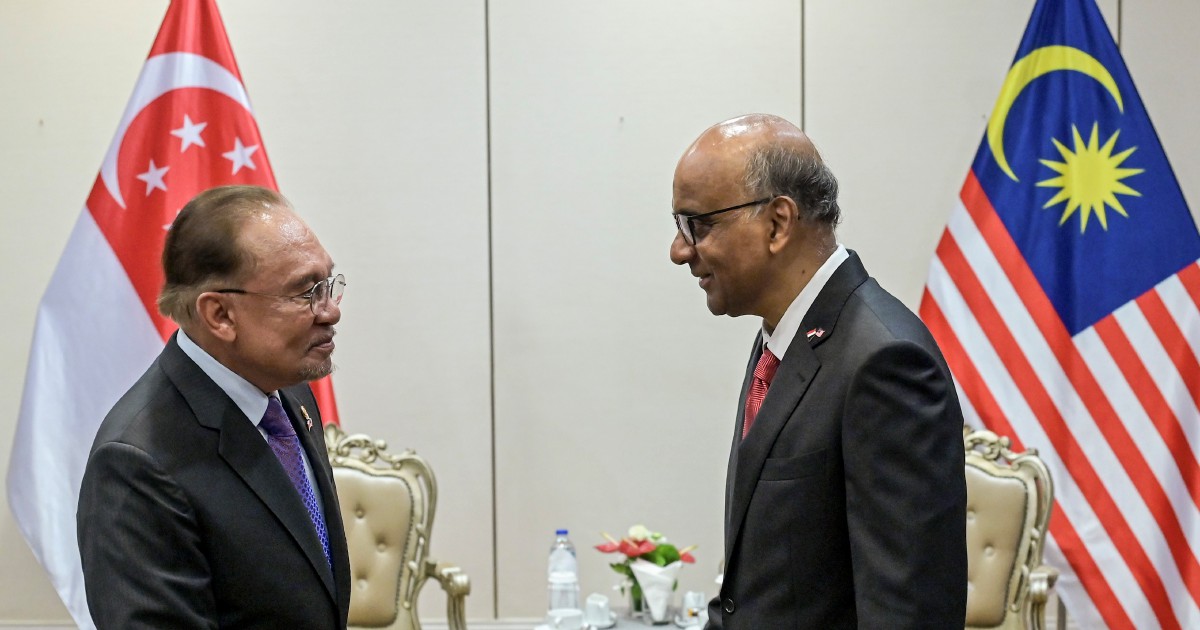
Malaysia and Singapore are moving closer to completion of their joint economic development blueprint, with Prime Minister Datuk Seri Anwar Ibrahim confirming that finalisation of the Johor-Singapore Special Economic Zone master plan is imminent. The announcement marks a significant milestone in one of Southeast Asia's most strategically important bilateral infrastructure projects, with implications extending far beyond the immediate border region.
The JS-SEZ represents a transformative initiative designed to leverage the complementary strengths of both nations—Singapore's financial and technological prowess alongside Malaysia's spatial capacity and manufacturing potential. The special economic zone concept has gained traction across the region as governments seek to boost competitiveness and attract foreign investment in an increasingly multipolar economic landscape. By establishing an integrated framework spanning the Johor straits, the two nations aim to create a seamless cross-border business environment that could position the region as a preferred destination for multinational corporations seeking alternatives to traditional manufacturing hubs.
The upcoming completion of the master plan represents the culmination of technical negotiations that have progressed steadily since the project's initial conceptualisation. Such comprehensive blueprints typically address critical operational questions: customs procedures, labour mobility, infrastructure standards, regulatory harmonisation, and fiscal arrangements. The complexity of coordinating two distinct legal systems and economic models has historically required meticulous coordination, making the projected timeline for finalisation a testament to political commitment from both capitals.
For Malaysia, the JS-SEZ opens significant economic opportunities, particularly for Johor state which would serve as the primary Malaysian component. The zone promises employment generation, skills transfer, and revenue from trade and business activities. It also positions Malaysia as an active participant in the growing South-East Asian integration narrative, strengthening the country's position within ASEAN's economic architecture. The initiative aligns with Malaysia's broader ambitions to diversify away from traditional sectors and establish itself as a regional hub for advanced manufacturing and digital services.
Singapore's involvement underscores its enduring strategy of positioning itself as a gateway and hub for regional commerce. Despite land constraints, Singapore has consistently leveraged partnerships with neighbouring states to extend its economic footprint. The JS-SEZ provides an outlet for Singaporean capital investment and expertise while maintaining the city-state's role as a financial and services centre that coordinates cross-border activities. This dynamic reflects how smaller, densely developed economies can remain economically dynamic through sophisticated regional partnerships.
The master plan's imminent completion carries implications for the broader ASEAN region. Successful implementation of a JS-SEZ could serve as a model for other bilateral economic initiatives within the association, demonstrating how neighbouring countries can pursue deeper integration while respecting sovereignty and distinct regulatory environments. Thailand, Vietnam, and Indonesia may observe the Malaysian-Singaporean approach with interest as they contemplate their own cross-border development zones.
Implementation logistics will prove decisive in determining whether the zone achieves its ambitious objectives. Efficiency in processing goods and people at border crossings, transparency in dispute resolution, and competitive tax regimes relative to other regional alternatives will influence investor confidence. Malaysian businesses, particularly SMEs, must receive clear information about participation mechanisms and potential competitive pressures from Singaporean and foreign firms operating within the zone.
The project also carries diplomatic weight beyond economics. Cross-border infrastructure projects inherently require sustained political cooperation and effective crisis management when disputes arise. The JS-SEZ's success would reinforce Malaysia-Singapore bilateral relations and provide a tangible institutional framework through which both nations regularly interact on substantive economic matters. Conversely, implementation difficulties could strain relations, making both governments' commitment to workable governance structures essential.
Regional observers note that timing matters considerably. As Southeast Asia navigates geopolitical uncertainties and competition between major powers for influence, practical economic partnerships between ASEAN members gain added significance. A functioning JS-SEZ demonstrates regional capacity for self-directed development independent of external power dynamics, reinforcing ASEAN centrality in shaping its economic future.
Malaysian policymakers should ensure that safeguards protect domestic interests alongside promoting open economic activity. Labour standards, environmental protection, and local business participation mechanisms warrant careful specification in the master plan. Thai experience with economic zones highlights how unequal benefit distribution can generate domestic political friction, a lesson relevant for Malaysian stakeholders assessing the zone's design.
The convergence toward plan finalisation reflects both pragmatic calculation and strategic vision. For ordinary Malaysians in Johor, the zone promises jobs and business opportunities, though implementation quality will determine whether benefits reach beyond elite contractors and major corporations. International investors evaluating Southeast Asian locations will gain a new option combining Singapore's institutional strengths with Malaysia's cost advantages and space, potentially reconfiguring investment flows across the region.
As negotiations approach completion, transparency regarding the master plan's contents becomes important. Public disclosure of key terms, timelines, and institutional arrangements would build stakeholder confidence and facilitate smoother implementation. The zone's ultimate success depends not merely on political leadership agreement but on practical efficacy when operations commence, requiring clear communication with businesses, workers, and communities affected by this transformative initiative.

