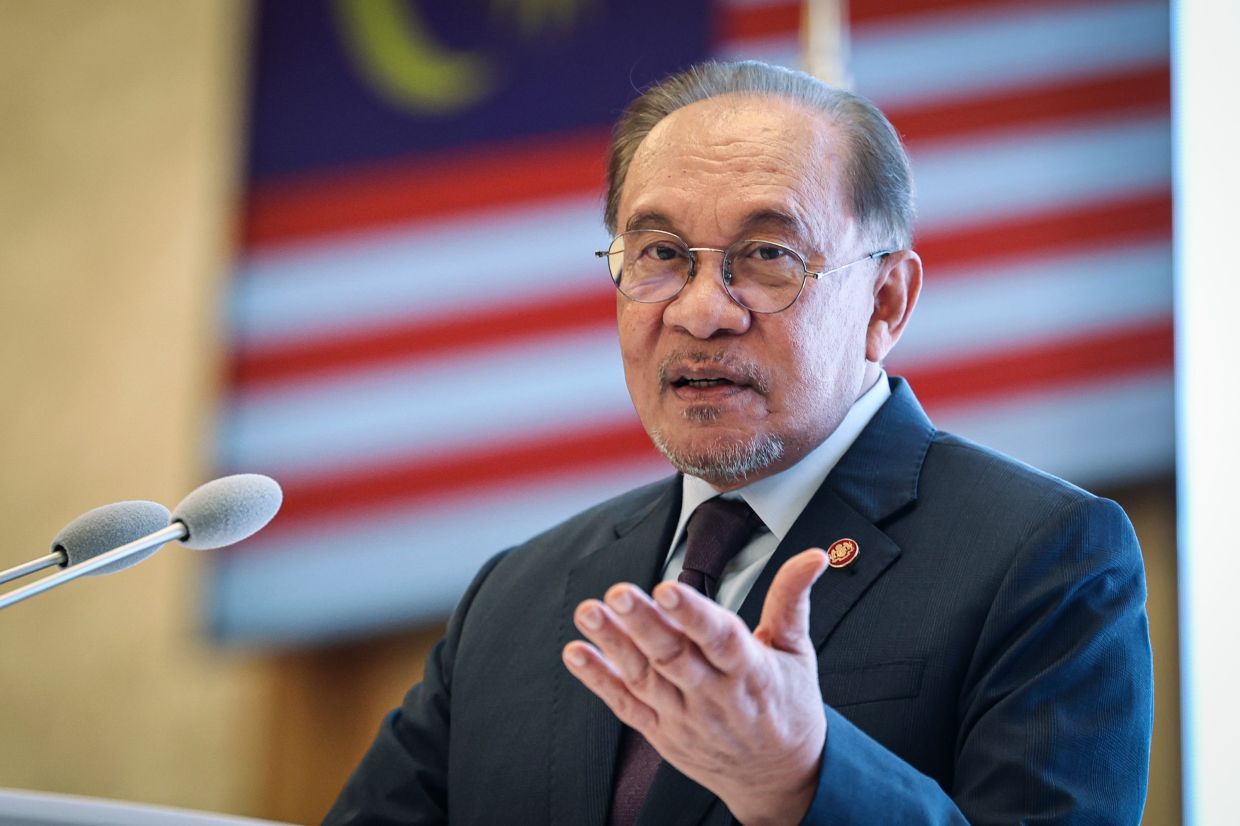
Prime Minister Datuk Seri Anwar Ibrahim has indicated that Malaysia and Singapore are on track to finalise the master plan for the Johor-Singapore Special Economic Zone (JS-SEZ) within the coming months, underscoring the two nations' determination to advance one of Southeast Asia's most significant bilateral economic projects. The announcement came during a high-level courtesy meeting with Singapore President Tharman Shanmugaratnam, who is undertaking a three-day state visit to Malaysia from July 13 to 15 at the invitation of His Majesty Sultan Ibrahim, King of Malaysia.
Anwar, who simultaneously holds the finance ministry portfolio, used the occasion to emphasise the constructive trajectory of Malaysia-Singapore relations and the momentum building around joint initiatives. The discussions with Tharman ranged across bilateral ties, contemporary regional geopolitical developments, and specific matters of concern to both governments. By hosting such talks at the presidential level, Malaysia demonstrated the strategic importance it attaches to the Singapore relationship, particularly given Singapore's position as a global financial hub and the region's most advanced economy.
The JS-SEZ represents an ambitious attempt by both nations to create an integrated cross-border economic corridor that would leverage Singapore's financial expertise and Malaysia's geographic scale and natural resources. The special economic zone framework is intended to attract multinational corporations and facilitate seamless trade flows between the two countries, potentially transforming the way commerce operates across their shared maritime and terrestrial boundaries. The completion of a finalised master plan is essential for establishing the regulatory architecture, governance mechanisms, and operational procedures that will govern the zone's functioning once it becomes operational.
Beyond the JS-SEZ discussions, Anwar emphasised in his statement that both Malaysia and Singapore have reaffirmed their commitment to resolving outstanding bilateral matters through sustained dialogue and constructive negotiation. This language is particularly significant, as it acknowledges that despite the strategic partnership, various longstanding disputes remain unresolved—whether relating to maritime boundaries, water agreements, or other contentious issues that have occasionally strained ties between the neighbours. The reference to "mutual respect and understanding" suggests both sides are committed to avoiding escalation and maintaining the diplomatic framework necessary for regional stability.
The timing of Tharman's visit is noteworthy given recent regional uncertainties and the heightened geopolitical attention on Southeast Asia. By framing Malaysia-Singapore cooperation as stable and forward-looking, both leaders are sending reassuring signals to the international business community and regional partners that the two nations remain reliable and committed to prosperity through economic integration. This demonstration of solidarity also carries implicit messages about ASEAN cohesion and the region's capacity to manage bilateral relationships in a constructive manner.
For Malaysian stakeholders, the progress on the JS-SEZ master plan carries significant implications. The special economic zone could create substantial employment opportunities, attract foreign direct investment, and position Malaysia as a more competitive destination for advanced manufacturing and financial services. The Johor region, in particular, stands to benefit from infrastructure development and improved connectivity that would typically accompany such initiatives. However, successful implementation will require careful coordination between federal and state governments, transparent governance structures, and mechanisms to ensure that local communities share in the economic gains.
The emphasis on finalising the master plan "in the near future" suggests that technical and diplomatic obstacles are being progressively cleared. Creating a joint master plan between two sovereign nations with different legal systems, regulatory frameworks, and political priorities is inherently complex. That both governments are now confident enough to indicate imminent completion demonstrates either genuine resolution of key contentious points or, at minimum, a shared political commitment to move forward despite remaining technical challenges.
Anwar's characterisation of the talks with Tharman reflects Malaysia's broader regional strategy of deepening economic ties while managing diplomatic sensitivities. By portraying bilateral relations through the lens of mutual benefit and shared prosperity, Malaysia positions itself as a pragmatic partner interested in concrete economic outcomes rather than zero-sum competition. This approach is particularly relevant for Southeast Asian nations seeking to balance relationships with major powers while developing intra-regional partnerships that strengthen collective economic resilience.
The Singapore-Malaysia relationship, despite occasional friction, remains foundational to regional stability and prosperity. Singapore's position as a critical financial and logistics hub means that smooth bilateral relations directly benefit Malaysia's ability to access global markets and attract international investment. Conversely, Malaysia's large domestic market and strategic location make it essential to Singapore's regional economic networks. The JS-SEZ initiative exemplifies how both nations can leverage their respective strengths to create value that extends beyond their borders.
Looking ahead, the successful completion of the JS-SEZ master plan will represent a milestone in regional economic integration. The project will require sustained political will, effective implementation mechanisms, and genuine cooperation across multiple government agencies in both countries. As Anwar indicated, the framework of mutual respect and constructive dialogue that has been established provides a foundation for translating the master plan into operational reality, though significant work remains in translating strategic vision into practical governance structures and business-friendly operating procedures.

