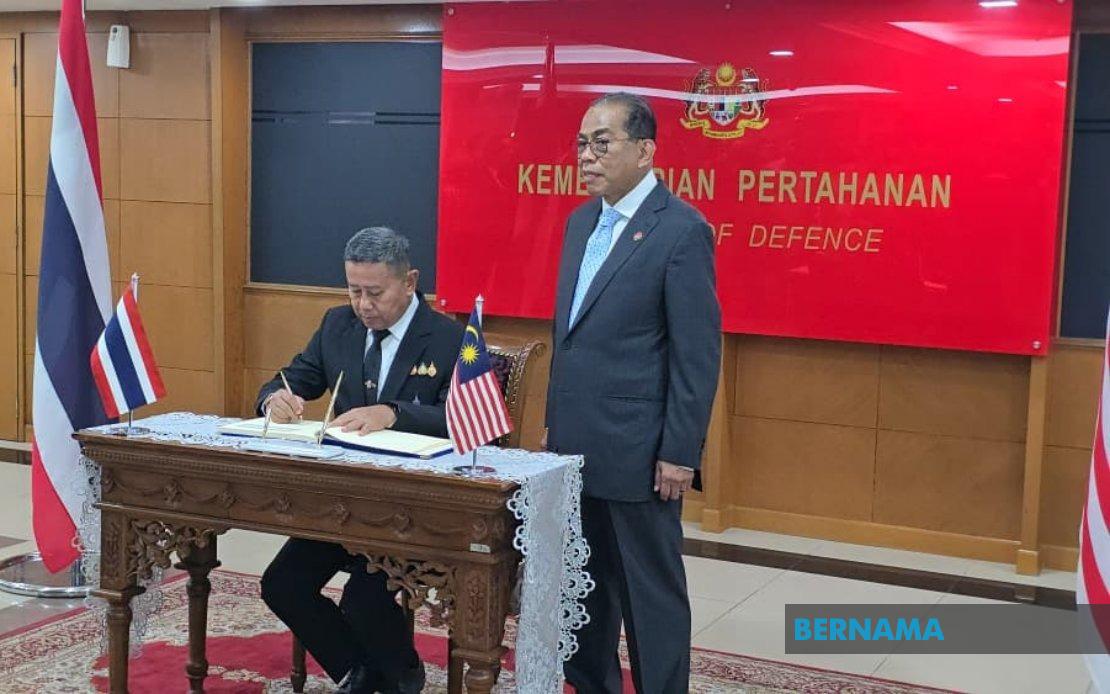
Defence ministers from Malaysia and Thailand have moved to solidify bilateral military cooperation, signalling renewed momentum in addressing shared security concerns across Southeast Asia. The engagement between Malaysia's Defence Minister Datuk Seri Mohamed Khaled Nordin and Thailand's newly appointed Defence Minister Lieutenant General Adul Boonthumjaroen at Wisma Pertahanan underscores the sustained priority both nations place on coordinated defence planning and regional stability initiatives.
Adul's maiden official visit to Malaysia since assuming his defence portfolio reflects the importance Bangkok places on strengthening ties with Kuala Lumpur, a key regional partner with significant military capabilities and diplomatic influence. The introductory meeting served as an opportunity for both leaders to chart the trajectory of defence relations and identify strategic priorities for the coming period. Mohamed Khaled's public congratulations on Adul's appointment and expression of confidence in Thailand's trajectory under Prime Minister Anutin Charnvirakul set a collegial tone that emphasises continuity and shared vision between the two defence establishments.
The breadth of issues discussed demonstrates how Malaysia-Thailand defence cooperation extends well beyond bilateral military exercises or equipment procurement. Both nations recognised their collective stake in promoting peace and stability throughout Southeast Asia, a region increasingly watching developments in areas ranging from maritime security to counter-terrorism efforts. This broader framing signals that defence cooperation serves as a foundation for addressing transnational challenges that respect no borders and require coordinated responses from multiple stakeholders.
Particular significance attaches to Thailand's explicit acknowledgment of Malaysia's mediation efforts in the longstanding border conflict between Thailand and Cambodia. This recognition validates Malaysia's position as a neutral and trusted facilitator in intra-regional disputes, a role that carries diplomatic weight and demonstrates how defence dialogues can yield broader conflict resolution benefits. By endorsing Malaysia's proactive stance, Thailand implicitly commits to supporting regional dialogue mechanisms that help defuse tensions and prevent flashpoints from escalating into broader regional instability.
The visit incorporated a substantive industrial component, with Adul touring facilities operated by the National Aerospace and Defence Industries (NADI) Group of Companies. Such industrial engagement moves defence relationships beyond government-to-government interactions into the commercial and technological dimensions of defence capability. Exposure to Malaysian defence manufacturing and aerospace capabilities presents opportunities for knowledge transfer, joint development projects, and potential procurement arrangements that could enhance Thailand's military modernisation programmes while bolstering Malaysian defence sector exports.
For Malaysian defence planners, the deepening relationship with Thailand holds strategic value given the latter's geographic position along critical maritime corridors and its role in coordinating regional responses to transnational crime and terrorism. Thailand's extensive border with Cambodia, Laos, and Myanmar positions it as a crucial partner in addressing cross-border security challenges that increasingly preoccupy Southeast Asian governments. Enhanced intelligence sharing, joint training exercises, and coordinated maritime patrols represent practical extensions of the political commitment both nations have reaffirmed.
The timing of this engagement reflects broader regional dynamics where Southeast Asian nations increasingly recognise that unilateral security approaches prove insufficient in addressing complex, multifaceted threats. Terrorism, human trafficking, drug smuggling, and maritime piracy require coordinated responses involving multiple state actors operating within established institutional frameworks. Malaysia and Thailand's recommitment to defence cooperation signals their intention to strengthen these frameworks and ensure that bilateral channels remain open and effective.
From Bangkok's perspective, strengthening defence ties with Malaysia serves multiple objectives simultaneously. It reinforces Thailand's standing within ASEAN, projects confidence in the new defence ministry's leadership, and demonstrates commitment to regional stability at a moment when Myanmar's political instability and evolving great power competition create strategic uncertainties. For Kuala Lumpur, the engagement consolidates Malaysia's position as a stabilising force and trusted dialogue partner that can broker consensus and facilitate cooperation even amid challenging geopolitical conditions.
The exploration of future cooperation opportunities discussed during Adul's NADI visit suggests both nations remain open to expanding the scope and depth of defence interaction. Whether through technology partnerships, personnel exchanges, or joint ventures in defence manufacturing, such initiatives can create mutual economic benefits while strengthening the human networks that underpin effective bilateral relations. Defence cooperation rooted in tangible commercial and technological partnerships tends to demonstrate greater resilience than relationships based solely on political rhetoric.
Looking forward, the reinforced Malaysia-Thailand defence relationship carries implications extending beyond bilateral interests into broader regional architecture. As ASEAN navigates challenges ranging from South China Sea security to transnational crime, the strength of bilateral partnerships between major regional powers determines the collective capacity to shape outcomes. Malaysia and Thailand's demonstrated commitment to cooperation suggests both nations understand that regional stability ultimately depends on sustained engagement, transparent dialogue, and shared commitment to peaceful resolution of disputes—principles that merit emulation across Southeast Asia as geopolitical competition intensifies.

