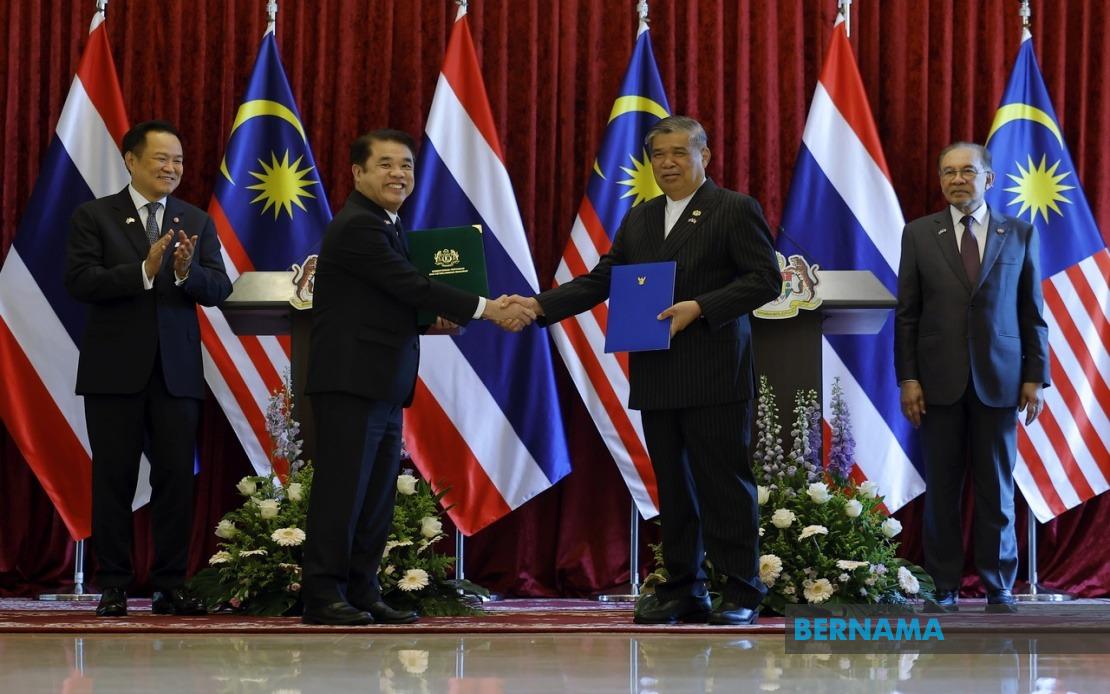
Thailand and Malaysia have moved to substantially expand their agricultural relationship through a comprehensive memorandum of understanding, marking a significant step toward regional food security and economic integration. The agreement, inked during bilateral talks between Thai Prime Minister Anutin Charnvirakul and Malaysian Prime Minister Datuk Seri Anwar Ibrahim at the Malaysian Prime Minister's Office in Putrajaya on Thursday, addresses a range of agricultural sectors and establishes frameworks for sustained collaboration across multiple dimensions of food production and rural development.
The memorandum encompasses cooperation in crop production, livestock management, fisheries operations, agricultural research, technology transfer mechanisms, human resource development for farming communities, and coordinated food security strategies. This multi-faceted approach reflects the recognition by both governments that modern agricultural challenges require integrated solutions spanning production methods, market systems, and workforce capability. The breadth of the agreement suggests both nations view agricultural development not merely as a trade issue but as a cornerstone of regional stability and prosperity.
A particularly significant achievement within the broader accord involved resolving protracted disputes over market access for two high-value seafood commodities. Outstanding issues concerning shrimp and barramundi trade between the two nations have been addressed, removing barriers that had constrained farmers and fishermen on both sides of the border. Thai Government spokesperson Ratchada Thanadirek indicated that agriculture ministers from both countries have been directed to expedite implementation of these resolved measures, signalling political commitment to translating diplomatic agreements into practical benefits for producers affected by previous trade impediments.
The bilateral engagement extends substantially beyond agricultural production itself. Both governments have committed to deepening cooperation across trade, investment, tourism, infrastructure development, and security matters. This interconnected approach recognises that agricultural success depends on robust supporting systems including efficient logistics networks, secure supply chains, and regulatory alignment. The two leaders emphasised their intention to create broader economic opportunities and improve living standards for citizens across both countries through coordinated regional development.
Central to the economic dimension of these talks was the reaffirmation of a shared target to achieve US$30 billion in bilateral trade in the near term. This ambitious figure, coupled with specific emphasis on strengthening supply chain cooperation in food security, energy sectors, and high-technology industries, positions agricultural and fisheries products within a larger framework of mutual economic interdependence. For Malaysia and Thailand, both significant agricultural producers and processors, achieving this trade milestone would substantially elevate their economic partnership and create interconnected value chains difficult to unwind by external pressures.
Prime Minister Anutin's visit represented his first bilateral engagement with Malaysia since his reappointment in March 2026, underscoring the importance both governments place on the relationship. His two-day official visit, undertaken at the explicit invitation of Prime Minister Anwar, suggests enhanced diplomatic momentum between the two neighbouring nations. The timing and scope of discussions indicate that both leaders view this period as opportune for advancing previously stalled or incremental cooperation initiatives into more substantive partnerships.
A practical manifestation of this commitment will unfold on Friday, July 10, when both Prime Ministers will jointly officiate the opening of a critical border infrastructure project in Kedah. The completion of a road linking the Immigration, Customs, Quarantine and Security Complex in Bukit Kayu Hitam with Thailand's corresponding Customs, Immigration and Quarantine Complex in Sadao represents more than symbolic cooperation. Enhanced border infrastructure directly facilitates agricultural trade by reducing transit times, minimising spoilage for perishable products, and streamlining regulatory procedures that have historically constrained cross-border commerce in agricultural goods.
For Malaysian agricultural stakeholders, the expanded cooperation offers multiple tangible benefits. Technology transfer provisions enable local farmers to access advanced production methods, potentially improving yields and product quality in competitive regional markets. Human resource development components address the perennial challenge of skilled labour shortages in commercial agriculture and modern fisheries. Simultaneously, the resolution of market access issues for shrimp and barramundi opens significant export opportunities for Malaysian producers who have faced regulatory barriers in neighbouring Thailand.
The agreements also carry strategic implications for Southeast Asian agricultural development more broadly. As the region confronts challenges including climate change impacts on crop yields, population growth driving food demand, and evolving consumer preferences toward higher-value agricultural products, bilateral cooperation models such as this one provide templates for other nations. Malaysia and Thailand, as major ASEAN members, are effectively demonstrating that agricultural integration can proceed through structured cooperation rather than competitive market disruption.
Prime Minister Anutin has directed relevant Thai government agencies to implement agreed outcomes swiftly and to complete pending bilateral memoranda of understanding. This directive reflects awareness that diplomatic agreements require institutional follow-through to deliver results. The emphasis on concluding outstanding bilateral instruments suggests both governments are building toward a significant milestone: the 70th anniversary of diplomatic relations between Thailand and Malaysia in 2027. Framing current cooperation efforts as preparatory for this anniversary indicates intention to present a substantially deepened partnership to publics and international observers at that milestone moment.
The agricultural cooperation framework also addresses food security concerns that have gained prominence across Southeast Asia and globally. By establishing coordinated approaches to crop and livestock production, technology sharing, and market stabilisation mechanisms, Malaysia and Thailand are creating buffers against supply disruptions and price volatility that can destabilise societies. For a region vulnerable to natural disasters and subject to global commodity price fluctuations, such bilateral resilience measures provide measurable security benefits extending beyond immediate commercial considerations.
Looking forward, the trajectory established through these agreements positions Malaysia-Thailand cooperation as a model for productive regional engagement. Success in implementing the agricultural memorandum, combined with infrastructure improvements at shared borders and progress toward the US$30 billion trade target, could encourage similar bilateral frameworks with other ASEAN neighbours. For Malaysian readers and observers, the agreements represent both immediate market opportunities for agricultural producers and a longer-term commitment by government to regional integration based on complementary economic strengths rather than zero-sum competition.

