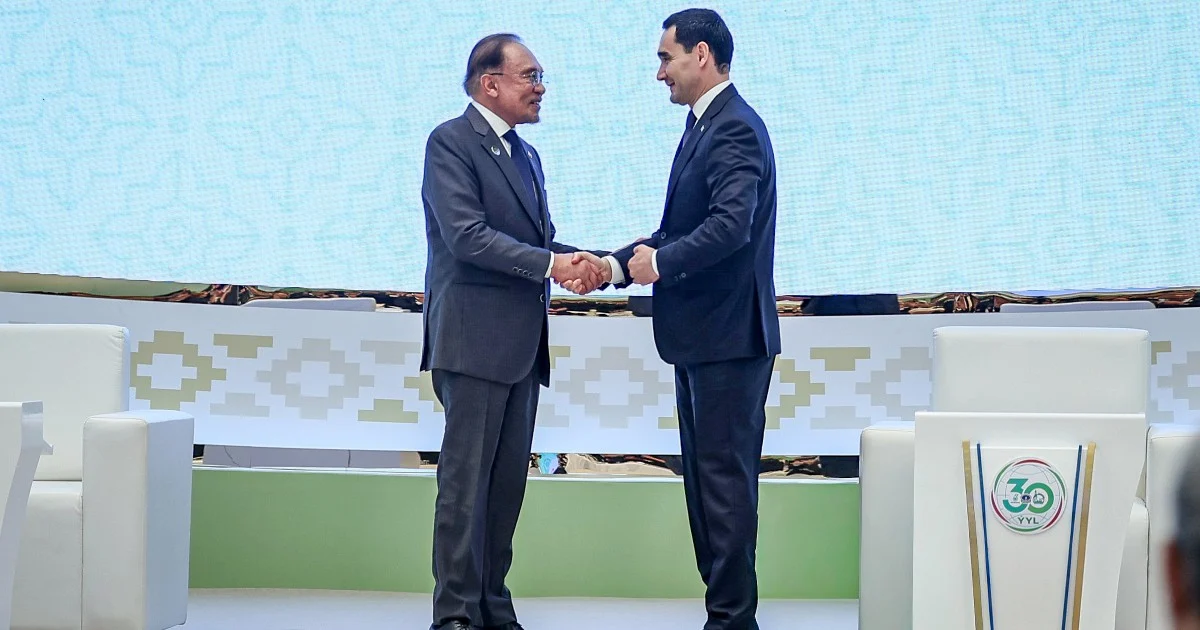
Malaysia and Turkmenistan have charted a course toward deeper economic integration, moving beyond traditional energy ties to establish a more comprehensive partnership framework that encompasses multiple strategic sectors. The bilateral commitment emerged during Prime Minister Datuk Seri Anwar Ibrahim's official state visit to the Central Asian nation, signalling renewed momentum in Malaysia's engagement with a region that has historically received less diplomatic attention despite its substantial energy reserves and growing economic potential.
The energy sector remains the cornerstone of this renewed partnership, reflecting Turkmenistan's position as one of the world's largest natural gas producers and Malaysia's energy-intensive economy. Turkmenistan currently operates significant hydrocarbon resources that could offer viable alternatives for Malaysia's long-term energy security as regional demand continues to grow and diversification becomes increasingly important for Southeast Asian nations. The agreement to deepen energy cooperation suggests concrete discussions around potential investments, technical expertise sharing, and possibly supply arrangements that could benefit Malaysian industrial and power generation sectors.
Beyond resource management, the two nations have identified trade and investment as pivotal growth areas requiring sustained focus and institutional support. Malaysia's established financial sector and regional expertise in trade facilitation could complement Turkmenistan's desire to integrate more extensively into global commerce. Conversely, Malaysian businesses seeking exposure to Central Asian markets would gain a strategic entry point through strengthened bilateral relations, potentially opening doors for Malaysian companies in telecommunications, manufacturing, and service industries that have shown competitive advantages in regional markets.
Transportation connectivity emerged as another dimension of the partnership, reflecting the geographical realities of Central Asian commerce. Enhanced transport linkages between Malaysia and Turkmenistan could facilitate smoother movement of goods and potentially reduce transaction costs for bilateral trade. This connectivity agenda aligns with broader regional initiatives aimed at establishing more efficient supply chains across Asia, particularly as global trade patterns shift and new logistical corridors gain prominence in international commerce.
The educational dimension of this partnership addresses human capital development, a critical factor for sustainable economic growth in both nations. By expanding educational exchanges and institutional collaborations, Malaysia and Turkmenistan create opportunities for knowledge transfer and workforce development that extend beyond immediate commercial transactions. Malaysian educational institutions, particularly those specialising in engineering, petroleum technology, and business studies, could attract Turkmen students while facilitating reverse exchanges that deepen mutual understanding and create long-term professional networks.
Technology cooperation represents the forward-looking component of this expanded framework, positioning both nations to benefit from Malaysia's established digital economy and Turkmenistan's emerging technological ambitions. Joint initiatives in sectors such as renewable energy transition, digital infrastructure, and telecommunications could address shared development challenges while creating collaborative research and innovation opportunities. This technological dimension also reflects a global trend where energy-producing nations increasingly emphasise clean technology adoption and digital transformation.
Anwar Ibrahim's state visit underscores Malaysia's strategic interest in strengthening connections with Central Asian neighbours, a region often overshadowed by Malaysia's traditional focus on Southeast Asian, Middle Eastern, and East Asian relationships. This diplomatic initiative suggests a recalibration of Malaysia's foreign economic policy toward greater geographic diversification. For Malaysian policymakers and business leaders, the Central Asian corridor represents untapped potential that could generate meaningful returns across multiple sectors simultaneously.
The timing of this partnership deepening coincides with broader regional shifts in energy markets and geopolitical considerations affecting Asia. As European nations reduce dependence on Russian energy and global energy transitions accelerate, alternative suppliers like Turkmenistan gain enhanced relevance. For Malaysia, establishing closer ties now positions the country advantageously for future energy security considerations while simultaneously offering Malaysian enterprises first-mover advantages in emerging Turkmen markets.
The comprehensive nature of the partnership—spanning energy, trade, investment, transportation, education, and technology—reflects a mature understanding that sustainable bilateral relations require multifaceted engagement rather than single-sector dependency. This approach reduces vulnerability to commodity price fluctuations and creates resilient economic ties that withstand geopolitical headwinds. Malaysian and Turkmen officials appear committed to building institutional mechanisms that ensure these agreements translate into concrete business activity and measurable economic outcomes rather than remaining aspirational statements.
For Malaysian enterprises, the implications extend across multiple domains. Energy-focused companies gain potential upstream and trading opportunities, while logistics providers, educational institutions, and technology firms discover new market segments. The agreement signals to Malaysian investors that Turkmenistan represents an increasingly welcoming destination for capital and expertise, though successful engagement requires understanding the regulatory environment and local business practices that characterise Central Asian commerce.
The partnership also carries implications for regional stability and economic cooperation frameworks across Asia. As Malaysia strengthens ties with Central Asian partners, it contributes to a more interconnected continent where trade, investment, and people-to-people exchanges create natural constituencies for peaceful coexistence and mutually beneficial development. This relationship-building also demonstrates Malaysia's capacity to operate effectively across diverse geopolitical contexts, from Southeast Asia through South Asia to Central Asia.
Moving forward, success depends on translating these broad agreements into specific mechanisms, investment vehicles, and operational frameworks that facilitate actual business transactions and sustained collaboration. Both governments will need to establish clear timelines, designated focal points, and measurable objectives that track progress across the various partnership dimensions. The energy sector will likely continue generating headlines, but the true long-term value may emerge from less visible cooperation in education, technology, and human capital development that creates enduring connections between Malaysian and Turkmen societies and businesses.