Brazil's commanding 3-0 dismissal of Haiti in Philadelphia on June 19 offered Carlo Ancelotti's supporters genuine cause for optimism, even if the tactical challenges facing the five-time World Cup champions remain formidable. The victory alone did not resolve the structural issues that emerged during the team's frustrating 1-1 Group C opener against Morocco, but it provided clarity about the direction the Italian coach intends to steer this squad and suggested that the necessary adjustments could yet yield dividends in the tournament.
Playing a Haiti side that repeatedly abandoned defensive responsibility in pursuit of attacking opportunities, Brazil found the space and passing angles that had eluded them in their opening fixture. For a team desperate to rediscover the slick combination play and rhythm that should define Brazilian football at its best, the performance against such limited opposition offered the breathing room needed to experiment. Yet the significance of this match extends beyond the comfortable scoreline, rooted instead in the two tactical modifications Ancelotti introduced that fundamentally altered his team's shape and attacking threat.
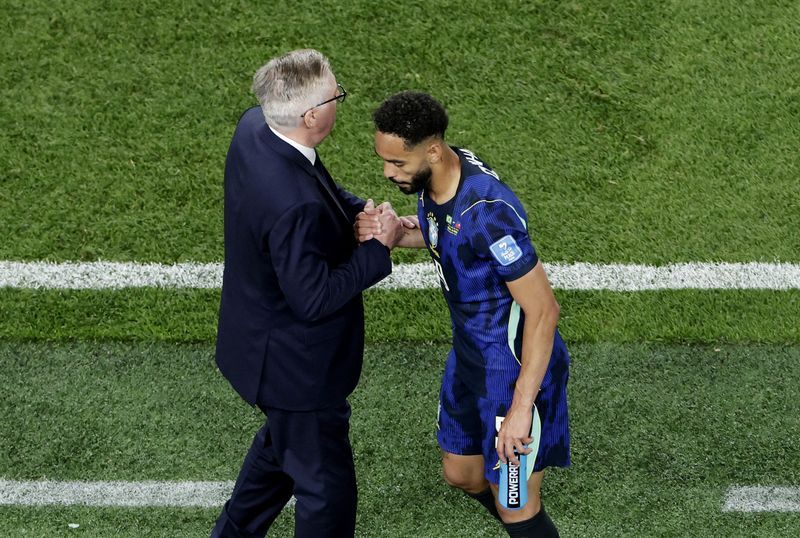
The most consequential change involved Matheus Cunha replacing Igor Thiago in the forward line, a substitution that immediately injected greater balance into Brazil's attacking phase. Cunha's performance illuminated what had been missing during the Morocco stalemate: a forward capable of drifting laterally, creating space in transition, and forging coherent passages of play between midfield and attack. His tireless movement and positioning allowed the midfield behind him to operate with greater freedom, a quality that transformed how the entire left flank functioned.
With Cunha operating in his characteristic style, Lucas Paqueta blossomed on the left side of Ancelotti's diamond midfield, a dramatic improvement from his laboured first-half showing against Morocco. The Paris Saint-Germain midfielder suddenly found himself operating in an environment where his strengths could flourish, with Cunha providing constant movement and intelligent positioning that drew defenders and created opportunities for combination play. Crucially, Paqueta began receiving the ball in positions where he could turn and drive forward, rather than being forced to operate in traffic as a more peripheral figure.
This axis of Paqueta, Cunha, and Vinicius Jr generated immediate cohesion and purpose, with Brazil's goalscoring opportunities naturally gravitating toward the left side. Vinicius, who has endured extended periods in the national team setup without receiving adequate support, suddenly enjoyed the presence of midfield runners and intelligent positioning that allowed him to receive the ball in threatening areas. The chemistry between these three players suggested they could develop into a potent attacking unit, particularly if sustained focus and repetition allows the patterns to become more intuitive and less reliant on individual moments of brilliance.
However, the left flank's renaissance exposed the fragility persisting on Brazil's right side, where Raphinha has now struggled for consecutive matches. The Barcelona winger appeared visibly uncomfortable throughout his time on the pitch, hampered by blisters that forced him to miss a training session earlier in the week and compromised his sharpness from the opening moments. Beyond the physical concerns, Raphinha's positioning in a wider role than he typically occupies at club level seemed to constrain his natural instincts, and he struggled with basic ball control and pass accuracy.
The distinction between Raphinha's club responsibilities and his international deployment highlighted a deeper tactical question. At Barcelona, the winger operates with greater freedom to drift infield and link play, adopting the kind of position that Cunha occupied so effectively against Haiti. Forced to remain pinned to the touchline in Brazil's system, Raphinha appeared neutered, unable to impose himself on the game. His substitution due to physical concerns ended a difficult outing prematurely, but the underlying issue suggests that Brazil's right-hand side requires recalibration to function at the level demanded in tournament football.
Casemiro's durability in midfield presents another dimension of tactical uncertainty that Ancelotti must address. The 34-year-old Manchester United anchor performed adequately against Haiti but may struggle against opponents with greater technical sophistication and pressing intensity. One potential solution involves repositioning Bruno Guimaraes, who operated competently on the right side of midfield and could drop deeper to provide defensive solidity while simultaneously improving Brazil's build-up play from defence. Such an adjustment would necessitate finding an alternative for the right flank, with Luiz Henrique emerging as the more promising candidate than Rayan, who failed to establish himself during his cameo appearance.
The diamond formation that emerged against Haiti represents Ancelotti's attempt to synthesize Brazil's traditional attacking prowess with defensive pragmatism, a balance that has proven elusive for the national team in recent campaigns. The system requires exceptional positional discipline and movement intelligence from its midfield operators, demanding a level of tactical sophistication that contrasts with the free-flowing football Brazilian audiences expect. Against Haiti, this worked tolerably well; against genuinely formidable opponents, the rigidity of the structure could become Brazil's greatest liability if the personnel cannot execute the necessary combinations.
Although the Haiti victory lacked the continental quality demanded of genuine tournament statements, it nonetheless represented meaningful progress compared to the creative limitations exposed during the Morocco encounter. Brazil demonstrated that alternative configurations exist and that adjustments can generate tangible improvements in attacking fluency. The challenge confronting Ancelotti extends beyond mere tactical tweaking; he must construct a system whereby Cunha's qualities, Vinicius's potency, and the midfield's creative contributions function seamlessly while simultaneously addressing the persistent weakness down the right side. The foundation exists, but the architecture requires refinement.