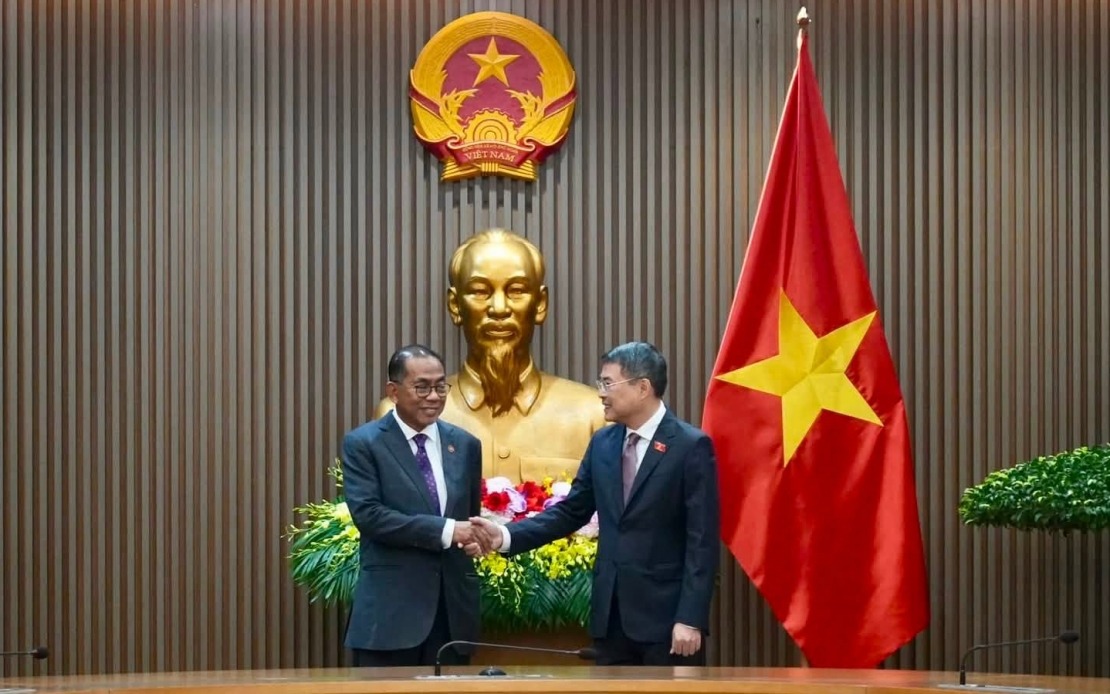
Malaysia and Vietnam have pledged to expand their defence relationship across multiple strategic domains, including maritime security, technological advancement, and defence industry collaboration. Defence Minister Datuk Seri Mohamed Khaled Nordin conveyed this commitment following discussions with Vietnamese Prime Minister Lê Minh Hưng during an official visit to Hanoi, signalling the depth of engagement between two Southeast Asian nations increasingly focused on coordinated regional security.
The partnership between Kuala Lumpur and Hanoi reflects a broader strategic convergence in how both countries approach security challenges in an increasingly contested region. Malaysia views Vietnam as a dependable ally, and this sentiment is reciprocated through sustained high-level diplomatic engagement and institutional cooperation frameworks. The relationship extends beyond traditional military cooperation to encompass emerging security domains that will shape regional dynamics for years to come.
Central to the evolving partnership is the Memorandum of Understanding on Defence Cooperation signed in 2023, which serves as the foundational document guiding bilateral military relations. Rather than representing a static agreement, this MoU functions as a living framework that both countries intend to expand and adapt. The document's emphasis on maritime cooperation is particularly significant given the strategic importance of Southeast Asian waters, where multiple nations maintain overlapping interests and where freedom of navigation remains a consistent policy priority.
Maritime security stands as a paramount concern for both nations. Vietnam, with its extensive coastline and maritime trade dependencies, faces persistent challenges related to its maritime borders and shipping corridors. Malaysia similarly depends heavily on secure sea lanes for trade and has jurisdictional interests spanning multiple maritime zones. By deepening cooperation in this sector, the two countries can enhance their collective capacity to monitor waters, share intelligence, and respond to incidents more effectively, while also strengthening interoperability between their naval forces.
The technological dimension of this partnership addresses the reality that contemporary security challenges increasingly require advanced digital and cyber capabilities. Both nations recognize that artificial intelligence, cyber threats, and information warfare represent evolving domains where preparedness and innovation determine strategic outcomes. Through joint capability development initiatives, Malaysia and Vietnam can accelerate their technological advancement while reducing duplicative expenditures and leveraging each nation's particular strengths and expertise.
Cooperation in the defence industry itself carries implications beyond military procurement. Building collaborative manufacturing and research capabilities between the two countries creates economic opportunities while fostering technological self-reliance at the regional level. This approach reduces dependency on external suppliers and keeps strategic defence capabilities within the region's control, a consideration increasingly important as geopolitical competition intensifies.
The two nations' shared commitment to ASEAN principles and consensus-based dialogue reflects a particular approach to managing regional tensions. Both Malaysia and Vietnam have historically advocated for resolving disputes through diplomatic channels and multilateral forums rather than confrontation. This stance becomes more significant given the strategic competition between major powers in the region, where smaller and medium-sized nations must carefully navigate their security choices while maintaining strategic autonomy.
The challenges enumerated during the ministerial meeting—including great power competition, grey zone activities, and supply chain disruptions—represent contemporary security threats that no single nation can adequately address alone. Grey zone activities, which encompass actions below the threshold of conventional conflict, particularly demand regional coordination and shared intelligence. When one nation experiences pressure through coercive measures short of military action, it affects the broader regional stability that all neighbours depend upon for their own security and prosperity.
Artificial intelligence and cognitive warfare merit particular attention as emerging domains where bilateral and regional cooperation remains underdeveloped. These technologies blur traditional lines between military and civilian domains, affecting information environments that shape public opinion and political outcomes. Malaysia and Vietnam's inclusion of these subjects in defence discussions demonstrates awareness of how future conflicts may unfold in ways fundamentally different from past experiences.
The emphasis on maintaining regional peace and stability through enhanced collective resilience reflects an understanding that ASEAN's future security depends on internal cohesion and coordinated responses to external pressures. Neither Malaysia nor Vietnam possesses the military capacity to independently counterbalance major power influence, making regional solidarity a strategic necessity rather than merely a diplomatic preference. Through partnership, they signal commitment to preserving ASEAN's centrality in regional security architecture.
For Malaysian readers, this deepening partnership with Vietnam carries direct implications for maritime security in key shipping lanes and the South China Sea region, where Malaysia maintains territorial interests. Enhanced intelligence sharing and coordinated capabilities with Vietnam strengthen Malaysia's ability to protect its maritime interests and respond to potential security incidents. The partnership also signals Malaysia's continued commitment to multilateral rather than bilateral security arrangements with external powers.
The timing of these defence discussions also reflects broader regional trends where Southeast Asian nations are diversifying their security partnerships rather than aligning exclusively with one major power. This hedging strategy, demonstrated through Malaysia's engagement with Vietnam and other ASEAN partners, provides greater flexibility in navigating great power competition while maintaining room for engagement with multiple international actors.
Moving forward, the expansion of the Malaysia-Vietnam defence partnership will likely serve as a model for other bilateral relationships within ASEAN, potentially contributing to the organization's capacity to address shared security challenges. As implementation of expanded cooperation frameworks progresses, the effectiveness of these arrangements will become clear, either validating this approach or revealing gaps requiring adjustment. The commitment articulated by Defence Minister Mohamed Khaled Nordin therefore represents not merely rhetorical support but the beginning of a practical process of deepening institutional ties that could reshape regional security dynamics.

