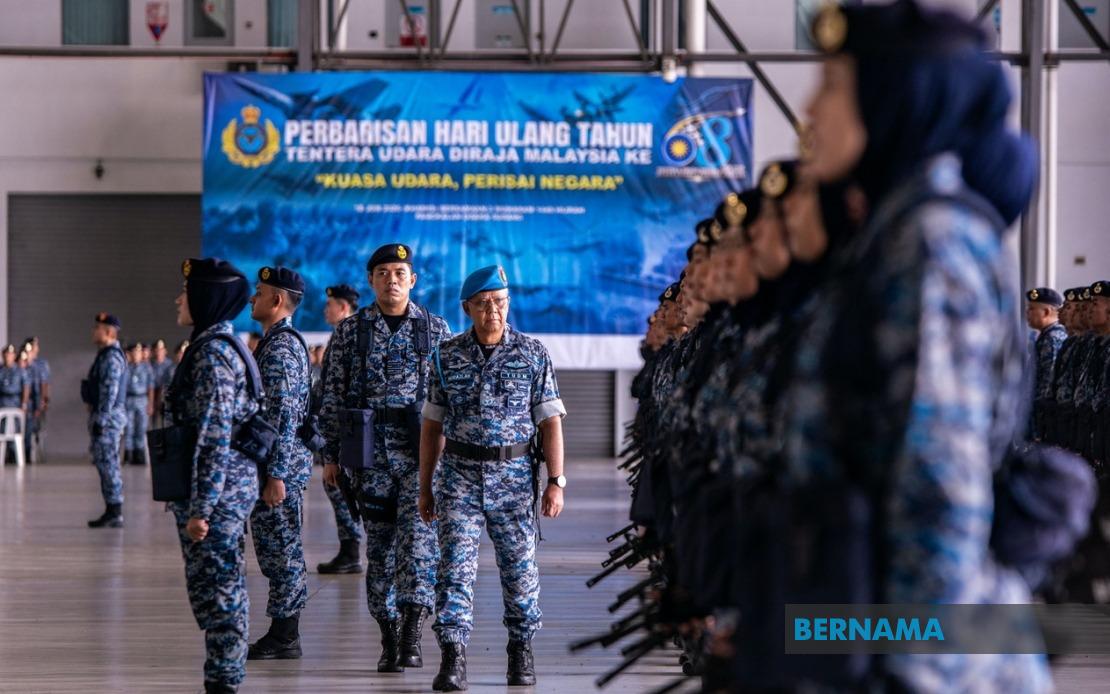
Malaysia's air force is moving ahead with a significant modernisation initiative aimed at closing critical surveillance gaps across the nation's airspace. The Royal Malaysian Air Force (RMAF) has begun deploying integrated air defence and surveillance radar systems at multiple strategic points spanning from Peninsular Malaysia to East Malaysia, a development announced during commemorations of the service's 68th anniversary at a parade in Subang. The initiative reflects growing concerns about maintaining effective monitoring capabilities in an increasingly complex security environment where technological advancement and geopolitical tensions demand heightened vigilance.
According to RMAF Chief General Tan Sri Muhamad Norazlan Aris, the new radar installations will be positioned at Bintulu in Sarawak, Bukit Puteri in Terengganu, and Bukit Lunchu in Johor. Complementing these land-based systems, an air surveillance radar facility is being commissioned on Pulau Layang-Layang, Malaysia's easternmost outpost in the South China Sea. The geographic spread of these installations demonstrates a deliberate strategy to establish comprehensive coverage across Malaysia's extensive maritime zones and airspace, addressing vulnerabilities that have persisted despite previous modernisation efforts.
These radar deployments represent the opening phase of the RMAF Capability Development Plan 2055 (CAP55), an ambitious roadmap designed to ensure the air force remains technologically competitive and operationally effective through the coming decades. By establishing redundant early warning systems spread across geographically diverse locations, the plan acknowledges that no single facility can adequately monitor the vast airspace Malaysia must protect. The phased approach also provides flexibility for budgeting and implementation, allowing the RMAF to integrate new systems while maintaining existing operations without disruption.
The expansion of Malaysia's radar network carries particular significance given escalating tensions in the Middle East and their potential ripple effects on Asian security and economics. General Muhamad Norazlan highlighted how the ongoing West Asian conflict has exposed vulnerabilities in critical international shipping lanes, particularly the Strait of Hormuz, where disruptions cascade through global energy markets and supply chains. Malaysia, as a trading nation heavily dependent on maritime commerce, faces indirect but tangible threats from such regional instability, making robust air and maritime domain awareness essential defensive measures.
Malaysia's reliance on unimpeded passage through crucial sea lanes cannot be overstated. The Strait of Malacca and the broader South China Sea constitute the economic lifeline supporting the nation's trade-dependent economy. Any disruption to shipping through these waters would devastate Malaysia's import-export sector and raise costs for consumers and businesses nationwide. The new radar capabilities serve a dual purpose: they enhance Malaysia's ability to detect potential threats to maritime traffic while demonstrating the nation's commitment to maintaining sovereignty over its claimed airspace and territorial waters. This positioning is particularly important given ongoing territorial disputes and competing claims in the South China Sea.
The placement of surveillance equipment on Pulau Layang-Layang underscores Malaysia's determination to maintain an active presence in its easternmost territories and assert its claims to surrounding maritime zones. The isolated island atoll, situated far from the Peninsular mainland, has historically been a symbol of Malaysian sovereignty in disputed waters. Installing sophisticated radar technology there sends a clear signal regarding Malaysia's long-term strategic vision for the region and its willingness to invest in infrastructure that supports both military readiness and civilian maritime safety.
Beyond the hardware installations, the RMAF has placed emphasis on honouring personnel contributions and maintaining institutional morale. During the anniversary parade, General Muhamad Norazlan presented service medals and commendation certificates to 17 recipients, recognising their dedication and professional achievements. The ceremony featured representation from across the air force's diverse operational branches, including the elite RMAF Special Forces (PASKAU), the Ground Defence Force (HANDAU), and gender-inclusive composite units, reflecting the modern, integrated approach to military operations that contemporary defence challenges demand.
The anniversary parade itself, themed 'Kuasa Udara, Perisai Negara' (Air Power, National Shield), emphasised the RMAF's role as a cornerstone of national defence. Participation by 16 officers and 272 personnel across multiple operational flights demonstrated the breadth of expertise and capability resident within the service. The inclusion of former air force chiefs in the proceedings underscored institutional continuity and the respect accorded to institutional memory and accumulated strategic thinking accumulated across decades.
The implications of these developments extend beyond military considerations into broader governance and economic policy domains. A well-equipped air force capable of detecting and responding to threats enhances Malaysia's attractiveness as a stable investment destination, an important factor for multinational corporations evaluating operational risks. Regional stability and demonstrable defence capability can influence foreign direct investment decisions, particularly in sensitive sectors like telecommunications, finance, and technology where security concerns weigh heavily in corporate location decisions.
Looking forward, the CAP55 plan represents a significant commitment of resources and strategic focus that will define Malaysian air power capabilities for decades. The phased implementation approach suggests government recognition that modernisation is not a one-time event but an ongoing process requiring sustained investment and attention. As regional geopolitical dynamics continue shifting and emerging technologies reshape military competition, Malaysia's investment in foundational surveillance infrastructure positions the nation to adapt more readily to future challenges than forces operating with outdated or fragmented detection systems.
The radar modernisation initiative also carries implications for regional cooperation and stability. Countries sharing the South China Sea and managing the Strait of Malacca have mutual interests in maintaining clear communication about air and maritime activities. Transparent operation of civilian and military surveillance systems can reduce misunderstandings that might otherwise escalate tensions. Malaysia's capability upgrades, presented openly and connected to legitimate defence needs, contribute to the broader architecture of regional security understanding that ultimately benefits all nations dependent on these critical waterways.
The timing of this announcement, coinciding with ongoing regional tensions and global economic uncertainty, signals that Malaysia's defence establishment is attuned to contemporary threats and committed to maintaining readiness. The RMAF's modernisation efforts, while measured and pragmatic rather than provocative, demonstrate that Malaysia takes its defensive responsibilities seriously. For Malaysian citizens and businesses dependent on stable security conditions and uninterrupted maritime commerce, the expansion of air surveillance capabilities represents a tangible investment in national resilience and continued prosperity.

%22%2F%3E%3C%2Fpattern%3E%3C%2Fdefs%3E%3Crect%20width%3D%22100%25%22%20height%3D%22100%25%22%20fill%3D%22url(%23ph1fu7wg)%22%2F%3E%3Crect%20width%3D%22100%25%22%20height%3D%22100%25%22%20fill%3D%22url(%23ph1fu7wp)%22%2F%3E%3Ctext%20x%3D%2250%25%22%20y%3D%2250%25%22%20text-anchor%3D%22middle%22%20dominant-baseline%3D%22central%22%20fill%3D%22rgba(255%2C255%2C255%2C0.95)%22%20font-family%3D%22Georgia%2C%20'Times%20New%20Roman'%2C%20serif%22%20font-weight%3D%22700%22%20font-size%3D%22170%22%20letter-spacing%3D%22-0.02em%22%3EGabungan%3C%2Ftext%3E%3C%2Fsvg%3E)