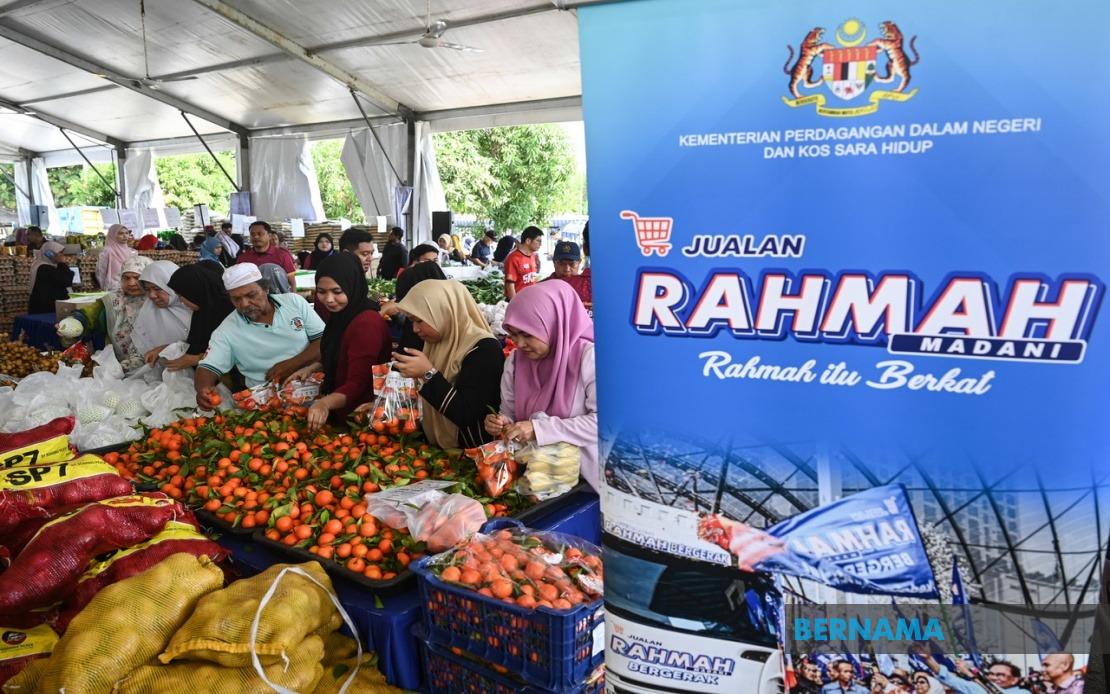
Prime Minister Datuk Seri Anwar Ibrahim has unveiled plans to launch the Ihsan Rahmah 9.9 online sale on September 9, 2026, capitalising on Malaysia Day celebrations to extend government assistance to the nation's entire population. The decision to digitalise the traditionally physical sales event represents a significant shift in how the government delivers subsidised goods to consumers, reflecting broader efforts to harness e-commerce platforms for public welfare initiatives.
The announcement came during Anwar's address at the TikTok Shop Summit Malaysia, where he emphasised the government's commitment to ensuring that all 34.5 million Malaysians could benefit from the initiative. By partnering with major digital retailers and e-commerce platforms, the government aims to democratise access to discounted necessities that have previously been available only through physical retail locations during designated dates. This expansion reflects recognition that online shopping has become integral to how many Malaysians, particularly younger demographics and those in remote areas, conduct their daily purchases.
The Ihsan Rahmah initiative, administered by the Ministry of Domestic Trade and Cost of Living, has consistently offered basic commodities at discounts ranging between 10 and 30 percent below regular retail prices. The programme targets staple items that form the backbone of household budgets—groceries, cooking oil, rice, eggs, and other essentials—making it particularly significant for lower and middle-income households navigating inflationary pressures. By transitioning to an online format, the government can maintain inventory more flexibly and respond more efficiently to regional demand variations across the country.
Anwar's framing of the initiative within Malaysia Day celebrations carries symbolic weight beyond mere commerce. The Prime Minister positioned the sale as a tangible expression of national solidarity and shared prosperity, emphasizing that strong economic growth figures must translate into concrete improvements in citizens' living standards. This rhetoric acknowledges the disconnect many Malaysians feel between headline GDP statistics and their personal experiences with purchasing power, a sentiment that has gained salience across Southeast Asia as economies navigate post-pandemic inflation and global supply chain disruptions.
The initiative will be implemented through coordination among multiple government ministries and agencies, including the Communications Ministry, Entrepreneur and Cooperative Development Ministry, and the Domestic Trade and Cost of Living Ministry. Communications Minister Datuk Seri Fahmi Fadzil's involvement underscores the importance placed on publicising the programme through digital channels, while Entrepreneur and Cooperative Development Minister Steven Sim Chee Keong's participation suggests potential involvement of small and medium enterprises in the supply chain. This multi-agency approach reflects the government's view that cost-of-living pressures constitute a whole-of-government concern rather than solely a trade and commerce issue.
The shift to online sales presents both opportunities and challenges for implementation. On one hand, digital platforms offer scalability, real-time inventory management, and the ability to track consumer behaviour and demand patterns with precision. On the other hand, the government must contend with ensuring equitable access across Malaysia's diverse digital landscape, where internet penetration and e-commerce familiarity vary considerably between urban centres and rural communities. Questions remain about how the government will manage logistics for delivery to all regions, particularly in Sabah and Sarawak where geographical distances complicate supply chains.
For Malaysian consumers, the timing is strategically significant. September typically marks a period of increased household spending as families prepare for back-to-school and festive season purchases. By positioning the Ihsan Rahmah 9.9 sale during this window, the government can provide relief when discretionary spending pressures are likely to be highest. The online format also allows households to plan and compare prices more deliberately than physical sales, which historically have involved queuing and time constraints that limited purchasing flexibility.
The emphasis on reasonable pricing and daily necessities reflects ongoing government concern about inflation's impact on household consumption patterns. Particularly in Malaysia's urban centres, where rental costs and utility bills consume larger portions of household income, subsidised access to food and basic goods can meaningfully improve purchasing power for other essential services. The 10 to 30 percent discount range, while modest relative to some international subsidy programmes, remains meaningful in a context where many households operate with minimal financial buffers.
The initiative also serves broader policy objectives around digital economy development. By routing government assistance through major e-commerce platforms, particularly international operators like TikTok Shop, the government generates transaction volume and consumer engagement data that strengthens Malaysia's positioning within regional digital commerce networks. This alignment between public welfare objectives and private sector digital infrastructure represents a pragmatic approach to delivering public goods through existing market mechanisms rather than building parallel government distribution systems.
Looking ahead, the success of the Ihsan Rahmah 9.9 online sale will likely influence how the government conceptualises future consumer assistance programmes. If the September 9 launch demonstrates that digital platforms can efficiently deliver subsidised goods across diverse demographic groups, the model could be expanded to other initiatives or made more frequent. Conversely, any gaps in reach or logistics could prompt recalibration of the approach, including potential hybrid models combining online and physical sales channels.
For Malaysia's broader economic narrative, the Ihsan Rahmah initiative occupies an interesting position between market intervention and market enablement. Rather than directly controlling prices through price controls—an approach that often creates shortages and black markets—the government subsidises consumers' purchasing power and facilitates transactions through private sector infrastructure. This approach aligns with moderate market-oriented economic frameworks that acknowledge the role of prices as information mechanisms while recognising that certain populations require targeted support to access essential goods.

