Malaysia's federal government has given formal approval to establish the National Tahfiz Council, a strategic initiative designed to formalise and elevate the status of Quranic memorisation education across the nation. Deputy Prime Minister Datuk Seri Dr Ahmad Zahid Hamidi announced the Cabinet decision at the Pahang State Huffaz Gathering 2026 held in Kuantan, where he revealed that Prime Minister Datuk Seri Anwar Ibrahim has tasked him with leading the new council as chairman. The approval represents a watershed moment for tahfiz education in Malaysia, signalling government commitment to integrating this specialised Islamic discipline within the broader national education framework rather than treating it as a parallel or supplementary pathway.
The timing of this announcement comes as Malaysia grapples with broader questions about how to balance religious education with modern economic opportunities. For years, tahfiz students—those who memorise the entire Quran—have faced structural barriers when transitioning into mainstream higher education or employment sectors. While their achievement is considered profoundly significant within Islamic scholarship, the lack of official recognition and standardised qualification frameworks has limited their career progression. The council's establishment directly addresses this longstanding gap by creating mechanisms for formal certification, academic progression routes, and professional integration that parents and educators have long advocated for.
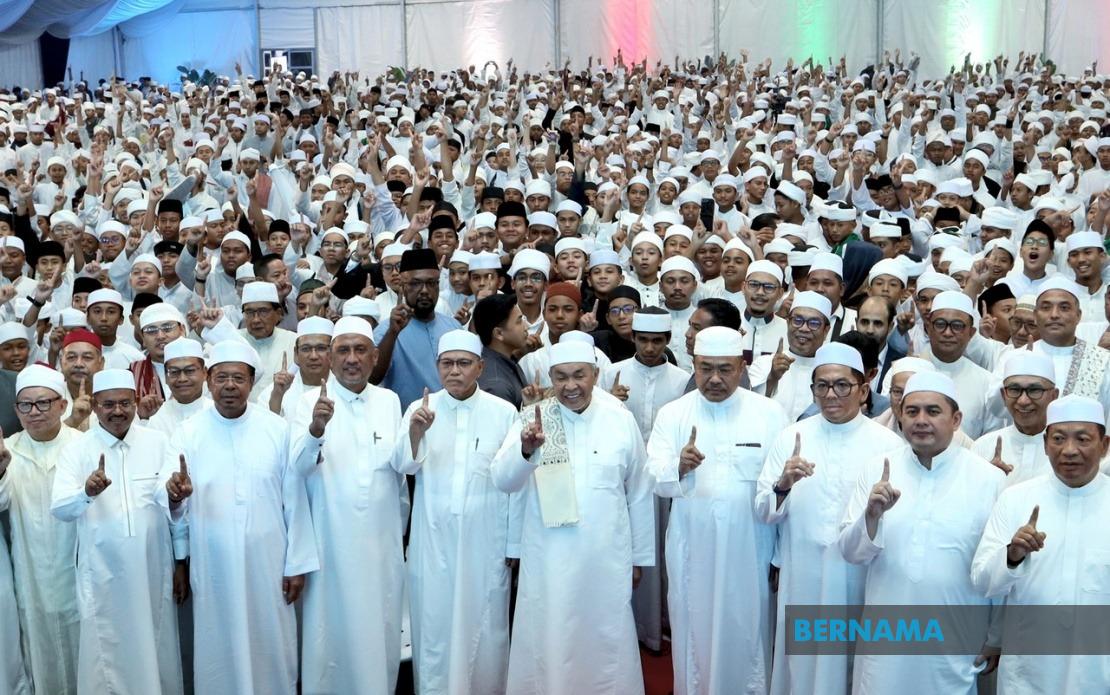
Ahmad Zahid articulated an ambitious vision during his speech at the gathering, which drew more than 5,000 huffaz from across Pahang state. He emphasised that the council should position tahfiz education as a recognised educational pathway, enabling students to transition seamlessly from madrasah institutions to university programmes, to translate their memorisation skills into practical professional competencies, and to enter the workforce with confidence and formal credentials. This statement reflects a fundamental shift in how the government conceptualises tahfiz education—no longer as a purely religious endeavour conducted outside formal educational structures, but as a legitimate discipline capable of producing graduates who can contribute meaningfully to Malaysia's knowledge-based economy.
Pahang has emerged as a model state for integrated tahfiz education development, and Ahmad Zahid highlighted the province's comprehensive approach spanning from early childhood through international levels. The state's initiatives, inspired by the Sultan of Pahang Al-Sultan Abdullah Ri'ayatuddin Al-Mustafa Billah Shah, include Tadika Tahfiz Negeri Pahang, which introduces Quranic learning at preschool age. By establishing this early foundation, followed by structured progression through schooling and eventually higher education, Pahang demonstrates that tahfiz education can form part of a coherent, long-term educational trajectory rather than existing as an isolated pursuit. This model offers valuable lessons for other states seeking to strengthen their own tahfiz infrastructure.
The government is simultaneously reviewing and implementing improvements to the National Tahfiz Policy 2.0, a comprehensive framework that addresses multiple dimensions of tahfiz education development. Within this policy structure, several interconnected initiatives have been introduced to create genuine pathways for students. TVET Tahfiz programmes link memorisation training with vocational and technical skills, making graduates employable in practical sectors. The Malaysian Tahfiz Certificate 2.0 provides standardised, recognised qualifications that Malaysian employers and educational institutions understand. The Graded Hafazan Certification system establishes benchmarks for different levels of Quranic memorisation achievement, similar to how other academic programmes have tiered credentials.
Financial barriers have historically prevented talented students from pursuing tahfiz education, particularly in lower-income communities. The introduction of the Huffaz Financing Scheme directly tackles this equity issue by ensuring that students' economic circumstances do not determine whether they can complete their memorisation training. The Malaysian Tahfiz Recognition Standard creates uniform expectations and quality measures across diverse tahfiz institutions nationwide, addressing current variability in educational standards and rigour. Strategic collaborations established between tahfiz programmes and higher learning institutions, including universities and skills development institutes, create concrete pathways for students to transition from memorisation-focused training into broader academic and professional fields.
The council's establishment signals a sophisticated understanding within government circles that Malaysia's economic competitiveness increasingly depends on deploying all forms of human capital effectively. Young people who have devoted years to mastering the Quran represent a pool of disciplined, intellectually committed individuals with proven capacity for sustained, focused learning. Rather than allowing this talent to remain underutilised in employment markets unfamiliar with tahfiz credentials, the council seeks to translate memorisation skills into forms of capital that employers across various sectors recognise and value. This pragmatic approach respects the religious significance of tahfiz while simultaneously addressing pressing workforce development needs.
At the Pahang gathering, Ahmad Zahid witnessed the signing of a memorandum of understanding between Yayasan Pahang, the Community Development Department (KEMAS), and Majlis Amanah Rakyat (MARA). This collaborative agreement underscores a multi-institutional approach to strengthening tahfiz education and expanding skills development opportunities for huffaz. By engaging development agencies and business-focused organisations alongside religious foundations, the agreement suggests that tahfiz education integration requires coordination across educational, economic, and community development sectors. MARA's involvement is particularly significant, as the agency has traditionally focused on business entrepreneurship and economic empowerment for Bumiputera communities, indicating growing recognition that tahfiz students represent a demographic worthy of targeted economic development support.
The establishment of the National Tahfiz Council also carries implications for Malaysia's position as a Muslim-majority nation seeking to demonstrate how religious and secular education can coexist productively within a modern national system. Many Muslim-majority countries struggle with integrating traditional Islamic education into contemporary labour markets, sometimes perpetuating a false choice between religious commitment and economic opportunity. Malaysia's approach, by formalising tahfiz education's integration within official pathways, models an alternative approach that respects religious education while ensuring graduates can leverage their training in diverse professional contexts. This balance resonates with concerns among many Malaysian Muslim parents who value their children's Islamic education but worry about future employment prospects.
Regional observers will note that this initiative reflects broader trends across Southeast Asia concerning the modernisation of Islamic education institutions. Countries including Indonesia, Thailand, and Singapore have initiated similar projects to standardise, credential, and professionally integrate traditional Islamic training programmes. Malaysia's establishment of the National Tahfiz Council places it within this regional conversation about how Muslim-majority societies can maintain religious educational traditions while ensuring graduates possess skills and certifications valued in contemporary economies. The council's success will likely influence how other nations approach this complex balance.
For Malaysia's education system more broadly, the council represents acknowledgment that formal educational pathways must expand beyond conventional academic and vocational tracks to recognise and integrate historically marginalised disciplines and student populations. As Ahmad Zahid emphasised, enabling tahfiz students to progress to university and professional roles with confidence requires fundamental system changes—not merely charity or accommodation, but genuine transformation of how educational achievement itself is defined and valued. The council's effectiveness ultimately depends on whether these institutional and policy changes translate into genuine opportunities for huffaz students to build fulfilling careers leveraging their distinctive expertise.