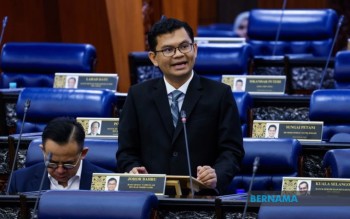
The Malaysian government is actively rolling out a comprehensive response to the ongoing global supply crisis, with 120 policy decisions now in various stages of implementation. Economy Minister Akmal Nasrullah Mohd Nasir disclosed this extensive intervention framework to parliament, revealing that 27 of these decisions have already been fully executed while the remaining 93 continue to be rolled out across government agencies and economic sectors. The scale of this response underscores the seriousness with which Kuala Lumpur is treating the cascading effects of international supply chain disruptions that have reverberated through Malaysia's economy since 2021.
The decisions emanate from the National Economic Action Council, the country's highest economic coordinating body, and represent a deliberate strategy to shield the public and small businesses from the shocks of global supply constraints. By disclosing implementation progress to Members of Parliament, the government aimed to demonstrate that its economic management apparatus is functioning operationally and subject to ongoing oversight. The breadth of measures signals that officials recognise the supply crisis is not confined to a single sector but rather permeates multiple dimensions of economic activity, from energy and manufacturing to retail and essential services.
The government's targeted approach prioritises vulnerable segments of Malaysia's economy, particularly micro, small and medium enterprises that typically lack the financial buffers and supply chain sophistication of larger corporations. Many MSMEs operate on razor-thin margins and depend on predictable input costs; when global supply disruptions spike commodity and freight prices unpredictably, these businesses face existential pressure. The 120 decisions reflect ministerial understanding that without targeted intervention, smaller enterprises could face cascading failures that would undermine employment and community economic resilience across Malaysia's towns and secondary cities.
Critically, the government has adopted what officials describe as a realistic timeline for recovery, explicitly rejecting the notion that the supply crisis will be resolved quickly or conclusively. Rather than waiting for global conditions to normalise entirely, authorities intend to maintain active monitoring and intervention measures throughout an extended recovery phase. This pragmatic stance differs markedly from an approach that might involve passive waiting for international supply networks to self-correct; instead, Malaysia is positioning itself to actively manage domestic shock absorption.
Projections for energy market stabilisation provide a window into the government's longer-term expectations. Based on current global economic trajectories, officials anticipate that energy markets—critical to manufacturing costs, transportation, and electricity pricing—will gradually stabilise beginning in the third quarter of 2026, though this projection remains contingent on geopolitical stability holding and international trade routes normalising. Uncertainty around energy pricing and availability will likely persist for another one to two years even after initial stabilisation begins, suggesting Malaysia faces a prolonged period of cost volatility that policymakers must accommodate through judicious intervention.
The government does not minimise the genuine risks posed by an extended supply crisis. Prolonged disruptions could trigger inflation, unemployment, investment flight, and social instability if left unmanaged. However, officials insist these risks are being addressed through structured, data-driven processes rather than ad-hoc or politically motivated responses. The National Economic Action Council serves as the institutional mechanism for continuous monitoring, allowing policymakers to adjust interventions as conditions evolve and new information emerges about global recovery timelines.
Transparency forms another pillar of the government's crisis response strategy. Officials have committed to sharing information with the Malaysian public as conditions warrant, recognising that uncertainty itself can damage business confidence and household decision-making. When citizens and entrepreneurs lack clear information about government intentions or economic trajectories, they may make defensive choices—postponing investments, hoarding goods, or reducing spending—that become self-fulfilling prophecies worsening economic conditions. Regular, accurate communication about supply chain progress and government measures aims to sustain confidence in Malaysia's economic management.
The supply crisis response also reflects broader recognition that Malaysia's economic resilience depends on stakeholder cooperation beyond government action alone. Businesses, workers, industry associations, and community organisations all play roles in absorbing shocks and maintaining economic function during disruptions. The government's appeal for collective effort frames crisis management not as a state responsibility alone but as a shared challenge requiring coordination across public and private sectors. This collaborative framing becomes particularly important in Malaysia's context, where trust between business and government influences investment decisions and operational willingness to absorb temporary costs.
The balancing act described by Minister Akmal—remaining vigilant without panic, realistic without defensiveness, and proactive without overreaction—captures the delicate political economy of supply crisis management in a middle-income country like Malaysia. Move too aggressively into intervention and the government risks distorting markets, crowding out private activity, or appearing to favour certain industries. Move too passively and vulnerable groups suffer while confidence erodes. The 120-measure framework represents an attempt to thread this needle, targeting support where markets alone would generate unacceptable social outcomes while preserving competitive dynamics elsewhere.
For Malaysian enterprises and households, the practical implication is that policymakers expect supply-side pressures to persist as a feature of the economic environment through at least 2027. Businesses should plan on managing elevated input costs and logistics expenses as baseline conditions rather than temporary aberrations. Households should anticipate that certain imported goods and energy-dependent products may remain costlier than pre-pandemic norms. Simultaneously, the government's commitment to active management suggests that worst-case scenarios—sudden shortages of essential goods, uncontrolled inflation spirals, or mass business failures—are not inevitable. This measured messaging attempts to inoculate Malaysia against the panic dynamics that could amplify supply shocks into genuine crises.

