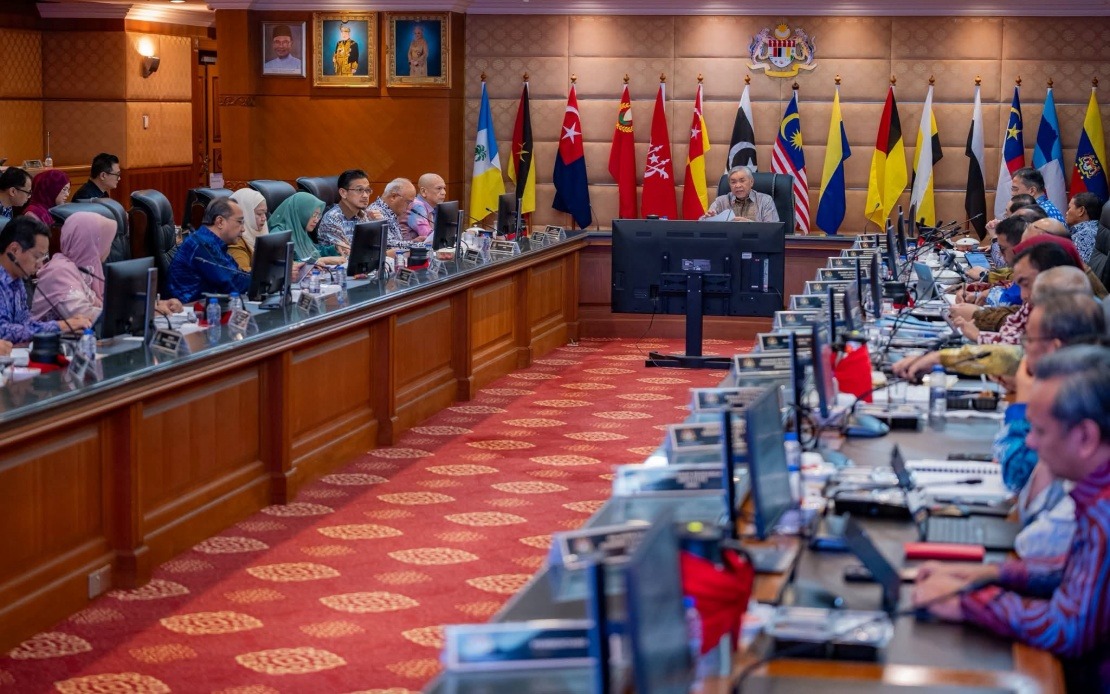
The Malaysian government is charting a carefully calibrated course through competing pressures in the domestic rice market, seeking to protect low-income families while ensuring the long-term sustainability of local farming operations. At the 18th Executive Committee meeting of the National Cost of Living Action Council (NACCOL) in Putrajaya on August 13, Deputy Prime Minister Datuk Seri Dr Ahmad Zahid Hamidi outlined a nuanced approach to stabilizing white rice prices that acknowledges the delicate balance between consumer welfare and agricultural viability. The strategy signals recognition that cost-of-living pressures cannot be solved through simplistic price controls alone, but require coordinated intervention across production, distribution, and targeted assistance mechanisms.
The centerpiece of the revised rice framework is a soft-landing transition mechanism that emphasizes subsidized supply channels for households classified as vulnerable. This phased approach is designed to cushion the impact of broader policy adjustments before they ripple through the wider economy, offering time for both producers and consumers to adapt to new market conditions. Rather than implementing sudden price shifts that could trigger inflation or production cutbacks, the council views gradual transition as the preferable path, reducing economic shock while maintaining political sustainability for agricultural reform. The proposal reflects lessons from similar food-price transitions across Southeast Asia, where abrupt changes have historically created social instability and market disruption.
Ahmad Zahid emphasized that addressing living costs requires looking beyond what shoppers encounter at supermarket checkouts. Production expenses, logistics networks, food availability for lower-income groups, healthcare expenditure, and education affordability all form part of an integrated challenge. This systemic perspective represents a shift from treating cost-of-living as primarily a retail pricing issue toward recognizing the structural inefficiencies and cost pressures embedded throughout supply chains and service delivery systems. By widening the analytical lens, policymakers can identify leverage points for intervention that might prove more effective than direct price management alone.
Among the broader measures discussed, the council agreed to recommend expanding the Sumbangan Asas Rahmah (SARA) assistance programme to encompass fresh produce including fruits, vegetables, and fresh protein sources. This expansion moves beyond staple rice to address nutritional diversity, signaling an acknowledgment that cost-of-living support should facilitate access to balanced diets rather than simply subsidizing single commodities. The recommendation will require approval from the main NACCOL council chaired by Prime Minister Datuk Seri Anwar Ibrahim, indicating this represents a substantive policy shift rather than routine administrative adjustment. For Malaysian households already stretched financially, the inclusion of fresh protein and produce could meaningfully improve dietary outcomes while supporting domestic agricultural sectors beyond rice cultivation.
The government has identified several external pressures amplifying production costs for local farmers and agribusiness. Geopolitical tensions, particularly volatility in West Asia, are driving up logistics expenses and complicating import-export operations. Rising regulatory compliance costs for food imports, combined with the effects of targeted subsidy programmes on agricultural input prices, create a challenging environment for producers. Ahmad Zahid noted that continuous monitoring of these international developments is essential to prevent them from generating inflationary waves that ultimately reach consumers. This framing acknowledges that Malaysia's food system operates within a globalized context, making domestic prices vulnerable to forces beyond national control—a reality that shapes both the feasibility and design of intervention strategies.
The council also tasked relevant agencies with refining support mechanisms for farmers and fishermen who face compressed margins in an environment of rising production costs. Targeted assistance programs recognizing sector-specific challenges represent an alternative to broad subsidy approaches that can distort markets. By calibrating help to particular agricultural groups and circumstances, the government aims to maintain incentives for productive investment while reducing fiscal burden. This more surgical approach reflects evolving international best practices around agricultural support, moving away from blanket subsidies that often benefit larger producers disproportionately toward mechanisms that can be better targeted to economically vulnerable farming operations.
On the healthcare dimension of cost-of-living pressures, the NACCOL committee reviewed implementation of eleven RESET strategy initiatives designed to constrain private sector medical costs while improving public access and treatment options. Healthcare expenses represent a significant burden for Malaysian families, particularly those managing chronic conditions or requiring specialist care. The RESET initiatives represent an attempt to create competitive pressure in the private sector while simultaneously expanding public capacity, potentially offering patients more choices at lower cost. Integration of healthcare reform within the broader Cost of Living Action Plan 2030 suggests the government views medical affordability as structurally linked to other living cost issues, warranting coordinated rather than fragmented policy responses.
Education affordability emerged as another priority, with Ahmad Zahid highlighting data showing that 62,937 Form Six and university students received assistance totaling RM589.6 million through thirteen different tertiary education aid schemes during the previous year. These numbers indicate substantial government commitment to educational access, yet also suggest fragmentation across multiple programmes that may create complexity for eligible applicants. The emphasis on education costs reflects recognition that talent development is constrained when financial barriers prevent capable students from pursuing higher learning. For Southeast Asia's regional competitiveness, ensuring that educational opportunity correlates with ability rather than family wealth has implications extending beyond national borders, as human capital mobility increasingly characterizes the region's labor markets.
The broader Cost of Living Action Plan 2030 represents an attempt to move beyond reactive, sector-by-sector responses toward a comprehensive framework addressing multiple dimensions of household expense simultaneously. Rather than implementing isolated price controls or subsidy adjustments, this integrated approach seeks to identify where coordinated action across agriculture, health, education, and logistics might generate synergies. Such comprehensive planning requires sustained bureaucratic coordination and political commitment across multiple agencies and electoral cycles, presenting implementation challenges even when policy direction is clear. For Malaysian policymakers and observers, this strategic shift signals recognition that cost-of-living pressures are sufficiently serious and multifaceted that they cannot be addressed through conventional market mechanisms or traditional subsidy approaches alone.

