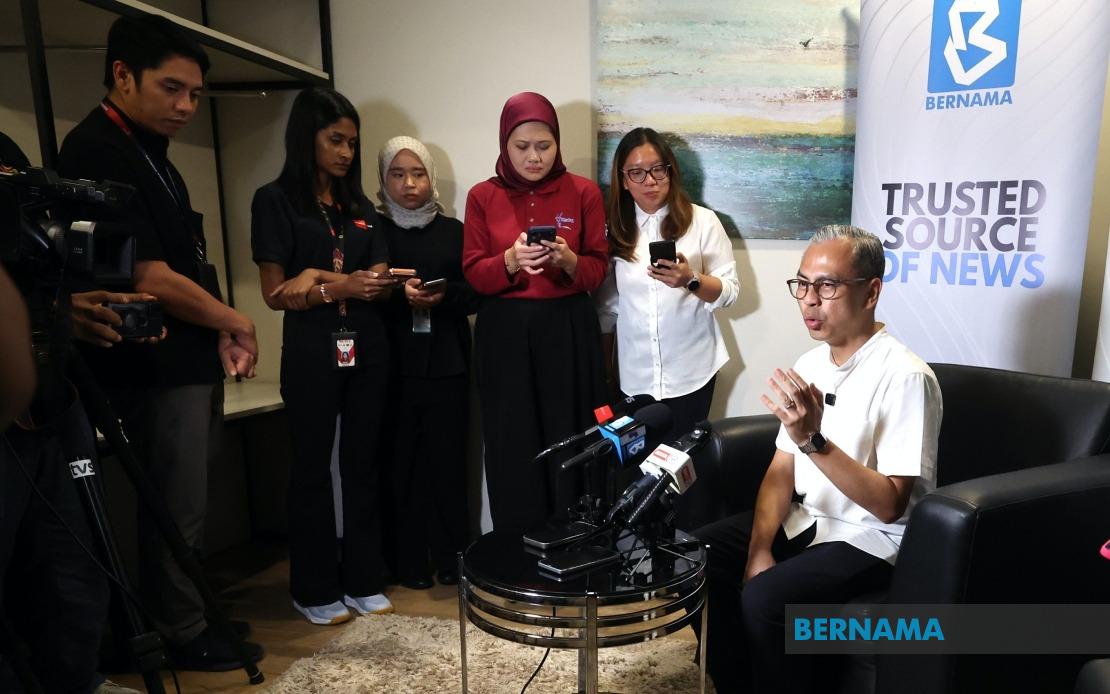
The Malaysian Media Council requires sustained investment and active government backing to fulfil its mandate as an independent watchdog for the country's media landscape, according to Communications Minister Datuk Fahmi Fadzil. Speaking during an official visit to the Malaysian National News Agency's operations centre in Johor Bahru on July 7, Fahmi outlined the government's vision for transforming the MMM into a robust self-regulatory body capable of addressing contemporary media challenges while maintaining journalistic independence.
Fahmi acknowledged that the council's nascent status necessitates targeted support during its formative years, signalling the administration's commitment to providing resources that would accelerate the organisation's operational maturity and institutional development. This backing extends beyond financial considerations to encompass strategic assistance in recruiting media organisations and digital platforms to join the council's membership base. The minister stressed that expanded participation from traditional publishers and emerging digital entities would amplify the council's ability to tackle industry-wide concerns through collaborative, internally driven governance structures rather than relying solely on government or regulatory intervention.
Prime Minister Datuk Seri Anwar Ibrahim has previously implemented a procedural safeguard whereby complaints lodged against journalists employed by recognised media organisations are first directed to the MMM rather than triggering immediate official investigations. This mechanism represents a fundamental shift in how Malaysia addresses media-related grievances, establishing a buffer between press practitioners and state apparatus. By funnelling allegations through the council initially, the government aims to ensure that any disciplinary action is conducted transparently, with adequate opportunity for defence and judicial review, thereby protecting journalists from arbitrary prosecution or investigation without proper institutional scrutiny.
The integration of social media platforms into this regulatory framework addresses a critical gap in Malaysia's current media governance architecture. Unlike traditional newsrooms, which typically employ editorial standards and fact-checking procedures, social platforms operate under generic community guidelines developed for global audiences and disconnected from Malaysian cultural norms, religious sensitivities, or legal frameworks. Fahmi pointed to the circulation of sensitive content following a stabbing incident in Banting, where victim identities and investigation details proliferated across digital networks without contextual consideration or community responsibility. Such incidents illustrate how borderless information flows can create domestic harms that existing platform policies fail to mitigate adequately.
Fahmi characterised the potential participation of social media companies in the Malaysian Media Council as essential to modernising self-regulation in an era where traditional journalism and user-generated content increasingly intersect. Most major platforms maintain formal codes of conduct, yet these instruments prioritise corporate liability protection and global consistency over local relevance. Should these organisations formally join the MMM, they would commit to aligning their content moderation practices with Malaysian values and legal requirements, creating mechanisms for rapid intervention when content breaches local sensibilities or contravenes national regulations. This shift would constitute a voluntary adoption of heightened responsibility rather than resistance to external enforcement.
The expansion of council membership carries implications for Malaysia's standing in international media freedom assessments. The World Press Freedom Index and comparable rankings evaluate nations partly on the robustness of industry self-regulation, the presence of independent oversight bodies, and the degree to which governments refrain from direct press censorship. A muscular, representative media council composed of diverse stakeholders—journalists, editors, publishers, platform representatives, and civil society advocates—signals to international observers that Malaysia prioritises press autonomy and industry-led accountability over state control. Fahmi's implicit acknowledgement that current positioning could improve suggests recognition that Malaysia's media freedom credentials require tangible demonstration through institutional reform.
The Communications Ministry's approach reflects broader global trends whereby governments and digital platforms increasingly collaborate through multi-stakeholder arrangements to establish content governance structures that respect free expression while protecting community interests. Countries including Singapore, India, and Germany have experimented with similar hybrid models, combining industry self-regulation with regulatory oversight and occasional judicial review. These frameworks attempt to balance competing imperatives: preserving editorial independence, protecting vulnerable populations from harmful content, maintaining public order, and respecting cultural diversity. Malaysia's adaptation of this model suggests policymakers recognise that purely prescriptive regulation risks chilling legitimate journalism, whereas purely laissez-faire approaches permit the spread of misinformation and community-damaging content.
However, the success of this initiative depends substantially on whether major platforms willingly subordinate global operational logic to local institutional participation. Meta, Google, TikTok, and other content distributors have historically resisted incorporation into domestic regulatory bodies, preferring direct engagement with governments and preservation of unified content policies. Convincing these corporations to join the Malaysian Media Council requires demonstrating that membership yields benefits—such as reduced legal exposure, improved stakeholder relationships, or enhanced reputational standing—that offset the operational complexity of localised content governance. The minister's framing of council participation as beneficial to platform interests, rather than punitive obligation, suggests diplomacy aimed at voluntary cooperation rather than legal compulsion.
The involvement of traditional media organisations in strengthening the council remains equally critical, particularly given their historical scepticism toward industry self-regulation mechanisms. Malaysian journalists and publishers have sometimes viewed such bodies with suspicion, fearing they could become vehicles for powerful proprietors to silence critical voices or enforce conformity. Building institutional credibility requires transparent governance structures, genuine independence from both corporate and political pressure, and genuine enforcement capacity. The council must demonstrate that it applies standards consistently across all member organisations, investigates complaints thoroughly, and imposes meaningful consequences when violations occur. Without such rigour, membership becomes merely symbolic, offering cover for continued malpractice.
The broader context underlying these reforms reflects Malaysia's ongoing negotiation between democratic principles and social cohesion concerns. Media freedom remains constitutionally protected, yet various laws—including the Official Secrets Act, Communications and Multimedia Act, and religious statutes—impose constraints on expression. Rather than abolishing these restrictions, which would generate domestic political resistance, the government has opted to develop procedural mechanisms that apply them more judiciously and transparently. The Malaysian Media Council becomes part of this architecture, functioning as an institutional intermediary that moderates state power while channelling industry accountability through professional norms rather than legal penalties.
Looking forward, the council's trajectory will significantly influence media dynamics across Malaysia and potentially establish precedents for other Southeast Asian democracies navigating similar pressures. Should the MMM succeed in attracting substantial membership, establishing credible complaint mechanisms, and demonstrating independence, it could become a model institution demonstrating that self-regulation proves compatible with contemporary digital media ecosystems. Conversely, if membership remains limited, the council lacks enforcement capacity, or participants perceive it as captured by dominant interests, it risks becoming merely another bureaucratic layer with minimal practical impact. Fahmi's advocacy signals government commitment, yet ultimate success depends on voluntary participation and genuine institutional empowerment.

