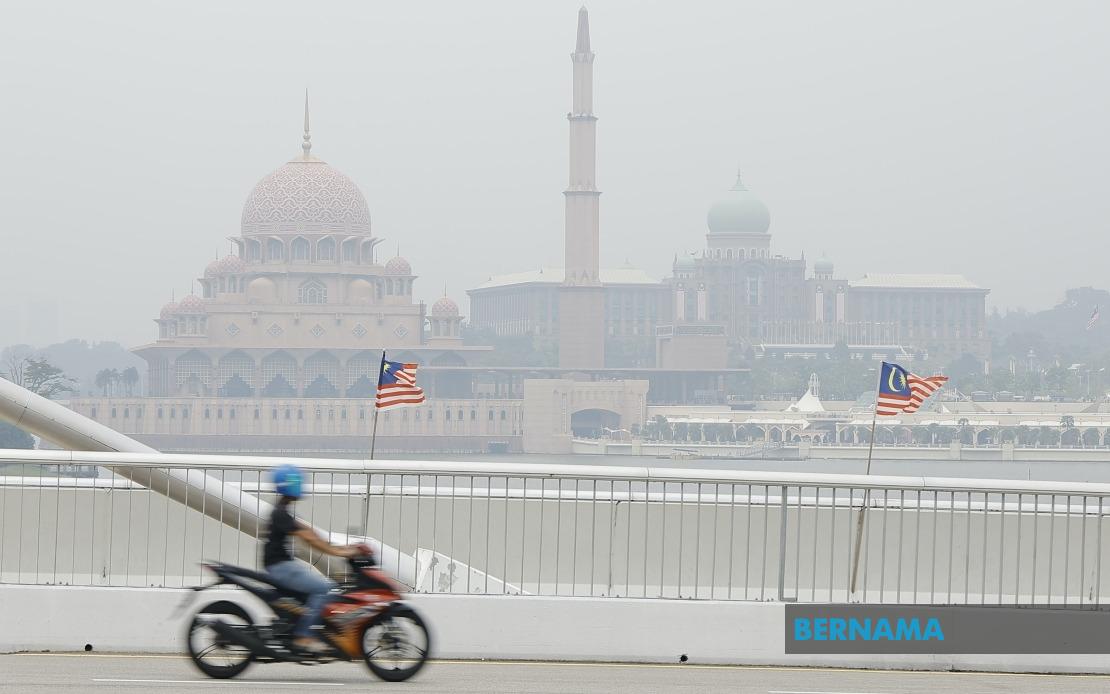
Malaysia must transition from managing haze crises after they occur to forecasting and preventing air pollution threats before they materialise, according to Associate Professor Dr Azman Azid, director of UniSZA's Besut Campus and a specialist in air quality and environmental science. Speaking in Kuala Nerus, Azman stressed that the nation possesses sufficient data to construct an early warning system capable of detecting hazardous air conditions well in advance, yet has not yet harnessed these resources effectively to shield public wellbeing.
The case for urgent action rests on alarming health data that has emerged during recent haze episodes. Between the 32nd and 33rd epidemiological weeks, the Ministry of Health recorded a disturbing 259 per cent increase in asthma cases, rising from 61 to 219 instances. This dramatic spike underscores a fundamental truth: haze represents far more than an air quality inconvenience. As pollution levels deteriorate, hospitals and clinics face mounting pressure from respiratory disease patients, and vulnerable populations—children, the elderly, and those with existing lung conditions—face intensified health risks. The current approach of monitoring air pollutant index readings and smoke movement fails to address this mounting public health burden adequately.
Azman advocates a comprehensive reorientation of Malaysia's haze response framework, moving away from the limited sequence of monitoring, warning, and reaction toward a more expansive model encompassing forecasting, prevention, protection, and action. This distinction proves critical for understanding why existing systems fall short. By the time the Air Pollutant Index climbs to unhealthy levels, pollutants already permeate the atmosphere, leaving little opportunity for meaningful intervention. A predictive system, by contrast, would grant authorities and healthcare providers crucial preparation time to mobilise resources and implement protective measures before conditions deteriorate.
The technical foundation for such a system already exists within Malaysia's institutional landscape. The country maintains weather forecasting capabilities that could serve as a template for developing parallel haze forecasting infrastructure. Azman proposes integrating multiple data streams: hotspot information identifying fire locations, satellite imagery tracking smoke plumes, meteorological parameters including wind direction and speed, atmospheric trajectory models predicting air mass movement patterns, current API measurements, epidemiological data revealing respiratory disease trends, and PM2.5 (fine particulate matter) concentrations. When individually, these datasets inform specific aspects of air quality; when synthesised, they enable horizon scanning across a 48 to 72-hour window.
The practical implications of such integration would transform Malaysia's institutional preparedness. If forecasting models project elevated PM2.5 levels in particular regions within two to three days, hospitals and clinics could initiate contingency protocols by stockpiling medications, arranging additional respiratory specialist coverage, and preparing isolation facilities. Schools could reschedule outdoor activities to safer periods. Authorities could preposition emergency response personnel. Citizens would receive advance notice, permitting vulnerable individuals to implement personal protective measures. This preventive capacity represents a qualitative leap beyond current reactive procedures that struggle to respond adequately once crises manifest.
Crucially, Azman emphasises that developing a forecasting system need not displace the existing API framework. Rather, the two instruments would complement each other, operating on different temporal horizons. The API provides real-time assessment of current air conditions, essential for immediate decision-making. A forecasting system would furnish earlier warning of deteriorating conditions, enabling preparatory action. From a risk management perspective, relying solely on API readings represents waiting for evidence that pollution has already arrived before responding—a fundamentally reactive posture that leaves populations unnecessarily exposed during the critical early hours of haze episodes.
Regional cooperation emerges as an equally vital component of any comprehensive haze mitigation strategy. Malaysia participates in the ASEAN Agreement on Transboundary Haze Pollution, yet Azman contends that current collaboration remains superficial. Air and smoke respect no political boundaries; pollution originating from agricultural burning or peatland fires across Southeast Asia inevitably affects Malaysian communities. Azman advocates deepening ASEAN engagement beyond mere data sharing toward genuine operational coordination encompassing fire source mapping, smoke trajectory forecasting, technology exchange, firefighting assistance deployment, and unified response mechanisms.
Enforcement and prevention mechanisms within Malaysia's own borders demand equal attention. Authorities must strengthen legal frameworks governing open burning, bush fires, and peatland management, then demonstrate sustained commitment to enforcing these regulations. Many haze episodes stem not from uncontrollable natural phenomena but from human activities—agricultural clearing, peatland drainage, and land-use conversion that destabilises carbon-rich soils. Addressing these root causes requires governmental will, regulatory capacity, and accountability mechanisms that deter violations.
The philosophical shift Azman advocates reflects mature environmental governance: acknowledging that perfect prevention remains impossible while demonstrating commitment to minimise harm through layered defences. Complete prevention of smoke plumes crossing into Malaysia may prove unattainable, but Malaysia can substantially reduce fire incidence through prevention, forecast smoke movement with greater accuracy through science, and critically protect population health through strategic preparation and public communication. This combination of technological capability, enforcement rigour, and diplomatic coordination represents the only realistic pathway to meaningfully reducing haze's devastating health impacts on Malaysian communities and the region broadly.

