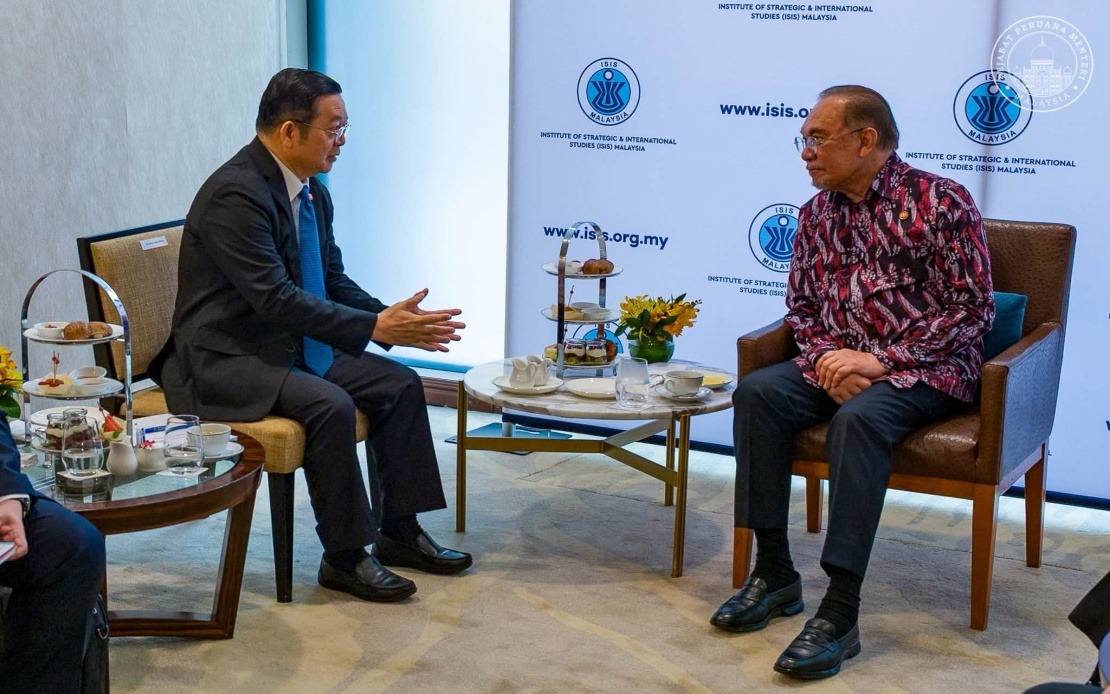
Prime Minister Datuk Seri Anwar Ibrahim has pledged Malaysia's ongoing commitment to reinforcing ASEAN as a unified, inclusive community that can effectively address the needs and ambitions of its constituent nations and their citizens. Speaking after a formal engagement with ASEAN Secretary-General Dr Kao Kim Hourn at the 39th Asia-Pacific Roundtable in Kuala Lumpur, Anwar emphasised the strategic importance of maintaining solidarity within the bloc as it navigates an increasingly volatile international environment characterised by geopolitical tensions and economic headwinds.
The courtesy call provided a platform for both leaders to address pressing regional concerns and chart ASEAN's strategic direction in the coming years. Anwar, who holds the concurrent portfolio of Finance Minister, underscored that the dialogue offered valuable opportunities to align perspectives on matters affecting Southeast Asia's stability and prosperity. The discussion touched upon multiple critical areas extending beyond traditional security concerns to encompass emerging challenges that will define the region's trajectory in the coming decade.
Myanmars political crisis featured prominently in their exchange, reflecting ongoing concern within ASEAN capitals about the humanitarian toll and regional spillover effects of the military coup and subsequent conflict. The deteriorating situation has tested ASEAN's consensus-based approach and raised questions about the bloc's capacity to influence outcomes in member states. Malaysia's position as a major stakeholder in regional peace has amplified its interest in finding constructive pathways forward that respect ASEAN's established norms while addressing the legitimate grievances of Myanmar's population.
The South China Sea maritime disputes remained a focal point of deliberation, underscoring the centrality of managing competing territorial claims and ensuring freedom of navigation in one of the world's busiest shipping lanes. As a coastal state with its own maritime interests, Malaysia has consistently advocated for a rules-based approach to resolving disputes whilst maintaining dialogue with all parties. The ongoing Code of Conduct negotiations with China continue to evolve, and Malaysia's constructive engagement in these talks mirrors its broader commitment to peaceful dispute resolution that balances national interests with regional stability.
Artificial intelligence has emerged as a transformative force with profound implications for Southeast Asian economies and societies, from automation to cybersecurity vulnerabilities. The inclusion of AI discussions at high-level diplomatic forums reflects ASEAN's recognition that technological advancement must be managed collaboratively to ensure equitable benefits across the region whilst mitigating risks of digital divides and economic disruption. Malaysia, with its developing tech sector, has particular interest in establishing regional frameworks that foster innovation whilst protecting critical infrastructure and privacy standards.
Timor-Leste's recent accession to full ASEAN membership represents a historic expansion of the regional bloc and introduces new complexities in coordinating policy and managing consensus. The post-accession phase requires careful navigation to integrate the newest member whilst respecting its unique circumstances and development needs. Malaysia's support for this transition reflects the broader principle that ASEAN's strength derives from inclusive growth and the incorporation of Southeast Asian states sharing common values of regional cooperation and non-interference.
The ASEAN Community Vision 2045 framework establishes ambitious objectives for regional integration across economic, political-security, and socio-cultural pillars. Implementation of this vision demands sustained political will, financial commitment, and practical mechanisms to translate aspirational goals into tangible improvements in citizens' lives. Malaysia's reaffirmation of support signals its intention to remain engaged in the arduous process of narrowing development disparities among member states whilst building institutional capacity for effective regional governance.
The conflict engulfing West Asia has immediate relevance for Southeast Asia given the region's significant Muslim population, extensive trade connections with Middle Eastern partners, and potential for spillover effects including refugee flows and disruptions to energy supplies. ASEAN must maintain strategic balance in its approach to the conflict, advocating for humanitarian access and ceasefire efforts whilst avoiding entanglement in great power rivalries. Malaysia's Islamic identity gives it particular standing in regional and international forums addressing Middle Eastern stability, and its advocacy within ASEAN helps ensure the bloc's voice is heard in global peace efforts.
Anwar's emphasis on ASEAN's foundational principles of unity, centrality, and close cooperation reflects the bloc's traditional operating philosophy of decision-making by consensus and non-interference in internal affairs. These principles, whilst sometimes constraining swift action, have historically provided the framework for peaceful coexistence among states with divergent political systems, economic models, and foreign policy orientations. However, maintaining centrality becomes increasingly challenging in an environment where major powers assert competing spheres of influence and internal crises demand responsive intervention.
The geopolitical landscape confronting ASEAN has become demonstrably more complex, with great power competition between the United States and China creating pressure on regional states to choose sides or navigate treacherous diplomatic terrain. Malaysia's centrist approach, seeking balanced engagement with major powers whilst prioritising regional agency, reflects the pragmatic calculation that Southeast Asian interests are best served through maintaining strategic autonomy rather than alignment with any particular bloc. This positioning requires sophisticated diplomacy and consistent messaging about ASEAN's independent capacity for decision-making.
Economic integration within ASEAN faces headwinds from global supply chain disruptions, protectionist pressures, and divergent recovery rates among member states post-pandemic. The Regional Comprehensive Economic Partnership represents significant progress, yet implementation challenges persist in eliminating tariff barriers, harmonising standards, and addressing the concerns of workers displaced by increased trade exposure. Malaysia's dual role as a developed economy and regional leader places it in a position to advocate for inclusive growth mechanisms that prevent integration from exacerbating inequality.
The broader context of Malaysia's ASEAN engagement reflects its historical role as a founding member and consistent champion of regional cooperation mechanisms. From the original five-nation ASEAN grouping to the current ten-member structure, Malaysia has invested diplomatically and materially in building institutions and norms that privilege dialogue over confrontation. This commitment extends beyond declaratory statements to concrete participation in ASEAN-led mechanisms, from the ASEAN Regional Forum to the East Asia Summit, where Malaysia actively shapes regional security architecture.
Looking forward, the challenges articulated in the ASEAN Secretary-General's visit underscore the necessity for sustained Malaysian leadership and commitment. As regional tensions mount and global actors increase pressure on Southeast Asia, the bloc's capacity to maintain unity whilst accommodating legitimate national interests will determine its relevance and effectiveness. Malaysia's reaffirmation signals that it intends to remain engaged in this complex balancing act, contributing its diplomatic experience and regional influence toward preserving ASEAN as a meaningful voice in shaping the region's future.

