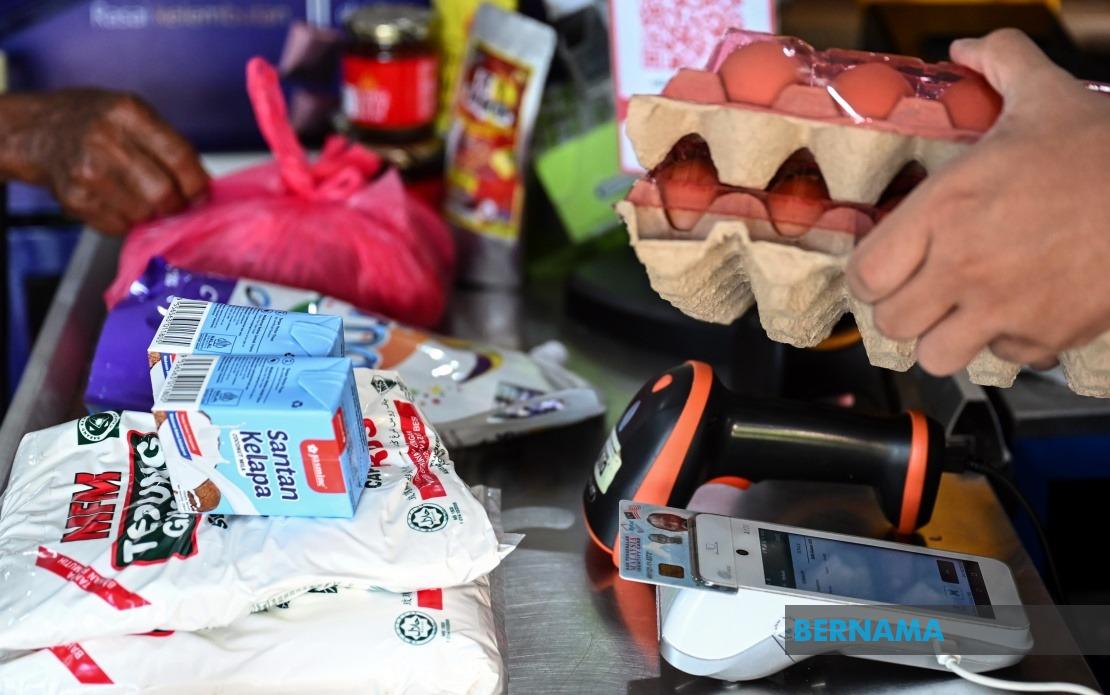
The Ministry of Finance commenced Phase 3 disbursements of the Sumbangan Tunai Rahmah (STR) cash aid programme today, reaching 5.3 million beneficiaries across the nation with a total allocation of RM1.2 billion. The expansion represents a significant growth in the programme's scope, with recipient numbers increasing by 300,000 since the start of the year when the baseline stood at five million households and individuals requiring government support.
The composition of this latest cohort reflects the government's targeted approach to poverty alleviation and household income support. Among the current recipients, 3.9 million are classified as low- and middle-income households facing persistent financial pressures, whilst 1.4 million are single senior citizens living on fixed or insufficient incomes. This segmentation underscores the administration's recognition that different demographic groups face distinct economic vulnerabilities, requiring differentiated support mechanisms to address their particular circumstances.
Payment amounts under Phase 3 vary according to household circumstances and eligibility categories. Qualifying low- and middle-income families will receive between RM150 and RM600, with the variation reflecting factors such as household income level and the number of dependent children. Single senior citizens, recognised as one of the most economically vulnerable segments of Malaysia's population, receive a standardised allocation of RM150. When combined with previous disbursements and concurrent monthly assistance, eligible recipients can accumulate up to RM3,300 by August 2026 through the integrated STR and SARA programmes, representing substantially improved income support compared to earlier assistance frameworks.
The aggregate fiscal commitment demonstrates the government's recalibration of budgetary priorities towards direct income support. Total disbursements across the first three phases of 2026 have reached RM3.6 billion, reflecting the enhanced scope and frequency of assistance compared to previous years. This represents a fundamental shift in the structure of government welfare, moving from ad hoc or sporadic payments towards a more systematic quarterly disbursement schedule that provides greater predictability for beneficiary households in their monthly budgeting.
Prime Minister Datuk Seri Anwar Ibrahim framed the expansion as a necessary response to persistent cost-of-living pressures that continue challenging Malaysian households despite broader economic growth initiatives. His statement emphasised that whilst the government pursues structural economic reforms aimed at raising incomes and living standards, immediate relief remains essential for vulnerable populations. The increase in STR-eligible low- and middle-income households from 3.7 million to 3.9 million reflects both genuine expansion of those meeting eligibility criteria and refined targeting methodologies that capture previously unreached segments.
The restructured assistance framework integrates two complementary programmes. STR operates on a quarterly cycle, providing lump-sum payments calibrated to household circumstances, whilst the SARA programme delivers monthly basic income support to qualifying citizens. This dual approach aims to balance the psychological and practical benefits of periodic larger payments—which facilitate household planning and management of substantial expenses—with the security provided by regular monthly disbursements that smooth consumption across the entire year. The synergy between these mechanisms represents a more sophisticated welfare architecture than earlier, simpler cash transfer schemes.
Financial allocation for these programmes has reached unprecedented levels, with RM15 billion committed in 2026 alone—the highest in Malaysian Federal government history. This appropriation nearly triples the allocations made for the Bantuan Rakyat 1Malaysia (BR1M) programme during 2016, reflecting both demographic expansion of eligible populations and the government's enhanced fiscal capacity to prioritise direct cash transfers. The reallocation of budgetary resources signals deliberate policy choices about prioritising household income support over alternative government expenditure categories.
Distribution mechanisms have been designed to accommodate Malaysia's diverse banking landscape and financial inclusion patterns. Beneficiaries possessing bank accounts will receive Phase 3 payments through automated direct credit transfers beginning today, minimising delays and transaction costs. Those without formal banking relationships—a concern particularly relevant for rural and elderly recipients—can collect cash payments at any Bank Simpanan Nasional branch nationwide, ensuring geographical accessibility and reducing barriers to receiving assistance. This dual-channel approach acknowledges the persistent digital divide affecting portions of Malaysia's population.
The Ministry of Finance attributed the programme's expansion and sustainability partly to improved fiscal management and governance reforms that have redirected state revenue towards targeted beneficiaries. Enhanced financial restructuring and tightened government expenditure controls have created fiscal space for expanded direct assistance without proportional increases in overall government spending. This efficiency-focused explanation suggests that programme growth has been enabled by better budget allocation rather than substantially increased taxation or deficit financing.
To prevent improper benefit capture and reduce leakage into ineligible hands, the administration maintains continuous application and appeal processes throughout the year via the official STR portal at bantuantunai.hasil.gov.my. This rolling enrolment mechanism allows newly eligible households and those previously overlooked to access assistance without waiting for discrete annual application windows. Comprehensive frequently asked questions resources are maintained on both the STR portal and the separate SARA platform at sara.gov.my, addressing beneficiary queries and reducing administrative burden on government agencies.
Concern about fraudulent schemes targeting beneficiaries prompted explicit public warnings about counterfeit online portals and scam attempts. The Ministry advised recipients to access information exclusively through official government channels and to exercise vigilance against deceptive links that harvest personal or financial information under false pretences. This cautionary messaging reflects growing sophistication of financial fraud targeting vulnerable populations, particularly elderly Malaysians unfamiliar with digital security practices.
The STR and SARA programmes operate within Malaysia's broader anti-poverty framework, functioning as immediate relief mechanisms whilst the government simultaneously pursues longer-term structural economic policies intended to expand productive employment, raise wage levels, and strengthen household asset bases. Official statements position cash assistance not as permanent welfare dependency but as cyclical support during an extended transition period whilst economy-strengthening reforms generate sustainable income improvements across all demographic segments. This framing attempts to reconcile immediate humanitarian concerns with longer-term economic development objectives.

