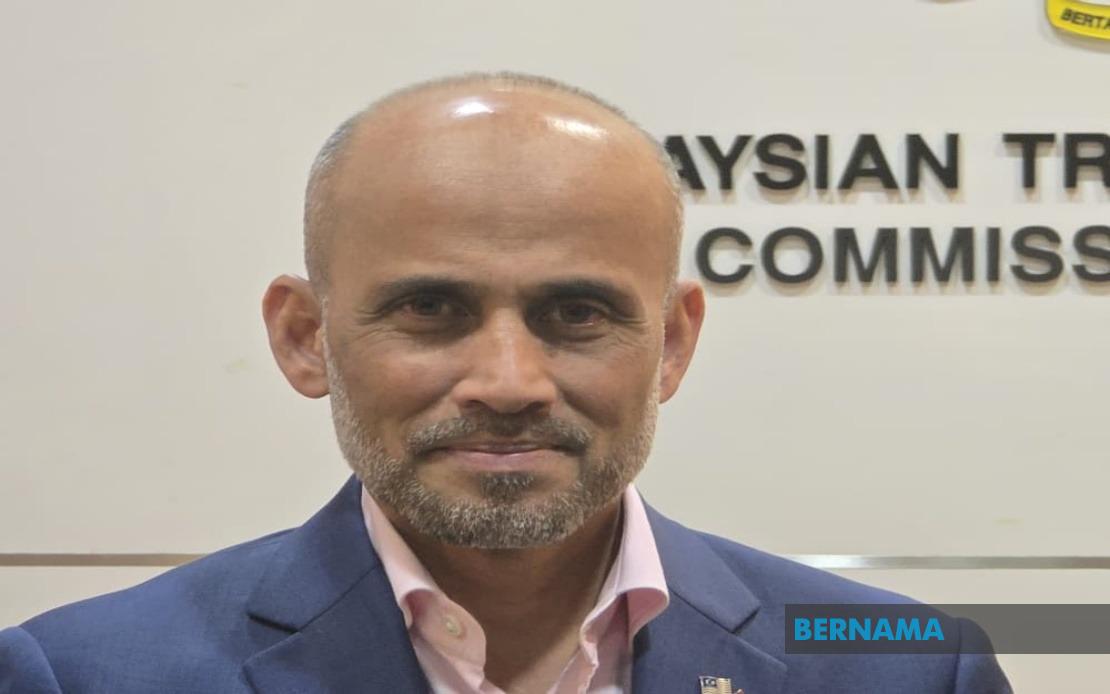
Malaysia and Singapore's diplomatic relationship has consolidated significantly over recent years, buoyed by collaborative efforts to tackle shared challenges ranging from pandemic disruptions to regional security concerns, according to Datuk Dr Azfar Mohamad Mustafar, who is concluding his tenure as Malaysia's High Commissioner to the city-state. Speaking ahead of his departure to take up the role of High Commissioner to the United Kingdom from July 1, Azfar reflected candidly on his five-year posting, which began in June 2021 at a moment when the two neighbours faced perhaps their most complex operational environment in decades.
The diplomat's time in Singapore coincided with some of the pandemic's most disruptive phases, during which travel restrictions and border closures fundamentally altered the flow of cross-border commerce and labour that typically characterises the relationship. Hundreds of thousands of Malaysians depend on daily passage into Singapore for employment and business activities, making the implementation of quarantine protocols and movement restrictions a delicate balancing act between public health imperatives and economic continuity. According to Azfar, managing the immediate consular pressures—processing documentation, handling emergency situations, and ensuring the wellbeing of nationals stranded or trapped on either side of the causeway—demanded sustained diplomatic coordination and rapid problem-solving at multiple bureaucratic levels.
Beyond pandemic management, the five-year period witnessed the broader re-emergence of geopolitical tensions in the Indo-Pacific region, including great-power competition and shifting security dynamics that directly touch Malaysia and Singapore's strategic interests. Despite these external pressures, Azfar maintained that the two countries have deepened their institutional mechanisms for cooperation and demonstrated a mature commitment to resolving bilateral matters through established channels rather than allowing regional friction to contaminate their relationship. This consistency reflects the pragmatic understanding in both capitals that mutual prosperity depends on maintaining stable, predictable ties across all sectors.
On the economic front, the recovery has been robust and instructive. Trade volumes between Malaysia and Singapore have not merely recovered to pre-pandemic levels but expanded further, with Singapore maintaining its position as one of Malaysia's most significant trading partners. Investment flows have followed a similarly encouraging trajectory, with Singapore-based capital continuing to flow into Malaysian projects across manufacturing, services, and infrastructure development. Azfar underscored the particular importance of the Johor-Singapore Special Economic Zone, a project that symbolises the two nations' commitment to leveraging geographic proximity and complementary economic structures for mutual gain. The initiative represents a strategic bet that deepening commercial integration in the growth corridors bordering Singapore can generate new employment opportunities, facilitate technology transfer, and position the broader Johor region as an attractive investment hub for both domestic and foreign enterprises.
Looking at the trajectory of Malaysian investment sourced from Singapore, Azfar expressed optimism that the special economic zone and other emerging opportunities would sustain and potentially expand the capital flows from the republic into Malaysia. This confidence rests partly on Singapore's established track record as a financial intermediary and investor in regional infrastructure, where Singaporean firms often serve as gateways for international capital seeking Southeast Asian exposure. The development of Johor as an economic centre increasingly integrated with Singapore's ecosystem offers a natural complement to Singapore's existing role as a regional financial hub, potentially amplifying benefits for both sides.
Among the forward-looking initiatives discussed by the high commissioner is Malaysia's anticipated support for Singapore's assumption of the ASEAN chairmanship in 2025. This support extends to substantive cooperation on Singapore's identified priority areas, which include advancing economic integration among the ten-nation bloc. The ASEAN Power Grid initiative emerged as a particularly significant project, reflecting the region's collective interest in energy security, climate transition, and infrastructure modernisation. By coordinating investments in cross-border power transmission and renewable energy development, member states can diversify their energy sources, reduce dependency on any single supplier, and work towards regional climate commitments. Malaysia's readiness to partner with Singapore on this initiative signals both countries' recognition that transnational infrastructure challenges cannot be addressed unilaterally.
Azfar's diplomatic career provides context for his measured optimism about bilateral prospects. His appointment as an Administrative and Diplomatic Officer in 1996 placed him during a foundational period in Malaysia's post-1997 Asian financial crisis recovery, exposing him to the complexities of regional economic volatility and interstate coordination. His posting as Ambassador to France from 2018 to 2021 equipped him with insights into European approaches to regional integration and multilateral governance, lessons potentially applicable to ASEAN's ongoing institutional evolution. His move to the Singapore posting in June 2021 thus represented a homecoming of sorts—a return to Southeast Asia at a critical juncture when the region's post-pandemic trajectory remained uncertain.
The broader significance of Azfar's reflections lies in their implicit acknowledgement that Malaysia-Singapore relations, while sometimes strained by specific bilateral disputes over water, maritime boundaries, and airspace, operate within a deeper framework of mutual interest in regional stability and economic cooperation. The five-year period he describes—marked by external shocks and internal adjustments—tested this framework considerably. Yet the relationship endured, adapted, and in several respects strengthened. This resilience suggests that despite occasional headline-grabbing disagreements, the two nations possess sufficient institutional depth and shared strategic vision to maintain a functioning partnership.
For Malaysian readers and businesses, the implications are significant. Singapore's continued status as a major investor in Malaysia and as a gateway to regional and global capital markets underscores the importance of maintaining clear channels of communication and transparent regulatory frameworks that facilitate cross-border economic activity. The development of the Johor-Singapore Special Economic Zone offers particular opportunities for Malaysian enterprises to integrate into cross-border value chains and access Singapore-based expertise and financing. Simultaneously, Malaysia's role in supporting Singapore's ASEAN chairmanship and collaborative initiatives reflects a broader positioning within the region where Malaysia contributes to shared prosperity rather than merely competing for immediate bilateral advantage.
As Azfar transitions to his posting in London, his successor will inherit a relationship characterised by solid fundamentals, active cooperation mechanisms, and clear opportunities for expansion. The outgoing high commissioner's assessment that "we still have a long way to go" reflects not a pessimistic view but rather a recognition that Malaysia-Singapore ties remain dynamic and capable of deepening in response to evolving regional circumstances. Whether measured through trade volumes, investment flows, infrastructure projects, or multilateral coordination, the trajectory suggests that the two neighbours are well-positioned to navigate the uncertainties ahead—provided both sides continue the patient, pragmatic diplomacy that has characterised their engagement over the past five years.

