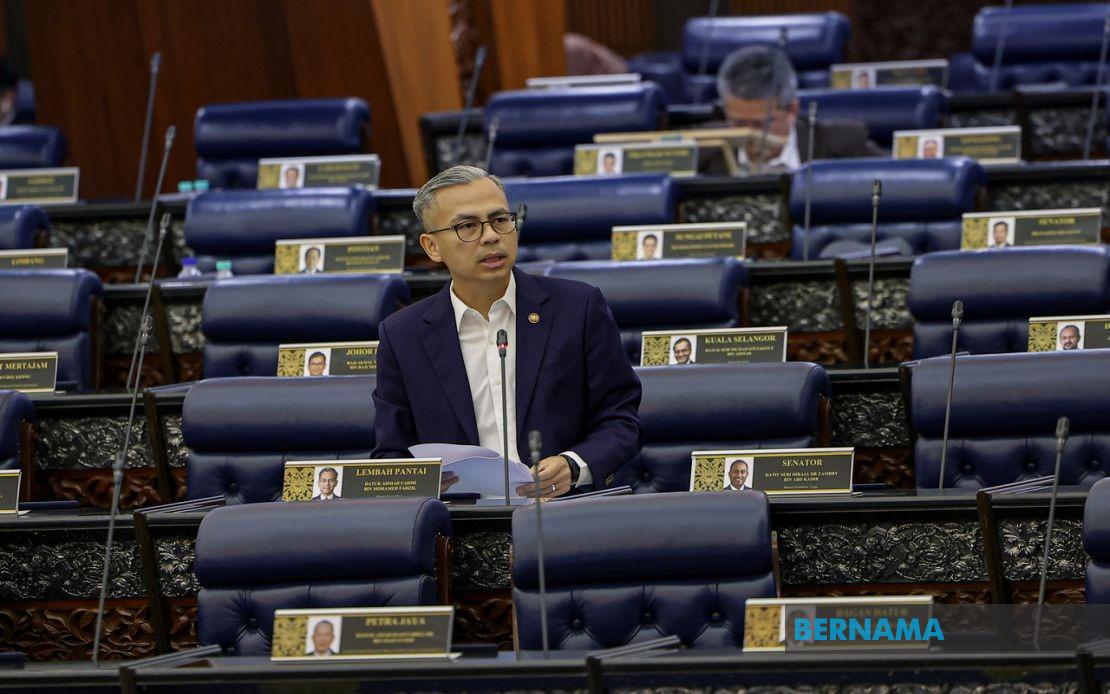
The Malaysian government has tabled the Communications and Multimedia (Amendment) Bill 2026 in parliament, signalling a significant recalibration of how the country approaches universal service obligations in the communications sector. Communications Minister Datuk Seri Fahmi Fadzil introduced the measure for its first reading in the Dewan Rakyat, with progression to second reading planned during the current parliamentary session. The bill represents a deliberate expansion of the regulatory framework governing telecommunications and digital services, introducing security considerations alongside traditional universal service principles that have governed the sector since 1998.
At its core, the amendment targets Section 202 of the Communications and Multimedia Act 1998, introducing two new subsections that fundamentally reshape ministerial authority in the sector. The amendments would grant the Communications Minister expanded powers to direct the Malaysian Communications and Multimedia Commission to initiate universal service provision programmes whenever national security interests are invoked. This represents a notable shift from the previous framework, which focused primarily on service accessibility and affordability across the country, particularly in underserved areas.
The security-focused provisions contemplate a broad range of potential interventions. These include directing the installation of network infrastructure, mandating the provision of network or application services, and encouraging telecommunications operators to undertake initiatives deemed necessary for national security purposes. The language casts a notably wide net, potentially enabling government direction across multiple layers of Malaysia's digital infrastructure, from physical network buildout to the services delivered across those networks. Such powers could prove consequential for telecommunications operators, who would face regulatory obligations extending beyond traditional universal service targets into security-designated projects.
A critical institutional safeguard embedded in the amendments channels security determinations through the National Security Council, operating under the National Security Council Act 2016. This institutional gateway theoretically prevents the communications minister from unilaterally declaring security initiatives, instead requiring that determinations originate from or receive validation from the NSC. However, the practical distinction between what constitutes a security matter versus a routine telecommunications matter remains undefined, potentially creating ambiguity in implementation.
The bill explicitly requires that any universal service initiatives launched under these new provisions must remain consistent with the original objectives of the 1998 Act. This consistency requirement attempts to cabin the expansion, ensuring that security-motivated programmes do not wholly displace the traditional universal service mandate focused on broad access and affordability. Whether this constraint proves meaningful in practice will depend on how broadly the government interprets compatibility between security objectives and universal service goals.
Additional provisions grant the minister authority to craft implementing regulations under Section 16 of the 1998 Act specifically addressing national universal service initiatives. This delegated rulemaking authority effectively grants the executive branch substantial discretion in determining how security-linked universal service programmes operate, their scope, funding mechanisms, and compliance requirements for telecommunications providers. The absence of parliamentary oversight over these regulatory determinations concentrates power within the executive branch.
From a financial perspective, the government has assured that the amendments will not trigger additional government expenditure. This assurance suggests that security-motivated universal service initiatives would operate within existing budget allocations or be funded through obligations imposed on telecommunications operators themselves. The cost implications for private telecommunications companies potentially entering into security-related provision mandates remain unaddressed, however, and could prove substantial depending on how extensively the framework is deployed.
The timing of these amendments reflects broader global trends in how democracies are integrating security considerations into digital infrastructure regulation. Major economies from the United States to the European Union have increasingly embedded security requirements into communications law, driven by concerns about critical infrastructure protection, data security, and emerging technologies. Malaysia's amendments position the country within this international context, though the breadth of ministerial discretion granted here exceeds the constraints found in comparable legislative frameworks elsewhere.
For Malaysian telecommunications operators, the amendments introduce regulatory uncertainty regarding potential future obligations. Companies cannot reliably predict when security justifications might trigger universal service directives, what those directives might entail, or what compliance costs they might impose. This uncertainty could affect investment decisions and operational planning across the sector, particularly for smaller providers with limited flexibility to absorb unexpected mandates.
The amendments also carry implications for Malaysia's digital ecosystem and innovation landscape. If security determinations drive infrastructure investments or service provision requirements, they could either accelerate buildout in strategic areas or alternatively divert resources from commercially viable projects toward security-designated initiatives. The net effect on Malaysia's competitive telecommunications market and consumers' service options remains contingent on implementation.
International observers and trading partners may scrutinise the amendments' potential application to foreign telecommunications companies operating in Malaysia or providing cross-border services. The broad language permitting direction over application services could theoretically extend to digital platforms and online services, raising questions about whether the framework might be deployed to restrict certain foreign digital services or mandate localisation measures under security rationales.
As parliament progresses to the second reading and eventual debate, crucial questions about implementation, safeguards, and application require clarification. The amendments represent a meaningful expansion of executive authority over Malaysia's communications sector, justified by security considerations but lacking detailed limiting principles. How this framework evolves through parliamentary scrutiny and subsequent regulatory practice will significantly shape Malaysia's digital infrastructure and the relationship between government, telecommunications providers, and digital service users across the region.

