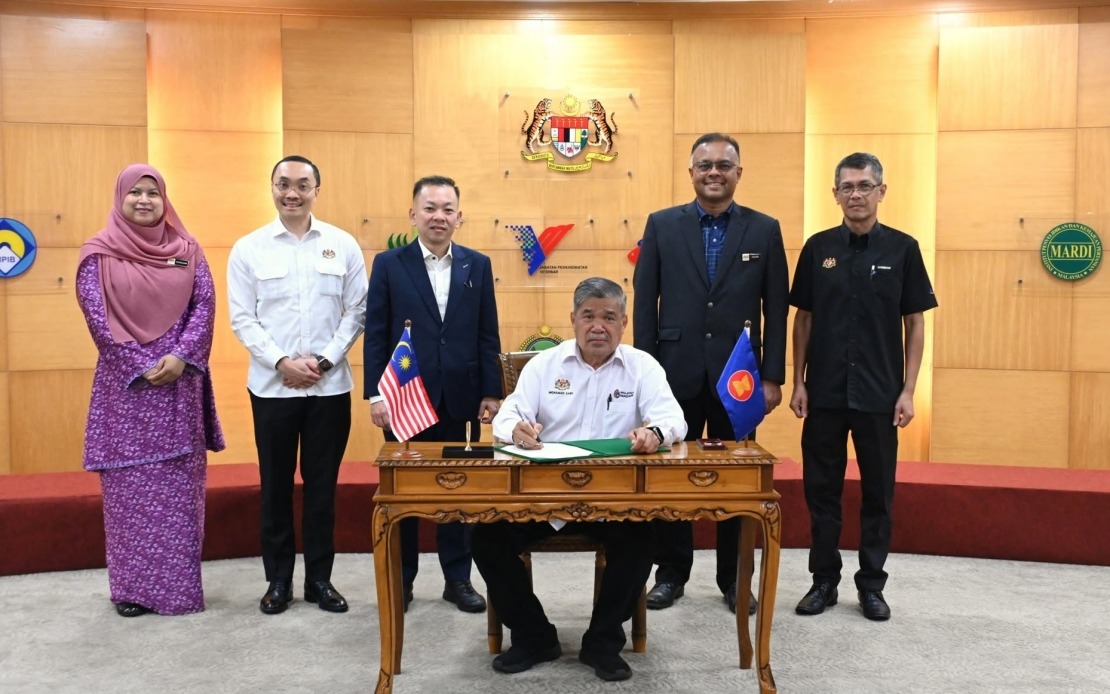
Malaysia has moved to unlock new commercial opportunities across Southeast Asia and with China by signing two strategic agricultural agreements that promise to reshape the region's farm trade landscape and modernise production methods. Agriculture and Food Security Minister Datuk Seri Mohamad Sabu formalised these commitments at the recent ASEAN Ministers on Agriculture and Forestry meeting, positioning the country to capitalise on expanded market access while addressing climate vulnerabilities that increasingly threaten harvests throughout the region.
The first agreement, the ASEAN Cooperation in Agriculture and Forest Products Scheme, represents a coordinated platform through which member nations will collectively advance their agricultural interests. Malaysia's strategy within this framework divides responsibilities sensibly: the Ministry of Plantation and Commodities will champion palm oil and cocoa on the international stage, while the Ministry of Agriculture and Food Security leads efforts to promote domestic agri-food exports. This arrangement recognises that Malaysia's agricultural portfolio extends well beyond plantation crops, encompassing livestock, processed foods, and value-added products that require tailored marketing approaches.
The scheme's five foundational pillars create a coherent architecture for regional agricultural development. Strengthening food security across ASEAN remains paramount given the region's exposure to climate shocks, supply chain disruptions, and demographic pressures. By facilitating trade in agricultural and forestry products, the agreement dismantles unnecessary barriers that historically fragmented Southeast Asia's farm markets, allowing Malaysian producers to reach consumers across Indonesia, Thailand, Vietnam, and beyond more readily. The emphasis on private investment invites corporate participation, potentially channelling capital toward infrastructure, processing facilities, and distribution networks that benefit entire supply chains.
Malaysia's appointment as the lead country for palm oil and cocoa underscores its economic weight in these sectors and its responsibility to defend them amid sustained international criticism. Global campaigns against palm oil production have pressured consuming nations and multinational corporations to restrict purchases, threatening Southeast Asian livelihoods. Through coordinated ASEAN messaging and joint strategic initiatives, Malaysia can present evidence-based arguments about sustainable production advances, certification schemes, and smallholder support programmes that counter negative perceptions. Similarly, cocoa expansion efforts tap into rising Asian chocolate consumption while supporting farmer incomes.
The scheme's commitment to sustainable natural resource conservation addresses long-standing concerns about deforestation and environmental degradation that have complicated Malaysia's international reputation. By anchoring agricultural growth to resource stewardship, the agreement attempts to harmonise productivity gains with conservation objectives, potentially opening doors to premium markets that reward sustainable sourcing. This positioning becomes increasingly valuable as global buyers, particularly in Europe and North America, impose stricter environmental standards on imported goods.
Beyond ASEAN, Malaysia has simultaneously deepened agricultural cooperation with China through a comprehensive five-year partnership covering eighteen areas of collaboration. This second agreement reflects the economic gravity of the Chinese market, which consumes vast quantities of palm oil, tropical fruits, seafood, and processed agricultural products. For Malaysia, China's appetite for diverse agricultural inputs provides a natural counterweight to Western market volatility and protectionist pressures. The partnership channels investment and expertise into modernising production systems, particularly through climate-smart agriculture initiatives that reduce emissions while maintaining yields.
Climate-smart agricultural technology represents perhaps the most consequential element of the ASEAN-China cooperation framework. Malaysia's tropical climate increasingly exhibits erratic rainfall patterns, elevated temperatures, and heightened disease pressure that conventional farming methods struggle to manage. The incoming transfer of Chinese expertise in low-carbon agriculture, sustainable forest management, and agricultural insurance could enable Malaysian farmers to adopt water-efficient techniques, precision farming applications, and resilient crop varieties. Such transitions demand investment, training, and policy support—precisely the resources the partnership promises to mobilise.
Disaster risk management provisions within the China agreement acknowledge the mounting reality of climate-related agricultural losses across Southeast Asia. Floods in 2022 devastated Malaysian crop production; droughts similarly constrain yields in neighbouring countries. By strengthening supply chain resilience through better forecasting, early warning systems, and coordinated responses, ASEAN and China can reduce the food security shocks that periodically roil regional markets. Agricultural insurance mechanisms, where insurers bear climate-related losses, allow farmers to operate with greater confidence despite environmental uncertainty.
Cross-border pest and disease management reflects practical wisdom gleaned from decades of regional agricultural challenges. Armyworm outbreaks, fruit flies, and livestock diseases circulate through porous international boundaries, affecting multiple nations simultaneously. Coordinated surveillance networks, rapid response protocols, and shared research findings help contain pest populations and disease spread far more effectively than isolated national efforts. Malaysia's participation in these mechanisms protects domestic production while supporting fellow ASEAN members, strengthening regional stability and prosperity.
The research and development cooperation components establish channels for continuous knowledge exchange and technological innovation. Chinese agricultural scientists have pioneered techniques in vertical farming, disease-resistant varieties, and sustainable aquaculture that could accelerate Malaysia's agricultural transformation. Reciprocally, Malaysian expertise in tropical crop production and smallholder organisation offers valuable insights for Chinese policymakers designing their own agricultural modernisation strategies. These exchanges embed Malaysia within broader Asian innovation ecosystems, elevating domestic research capacity.
Trade information-sharing provisions demystify market dynamics and enable Malaysian exporters to make better-informed decisions about product positioning, pricing, and promotional strategy. Real-time data on Chinese consumer preferences, regulatory requirements, and competing suppliers transforms market access from abstract possibility into concrete commercial reality. Malaysian agri-food businesses can thus navigate the world's second-largest economy with greater strategic clarity, potentially capturing share from competitors less attentive to Chinese market nuances.
For Malaysian policymakers, these agreements represent a sophisticated balancing act between deepening regional integration through ASEAN while simultaneously cultivating bilateral advantages through China partnerships. The approach acknowledges that agriculture increasingly operates within global value chains requiring technological sophistication, environmental responsibility, and climate adaptation capacity. By securing access to improved methods and expanded markets simultaneously, Malaysia positions itself to prosper amid the agricultural transformations reshaping Asian food systems. The true test lies in implementation—whether government agencies, research institutions, and farming communities can effectively translate these institutional agreements into tangible productivity improvements and market gains.

