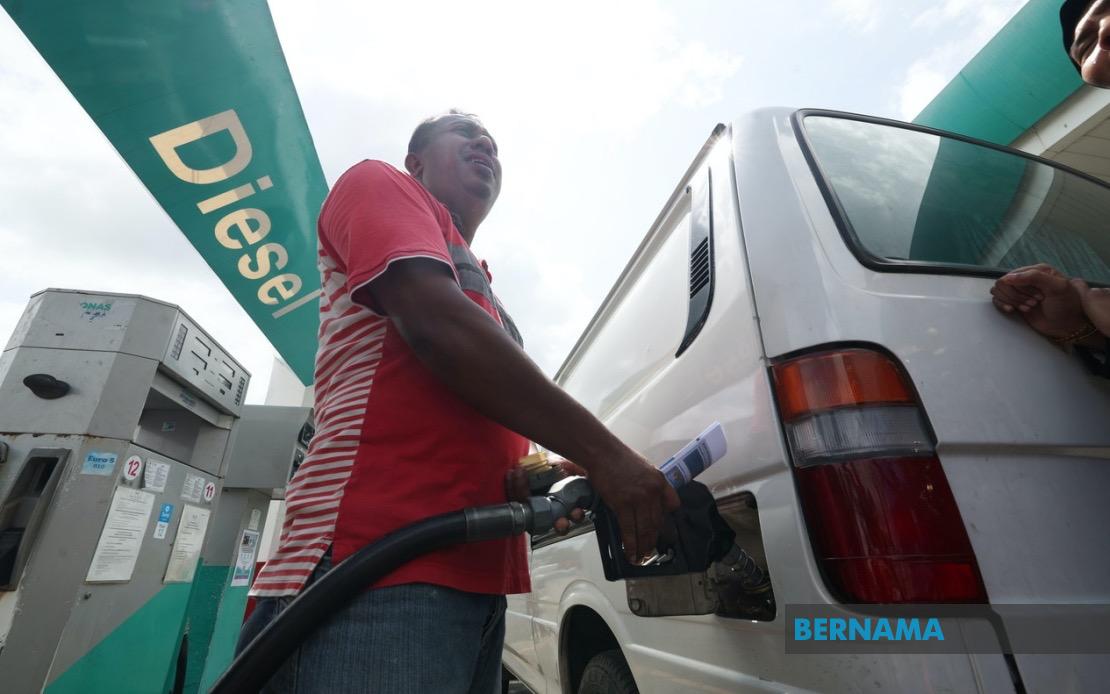
Prime Minister Datuk Seri Anwar Ibrahim has unveiled the MADANI Government's latest subsidy restructuring initiative, announcing that the price of subsidised diesel will be fixed at RM2.10 per litre beginning July 2026. The announcement, made during the Cheque Handover Ceremony Following the Conversion of Bintulu Port Status from Federal Port to State Port in Bintulu, signals a major shift in how Malaysia's fuel subsidy programme will operate going forward. This move represents a continuation of the administration's broader strategy to rationalise government spending while maintaining affordability for eligible citizens.
The diesel subsidy reform mirrors the approach successfully implemented through the BUDI MADANI RON95 (BUDI95) programme, which introduced targeted subsidies for petrol through a verification mechanism. Rather than providing universal fuel subsidies to all consumers regardless of income level, the new system will employ MyKad identification to determine subsidy eligibility, ensuring that government support reaches those who genuinely need it. This targeted approach contrasts sharply with the previous system of blanket subsidies, which had become increasingly costly to maintain as global fuel prices fluctuated and domestic consumption patterns shifted over the years.
The implementation of MyKad-based verification represents a technological and administrative advancement in Malaysia's subsidy delivery mechanisms. Similar systems have been tested and refined through the BUDI95 programme, allowing officials to verify citizen status and eligibility in real-time at fuel pumps nationwide. This digital infrastructure enables more precise targeting of subsidies while reducing leakage to non-eligible recipients and curbing potential abuse of the subsidy system. For ordinary Malaysians, the process should remain relatively seamless, requiring only their MyKad to be presented at participating petrol stations and fuel retailers.
The financial implications of this subsidy reform deserve careful examination, particularly given Malaysia's fiscal constraints and the need to balance social support with long-term economic sustainability. Diesel subsidies have historically represented a substantial drain on government finances, especially during periods of elevated crude oil prices. By capping the subsidised price at RM2.10 per litre, the government effectively limits its financial exposure while still providing meaningful price relief compared to market rates. The approach reflects a pragmatic understanding that unlimited subsidies, while politically popular in the short term, can undermine macroeconomic stability and crowd out spending on other essential services such as healthcare and education.
For the commercial and transport sectors, which rely heavily on diesel fuel, this price ceiling offers important predictability. Freight operators, bus companies, and other diesel-dependent businesses will benefit from knowing the maximum price they will pay, enabling better budgeting and financial planning. However, questions remain about how the subsidy will be administered for commercial users and whether there will be different eligibility criteria or price tiers for business versus personal consumption. The Finance Minister II Datuk Seri Amir Hamzah Azizan was scheduled to provide detailed implementation guidelines to the media in Kuala Lumpur, which should clarify these operational matters.
The broader context of Malaysia's subsidy reform agenda extends beyond fuel pricing alone. The government has been systematically reviewing various subsidy programmes to improve their targeting and efficiency. This diesel initiative exemplifies that commitment, building on lessons learned from the BUDI95 petrol subsidy programme and other recent policy interventions. The approach demonstrates a recognition that contemporary subsidy systems must balance equity with fiscal responsibility, employing technology and data to ensure resources flow to deserving recipients rather than being dispersed indiscriminately.
Regionally, Malaysia's subsidy restructuring may provide a blueprint for other Southeast Asian nations grappling with similar challenges. Several neighbouring countries maintain substantial fuel subsidies that constrain government budgets and create market distortions. By implementing a transparent, technology-enabled targeting system, Malaysia demonstrates that it is possible to maintain affordability for vulnerable groups while improving fiscal sustainability. This could influence policy discussions in Indonesia, Thailand, and other regional economies where fuel subsidies remain politically sensitive but financially burdensome.
The timing of this announcement in late June, with implementation to commence in July 2026, provides petrol retailers and consumers approximately one month to adjust to the new arrangements. This transition period, while relatively short, should be sufficient given the technological foundation already established through the BUDI95 programme. The government will likely undertake an awareness campaign to educate citizens about the new system, emphasising the need to carry MyKad when purchasing diesel and explaining the verification process at the pump.
Looking ahead, this subsidy reform reflects the MADANI Government's broader economic philosophy, which prioritises targeted assistance over universal programmes, fiscal discipline over open-ended commitments, and leveraging technology to improve service delivery. By anchoring the diesel price at RM2.10 per litre, policymakers are signalling confidence that this level provides adequate consumer relief while being sustainable for the government budget. As implementation details emerge and the system becomes operational, both consumers and industry observers will gain clarity on how effectively this new framework balances competing objectives of affordability, equity, and fiscal responsibility.