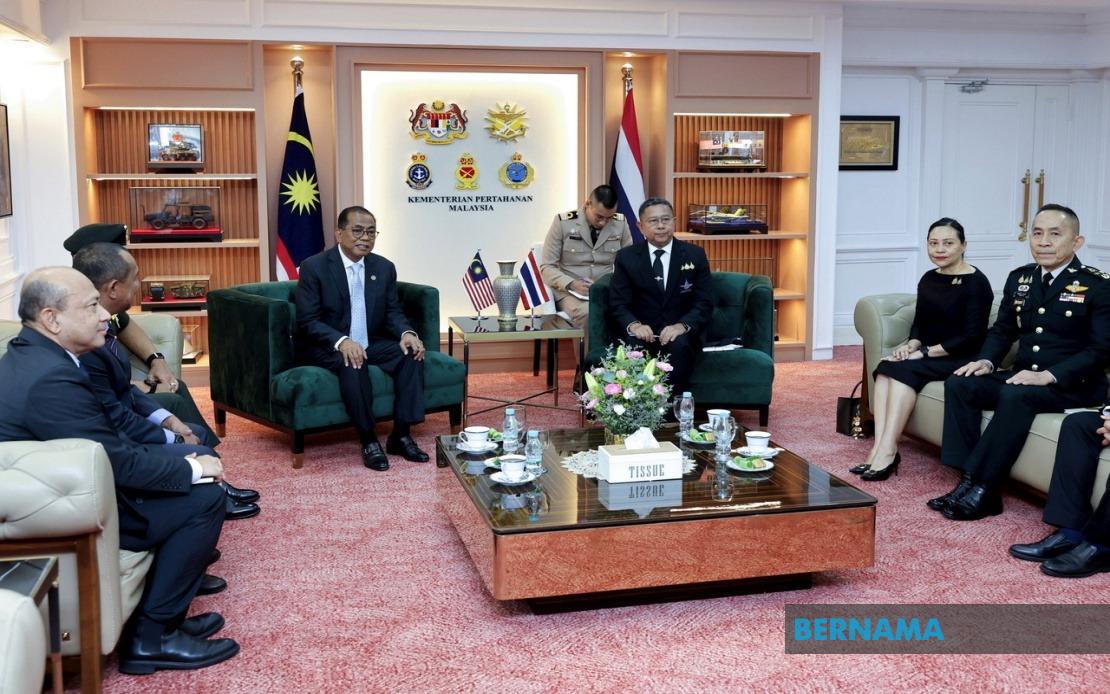
Malaysia has pledged to work more closely with Thailand's newly appointed chief of the Peace Dialogue Panel, Thanut Suvarnananda, as both nations intensify their joint push to bring lasting peace and stability to the volatile southern region. Defence Minister Datuk Seri Mohamed Khaled Nordin made the commitment during talks with his Thai counterpart, Lieutenant General Adul Boonthumjaroen, underscoring Malaysia's continued commitment to the regional peace process despite the complex security landscape across the border.
The appointment of Thanut represents a significant development in Thailand's administrative handling of the southern insurgency, which has claimed thousands of lives and displaced communities across the predominantly Muslim provinces of Pattani, Yala and Narathiwat. Malaysia's endorsement of this leadership change signals confidence that the new configuration may accelerate stalled negotiations, though observers caution that structural obstacles to peace remain formidable. The Thai government had previously informed Malaysian officials of Thanut's elevation to the role, demonstrating the transparency increasingly characterizing bilateral security dialogue between Bangkok and Kuala Lumpur.
Malaysia's own facilitator for the peace process, Datuk Rabin Basir, will serve as the primary liaison with Thanut's panel, maintaining the institutional continuity that has allowed both countries to make incremental progress despite frequent setbacks. The selection of Malaysia as mediator reflects its unique position as a Muslim-majority nation with substantial ethnic and religious ties to southern Thailand's population, lending it credibility that other potential mediators might lack. This positioning has become more valuable as international attention to the conflict has waned, leaving bilateral engagement as the primary diplomatic channel for resolution.
Mohamed Khaled was careful to delineate Malaysia's circumscribed role in the peace architecture, emphasizing that while Kuala Lumpur can facilitate dialogue and offer venues for negotiation, the actual military operations and internal security decisions remain entirely within Thai sovereignty. This distinction is crucial for maintaining regional stability, as it prevents Malaysian involvement from being perceived as interference in Thai internal affairs or as providing implicit support to armed groups operating in southern Thailand. The Defence Minister's clarification also serves to reassure other ASEAN members that Malaysia respects established norms of non-interference.
Beyond the peace dialogue framework, the two defence ministers identified several concrete operational areas for enhanced cooperation. Most significantly, both nations agreed to strengthen efforts against smuggling networks and to prevent militant elements from moving across the shared border, recognizing that cross-border trafficking in weapons, drugs and personnel poses a threat to security in both jurisdictions. The Malaysia-Thailand General Border Committee, the principal mechanism for such coordination, will receive renewed impetus through these commitments.
The upcoming 57th meeting of the General Border Committee, which Malaysia will host this year, is expected to tackle an expansive agenda reflecting the multifaceted nature of bilateral border challenges. Discussion topics will extend beyond traditional security concerns to encompass joint military exercises, socio-economic development initiatives in border communities, and disaster response protocols. This holistic approach acknowledges that sustainable peace requires addressing not just militant activity but also the poverty and marginalization that can fuel recruitment into armed movements.
Malaysia has also positioned itself as a supporter of Thailand's bilateral approach to its territorial dispute with Cambodia, preferring that the two countries resolve their differences through direct negotiation rather than regional or international intervention. This stance aligns with ASEAN's traditional preference for the 'ASEAN Way,' emphasizing confidential dialogue and consensus-building over public pressure or external mediation. As the 2026 ASEAN Chair, the Philippines has been informed of Malaysia's position with the expectation that Manila will support efforts to reduce regional tensions without imposing external solutions.
The Defence Ministers' meeting also served a preparatory function ahead of the ASEAN Defence Ministers' Meeting and ADMM-Plus gatherings scheduled for the Philippines. By aligning their positions beforehand, Malaysia and Thailand can present a united front on regional security issues and strengthen ASEAN's collective approach to emerging challenges including maritime security, cyberthreats and transnational crime. This coordination exemplifies how bilateral relationships underpin broader regional institutions.
Looking forward, both nations plan to formalize their expanding defence partnership through a Memorandum of Understanding to be signed this year. The agreement is expected to cover regional security enhancement and cross-border cooperation in defence industry development, reflecting a growing recognition that Southeast Asian nations must strengthen indigenous capacity in military technology and production rather than relying exclusively on external suppliers. For Malaysia, deepening ties with Thailand's defence sector opens possibilities for joint research and manufacturing ventures that could benefit both economies.
The reinforced Malaysia-Thailand defence relationship comes amid broader regional recalibration as major powers compete for influence in Southeast Asia. By strengthening bilateral ties and demonstrating commitment to regional stability mechanisms, Malaysia and Thailand are asserting ASEAN's capacity to manage its own security challenges without external intervention. The southern Thailand peace process, despite its limited tangible progress, remains symbolically important as evidence of regional commitment to peaceful conflict resolution.
For Malaysia, this engagement carries domestic implications as well. The government must balance support for Thailand's sovereignty and peace efforts with sensitivity toward the rights and aspirations of the Muslim population in southern Thailand. Kuala Lumpur's facilitator role requires careful diplomatic footwork to maintain credibility with all parties while avoiding the perception of favoring one side over another. The appointment of Thanut and Malaysia's subsequent endorsement suggest both governments believe new diplomatic configurations might unlock progress where previous efforts stalled.
Ultimately, the deeper cooperation outlined between Malaysian and Thai defence officials reflects a shared understanding that sustained border security and regional stability require continuous institutional engagement, regular high-level contact, and concrete mechanisms for addressing both security threats and development needs in frontier areas. While the southern Thailand conflict remains intractable in many respects, the commitment to ongoing dialogue and coordinated action represents the only viable path toward meaningful improvement in the lives of affected communities.

