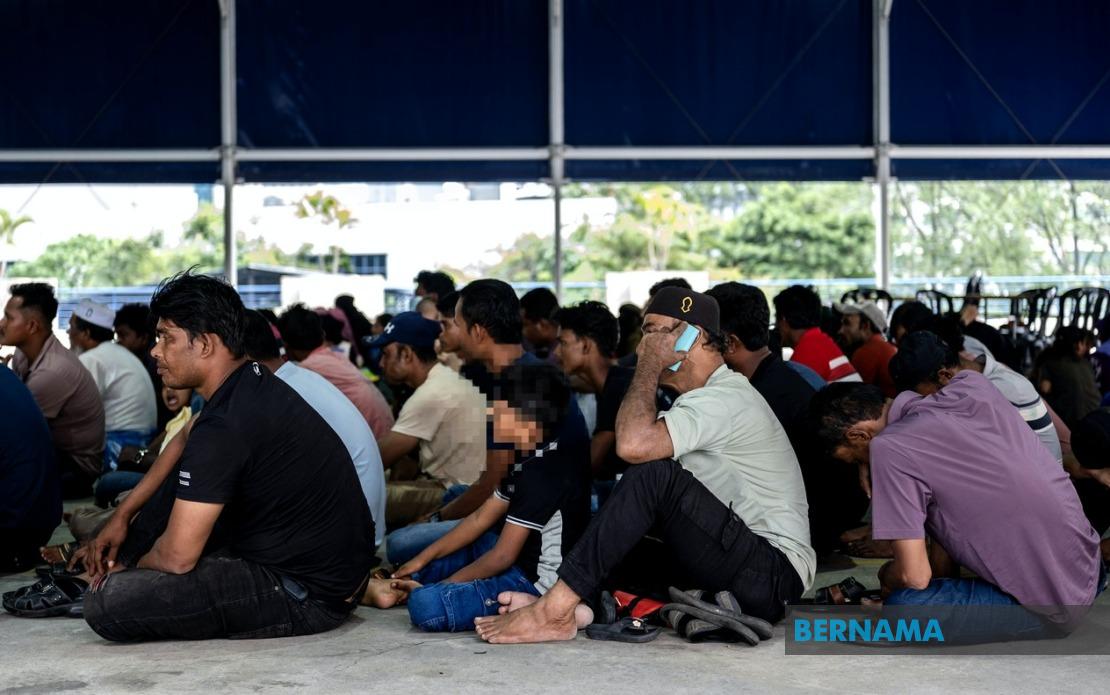
Home Minister Datuk Seri Saifuddin Nasution Ismail has signalled that Malaysia will complete the first phase of data collection on Myanmar refugees by the end of 2024, marking a significant milestone in the government's systematic approach to managing the displaced population. Speaking in Putrajaya on August 9, the minister outlined that preliminary information gathered through the Refugee Registration Document (DPP) programme would be made public once compilation is finished in the fourth quarter, providing both policymakers and the public with concrete figures on the scale of Myanmar displacement in the country.
The Refugee Registration Document programme represents a deliberate shift towards institutionalised management of Myanmar refugees and other displaced persons within Malaysia's borders. Rather than relying on ad-hoc assessments, the Immigration Department is implementing a structured data collection mechanism designed to capture comprehensive biometric and identity information from individuals claiming refugee status. This systematic approach aligns with Malaysia's National Security Council Directive No. 23 (Revision 2023), which sets out the framework for managing refugees and irregular migrants within the national security context. The initiative reflects growing international pressure on Malaysia to demonstrate transparent governance of its refugee populations whilst balancing domestic security concerns.
The significance of this data collection extends beyond mere administrative record-keeping. Saifuddin Nasution emphasised that verified refugee data would form the basis for prioritising repatriation efforts, particularly for those confirmed as legitimate refugees. The Foreign Ministry (Wisma Putra) is positioned to coordinate the actual repatriation process once individuals are properly identified and verified. This two-ministry approach creates a clear separation between security-focused identification and diplomatic repatriation, allowing Malaysia to manage both its immigration concerns and its international humanitarian obligations more effectively.
A critical aspect of the programme's implementation involves extensive public outreach to encourage eligible refugees to register voluntarily. The Home Ministry recognises that data collection cannot succeed without the cooperation of the target population, many of whom may be living in informal settlements or underground communities due to legal status anxieties. Government communications campaigns are planned to assure potential registrants that participation in the DPP programme is not a pathway to arrest or forced detention, but rather a legitimate mechanism for obtaining recognition and accessing eventual repatriation services. This messaging will be crucial in building trust among Myanmar nationals who have experienced displacement and instability.
The scope of the refugee registration initiative extends beyond Myanmar nationals alone. Saifuddin Nasution clarified that the DPP programme encompasses all individuals identified within Malaysia's territory who meet refugee criteria, including displaced persons from other regional conflicts and crises. This broader framing allows Malaysia to develop comprehensive policy responses that address multiple displacement scenarios simultaneously, whilst avoiding the appearance of singling out Myanmar or creating disparate treatment among different refugee communities. The inclusive approach also positions Malaysia as a responsible regional player capable of managing diverse humanitarian challenges.
For Malaysia's economy and social fabric, the availability of reliable refugee statistics carries tangible implications. Accurate data on refugee populations enables better workforce planning, more targeted social services delivery, and more informed public discourse around migration and integration issues. Policymakers will be able to assess whether refugee employment in specific sectors has genuine economic benefits, whether existing healthcare and education systems can accommodate refugee populations, and how to manage community relations in areas with significant refugee concentrations. Current political sensitivities surrounding irregular migration make such evidence-based policymaking particularly valuable.
Regionally, Malaysia's systematic refugee registration approach may serve as a model for other Southeast Asian nations grappling with displacement from Myanmar and other sources. The ASEAN region has historically struggled to develop coordinated refugee responses, with individual member states adopting ad-hoc policies based on national interest rather than collective frameworks. Should Malaysia successfully implement the DPP programme and achieve high registration rates, neighbouring countries such as Thailand and Bangladesh—which host far larger Myanmar refugee populations—may consider similar approaches. This potential demonstration effect could influence broader regional conversations about burden-sharing and international responsibility for refugees.
The timeline for Q4 data release creates a compressed working period for the Immigration Department and partner agencies. With only approximately four months from the announcement to the deadline, implementation teams must simultaneously conduct outreach campaigns, establish registration centres, process applications, and verify biometric data at considerable scale. Operational challenges are inevitable, including ensuring accessibility for refugees living in remote areas, managing language barriers, and maintaining security protocols throughout the process. The success of this initial phase will likely determine whether the programme becomes a permanent feature of Malaysia's refugee management infrastructure or faces political pressure for modification.
Saifuddin Nasution's commitment to transparency about eventual figures suggests the government is prepared for public scrutiny of the data once released. Whether the numbers are high or low, they will shape subsequent policy discussions around refugee capacity, resource allocation, and international cooperation. High numbers may trigger demands for stricter border controls and faster repatriation timelines, whilst lower numbers might suggest significant gaps in the registration reach or resistance from the target population. The minister's pre-commitment to sharing results publicly indicates confidence in the methodology and a desire to anchor the refugee discussion in verifiable facts rather than speculation.
The DPP programme also signals Malaysia's attempt to distinguish between refugees—persons fleeing persecution—and economic migrants, a distinction that remains blurred in public and political discourse. By collecting detailed biometric and biographical information, Malaysian authorities can better assess individual circumstances and determine who genuinely qualifies for refugee protection under international standards. This differentiation is crucial for Malaysia's credibility both domestically, where public support for refugee programmes depends on perceptions of fairness, and internationally, where Malaysia's humanitarian credentials are increasingly scrutinised. The data collected will provide evidence about the actual composition of displaced populations in the country.

